Complete Payroll Management: 2026 Guide
Payroll management is evolving significantly in 2026 with new legal obligations, digitization, and electronic signature. Discover all the keys to compliant and efficient payroll.
Updated on
Writer — Certyneo · About Certyneo
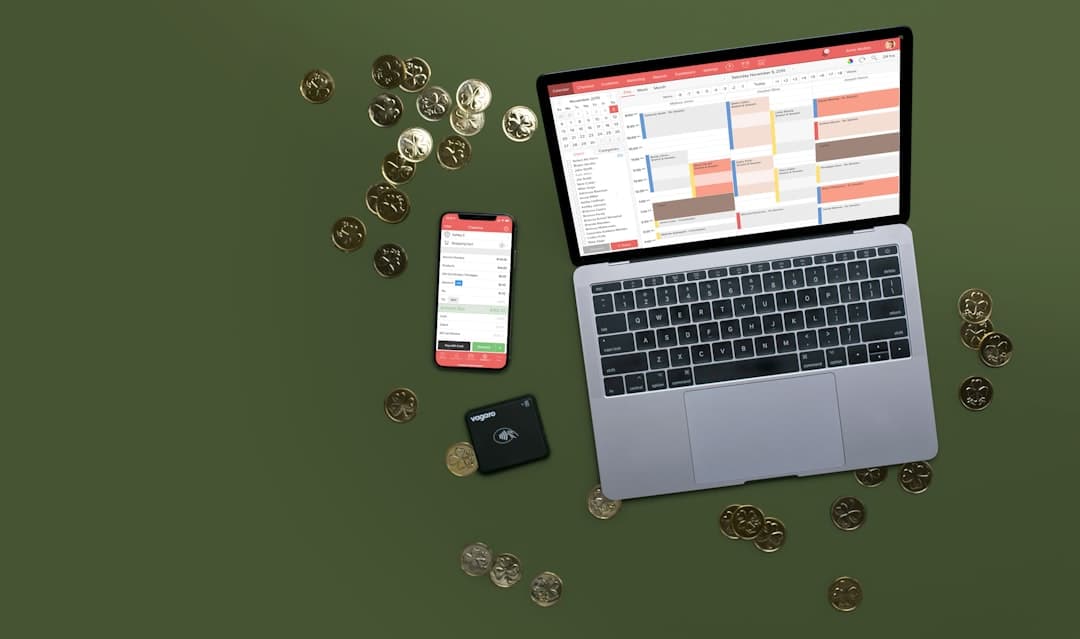
Complete payroll management represents one of the most critical and heavily regulated HR processes in a company. In 2026, with the rise of digitization, obligations under the Labor Code, URSSAF requirements, and the generalization of electronic pay slips, HR teams must master an increasingly complex ecosystem. This expert guide walks you through all the steps — from calculating social contributions to secure delivery of the pay slip — while incorporating the latest regulatory developments and best digital practices for compliant, optimized, and risk-free payroll.
The Fundamentals of Payroll Management in 2026
What is Complete Payroll Management?
Payroll management refers to all operations that allow you to calculate, establish, and transmit employee compensation, as well as declare and remit social contributions to the competent authorities (URSSAF, pension funds, health insurance, France Travail). In 2026, this process necessarily includes digital components: real-time DSN (Nominative Social Declaration) transmission, delivery of the pay slip in electronic format by default since the 2016 Labor Act (Article L3243-2 of the Labor Code), and secure probative archiving.
Complete payroll management thus covers:
- Gross pay calculation: base salary, overtime, bonuses, benefits in kind
- Social contribution calculation: employee and employer portions according to applicable rates
- Exemptions and specific schemes: general contribution reduction (e.g., former Fillon reduction), enterprise zones, assisted contracts
- Absence management: paid leave, sick leave, maternity/paternity leave
- Pay slip establishment and delivery
- Social declarations: monthly DSN, annual declarations
Social Contribution Rates Applicable in 2026
Social contribution rates change annually. In 2026, the main applicable rates (subject to adjustments decided by the 2026 Social Security Financing Act) remain structured around:
- Health insurance (employer): 7% to 13% depending on salary level
- Basic retirement CNAV: 6.90% employee / 8.55% employer (within the ceiling)
- Supplementary retirement AGIRC-ARRCO: variable rates by bracket
- Unemployment insurance (employer): 4.05%
- CSG/CRDS: 9.7% (of which 6.8% tax-deductible)
The annual Social Security contribution ceiling (PASS) is the central reference for calculating many contributions. For 2026, it has been revalued in line with average salary growth, in accordance with Article D242-16 of the Social Security Code.
DSN: The Backbone of Declarative Payroll
Since its generalization in 2017, the Nominative Social Declaration (DSN) has been the sole and mandatory channel for transmitting payroll data to social authorities. In 2026, DSN is evolving toward near-real-time declarations, with the administration aiming for instant payroll data processing. Employers must submit their monthly DSN by the 5th or 15th of the following month after payroll closure, depending on headcount. Penalties for late or incorrect declarations can reach €1,547 per missing declaration (Article R243-14 of the Social Security Code).
Payroll Digitization: Issues and Obligations
The Electronic Pay Slip: A Default Right
Since Act No. 2016-1088 of August 8, 2016 (El Khomri Act), the pay slip may be delivered electronically without prior employee agreement, unless the employee explicitly objects. In 2026, more than 78% of pay slips in France are delivered in digital format according to Ministry of Labor estimates, a 15-point increase since 2022.
To be compliant, the electronic pay slip must:
- Be accessible, readable, and downloadable by the employee
- Be preserved for 50 years or until the employee reaches age 75 (Article L3243-4 of the Labor Code)
- Guarantee data integrity (impossibility of retroactive modification)
- Permit access even after employment termination
The use of a certified digital safe or a platform offering electronic signature compliant with the eIDAS regulation meets these technical and legal requirements.
Electronic Signature of Payroll Documents: When and Why?
While the pay slip itself does not require employee signature, many HR documents related to the payroll process require a valid signature: employment contracts, salary amendments, final settlement statements, receipts for settlement of accounts, SEPA mandates, day-rate agreements. The electronic signature for HR is now becoming standard in modern companies.
Under Article 1366 of the Civil Code, electronic signature has the same legal value as handwritten signature, provided the eIDAS regulation (No. 910/2014) is respected. Three signature levels coexist:
- Simple Electronic Signature (SES): suitable for routine HR documents
- Advanced Electronic Signature (AES): recommended for amendments and contract modifications
- Qualified Electronic Signature (QES): required for high-stakes legal documents
Probative Archiving of Payroll Documents
Archiving pay slips and related documents must follow strict retention rules. Beyond the legal retention period (5 years for accounting documents under Article L123-22 of the Commercial Code, 50 years for pay slips), the issue is probative value in the event of an employment dispute. Electronic archiving compliant with standard NF Z 42-013 and using qualified timestamping mechanisms guarantees this probative value.
For deeper understanding of the compliance criteria for electronic archiving solutions, consult our complete guide to electronic signature.
Automation and Payroll Software: 2026 Landscape
Criteria for Selecting Payroll Software
The French payroll software market is dominated by a few major players (Silae, Cegid, ADP, Payfit, Lucca) as well as integrated ERPs (SAP, Sage, Oracle HCM). In 2026, the determining criteria for choosing a solution include:
- Automated regulatory compliance: automatic update of contribution rates, configuration of collective agreements (over 700 sectoral agreements in France)
- Native DSN integration: automatic DSN generation and transmission
- GDPR compatibility: data hosting in the European Union, AES-256 encryption, processing register
- HR interoperability: connectors with HRIS systems, time-tracking tools (GTA), electronic signature solutions
- Simulation features: hire simulations, promotion scenarios, part-time conversion
- Complex case handling: expatriates, multi-location, payroll portage, therapeutic part-time arrangements
Artificial Intelligence in Payroll
In 2026, AI integrated into payroll software delivers tangible added value: automatic detection of payroll anomalies (unusual salaries, missed variable elements, inconsistencies between absence days and gross amount), salary mass prediction, comparative sectoral analysis. Some solutions offer predictive control engines capable of identifying URSSAF redressment risks before DSN submission.
Using an AI contract generator upstream of the payroll process also helps secure salary clause drafting and ensure consistency between the contract and variable elements entered in payroll.
Payroll Outsourcing vs. In-House Management
According to a Markess by exægis study (2025), 52% of French companies with fewer than 250 employees outsource all or part of their payroll to an accountant or specialized service provider. Arguments favoring outsourcing include the growing complexity of rules (over 450 payroll regulatory changes annually on average), reduced redressment risk, and fixed-cost control. Conversely, in-house management offers better reactivity, enhanced confidentiality, and full control over compensation data.
Regardless of which option is chosen, electronic signature of payroll management mandates and service contracts with externalized firms is essential. Our comparison of electronic signature solutions can help you select the tool best suited to your organization.
URSSAF Audits and Risk Management in 2026
URSSAF's Priority Audit Points
URSSAF audits prioritize:
- Professional expenses: correct application of mileage allowances, specific deductions, real expense reimbursements
- Benefits in kind: company vehicle, housing, meal vouchers beyond exemption thresholds
- Day-rate agreements: compliance with collective agreements and workload monitoring
- Atypical employment contracts: interns, apprentices, subcontractors reclassified as employees
- Contribution exemptions: actual eligibility for applied schemes (LODEOM, rural revitalization zones, etc.)
An URSSAF redressment can generate contribution arrears plus penalties reaching 10% of amounts due (Article R243-18 of the Social Security Code), or even 25% in cases of undeclared work (Article L8224-1 of the Labor Code).
Legal Security Through Electronic Signature
Electronic signature of HR documents provides an effective safeguard against payroll-related disputes. A receipt for settlement of accounts signed electronically with qualified timestamping is unassailable before the Employment Tribunal — provided the solution used complies with eIDAS regulation and the trust chain is preserved. To understand the differences between signature levels applicable to payroll documents, our guide on the eIDAS 2.0 regulation is an essential reference.
Companies that integrate electronic signature in their payroll process also observe a 60 to 80% reduction in signature collection delays on HR documents, freeing time for higher value-added tasks (manager coaching, salary mass analysis, workforce planning).
Managing Employment Disputes Related to Payroll
The Employment Tribunal handles over 140,000 new cases annually in France (Ministry of Justice data 2025), with a significant portion concerning compensation disputes. The quality of electronic archiving of pay slips and contract documents directly determines the employer's ability to prove its obligations.
The electronic signature ROI calculator from Certyneo allows you to precisely evaluate the savings achievable by securing your payroll and HR processes through electronic signature.
Legal Framework Applicable to Payroll Management and Digitization
Payroll management operates within a dense legal framework combining labor law, social security law, law of evidence, and European digital regulation.
Labor Code
- Article L3243-1: obligation to issue a pay slip with each salary payment
- Article L3243-2: authorization to deliver pay slip electronically, unless the employee objects
- Article L3243-4: employer obligation to retain the pay slip for 5 years, with guaranteed employee accessibility for 50 years or until age 75
- Article L1234-20: probative value of settlement receipt after 6 months without challenge
- Article L8224-1: criminal penalties for undeclared work (3 years imprisonment, €45,000 fine)
Social Security Code
- Article R243-14: penalties for missing or late DSN (€1,547 per breach)
- Articles D242-1 et seq.: calculation methods for social contributions
eIDAS Regulation No. 910/2014 This European regulation, supplemented by eIDAS 2.0 (Regulation EU 2024/1183 entering progressively into force), establishes the framework for mutual recognition of electronic signatures within the EU. It distinguishes three levels (simple, advanced, qualified) whose legal value is guaranteed by Article 25. For payroll and HR, advanced electronic signature (AES) based on a qualified certificate constitutes the recommended standard for contract documents.
Civil Code
- Article 1366: electronic signature has the same value as handwritten signature under reliability conditions
- Article 1367: defines reliability requirements for an electronic signature process
- Article 1379: probative value of faithful and durable electronic copy
GDPR No. 2016/679 Payroll data constitutes personal data under Article 4 of GDPR. Its processing requires: legal basis (legal obligation under Article 6.1.c), limited retention period, enhanced security (encryption, pseudonymization), employee access rights. DPO designation is mandatory for companies processing such volumes of sensitive data at scale.
ETSI Standards
- ETSI EN 319 132: XAdES signature for XML documents used in payroll flows and DSN
- ETSI EN 319 122: CAdES signature for PDF pay slip files
Standard NF Z 42-013 (electronic archiving with probative value): applicable to electronic pay slip retention with qualified timestamping, guaranteeing their long-term integrity.
Use Cases: Digitized Payroll Management in Practice
Scenario 1: An 80-Employee IT Services SME Migrates to 100% Digital Payroll
An IT services company with approximately 80 employees spread across three Île-de-France sites had long managed payroll using outdated spreadsheets coupled with legacy payroll software, with pay slips delivered on paper via internal mail. Unclaimed slips accumulated, and settlement receipt signatures dragged on during employee departures.
By deploying an integrated cloud payroll solution (automated DSN transmission) coupled with an eIDAS-compliant electronic signature platform for HR documents, the company achieved the following results in 6 months:
- 70% reduction in pay slip processing time (from 4 days to under 24 hours)
- 100% of settlement receipts signed within 48 hours versus 8 days average previously
- 0 pay slips undelivered thanks to automatic distribution to employee digital safes
- Estimated savings of €3,200 annually in printing, postage, and administrative management costs
Scenario 2: A Consortium of Accounting Firms Managing Outsourced Payroll for SME Clients
A consortium of accounting firms handling payroll for 120 client companies (micro and small businesses, 5 to 150 employees) faced mounting administrative burden from collecting variable payroll elements (expense reports, overtime, absences) and signing management mandates.
By integrating digital workflows for collecting payroll variables and electronic signature of SEPA mandates and engagement documents, the consortium achieved:
- 55% reduction in client follow-up volume for variable element collection
- Average SEPA mandate signature time reduced from 12 days to 2 days
- Full GDPR compliance on externalized payroll data processing, with updated processing register
- Productivity gains estimated at 1.2 FTE redeployed to higher value-added advisory services
Scenario 3: A Retail Chain with 400 Part-Time Variable-Hour Employees
A food retail chain employing approximately 400 employees, mostly part-time with variable hours, had to manage highly variable pay slips month-to-month (additional hours, Sunday premiums, food benefits in kind). URSSAF redressment risks on professional expenses and additional hours were high.
Implementing a pre-DSN automatic audit module coupled with electronic signature of additional hour contracts and monthly amendments enabled:
- Detection and correction of 98% of payroll anomalies before DSN transmission
- Zero URSSAF redressment during the audit following solution implementation
- 40% reduction in employee inquiries about their pay slips, thanks to simplified and auto-annotated slips
- Signature collection time for amendments reduced from 8 days to under 4 hours via mobile electronic signature
Conclusion
Complete payroll management in 2026 is no longer merely an administrative obligation: it is a strategic lever for compliance, productivity, and social trust within the company. Mastery of contribution rates, DSN reliability, secure pay slip digitization, and electronic signature of HR documents form the four pillars of modern payroll management without litigation risk.
Electronic signature compliant with eIDAS plays a central role in this transformation: it secures contractual acts related to compensation, accelerates HR processes, and guarantees document probative value in case of dispute. Certyneo supports you in this journey with an intuitive, compliant platform tailored to the HR needs of French businesses.
Ready to secure and accelerate your payroll processes? Discover Certyneo pricing or contact our team for a personalized demonstration.
Try Certyneo for free
Send your first signature envelope in under 5 minutes. 5 free envelopes per month, no credit card required.
Go deeper on the topic
Reference articles on this topic.
Go deeper on the topic
Our comprehensive guides to master electronic signatures.
Recommended articles
Deepen your knowledge with these related articles.

Digital Construction Schedule: Electronic Signature in 2026
The digital construction schedule revolutionizes BTP project management in 2026. Electronic signature, traceability and regulatory compliance: a complete guide for industry professionals.
Electronic Signature for HR Teams: Contracts & Onboarding
Electronic signatures help HR teams sign employment contracts, onboarding forms, and policy documents in hours—not days. Here's how to do it compliantly.

Public Works Tender: eIDAS-Compliant Electronic Signature in 2026
The digitalization of public works tenders is now a regulatory obligation. Discover how eIDAS-compliant electronic signature transforms the management of your calls for proposals.