
Digital Construction Schedule: Electronic Signature in 2026
The digital construction schedule revolutionizes BTP project management in 2026. Electronic signature, traceability and regulatory compliance: a complete guide for industry professionals.
Updated on
Writer — Certyneo · About Certyneo
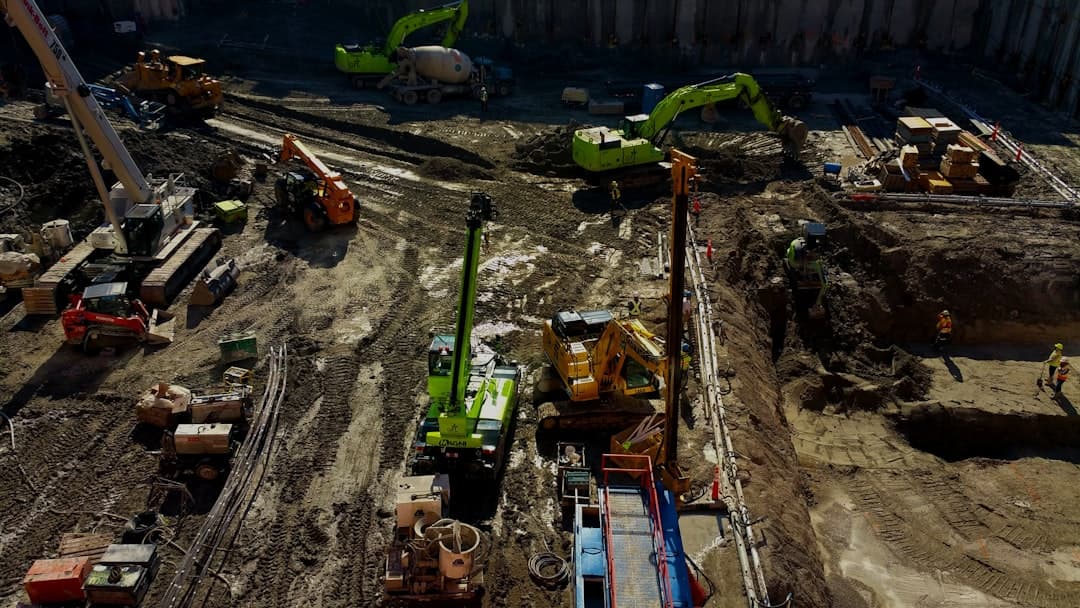
Introduction: Construction Site in the Digital Age
The building and public works (BTP) sector is one of the last major sectors to have resisted digital transformation. Yet, in 2026, regulatory pressure, traceability requirements and the multiplication of stakeholders on the same construction site make the digital construction schedule no longer optional, but essential. Combining a digital planning tool with a solution of electronic signature compliant with eIDAS makes it possible to streamline the entire lifecycle of a construction project: from the call for tenders to the reception of works, passing through construction amendments and reception reports. This article explores the technical, legal and operational foundations of such an approach.
---
Why Digitalize Your Construction Schedule in 2026?
France has more than 380,000 craft building companies according to the French Building Federation (FFB). Most still manage their schedules on spreadsheets, or even on paper. Yet the challenges have become considerably more complex:
The Limitations of Paper Schedules
A traditional construction schedule suffers from several structural flaws. First, real-time updating is impossible: when a delay occurs on the structural work lot, the entire forecast must be recalculated manually and redistributed to subcontractors. Second, traceability of decisions is lacking: who validated such an amendment? On what date? With which version of the document? In case of dispute, the lack of time-stamped and signed proof can be very costly. Third, multi-stakeholder coordination (owner, designer, control office, subcontractors) generates a multiplication of document versions without a clear reference version.
The Benefits of a Digital Construction Schedule
A digital construction schedule centralizes all project data in a collaborative environment. Modern solutions integrate functionalities such as:
- Interactive Gantt charts with milestones and task dependencies
- Automated alerts in case of deviation from the initial schedule
- Integrated document management (plans, CCTP, CCAP, PGC, PPSPS)
- Work tracking dashboard in real time
- Document validation workflows by electronic means
This last point is what makes the integration of an electronic signature solution essential. Without a dematerialized validation circuit, the digital schedule remains incomplete: data is collected but cannot be legally committed.
---
Electronic Signature at the Heart of Work Monitoring
Integrating electronic signature into the lifecycle of a construction site goes far beyond simple time savings. It is a profound transformation in the mode of contracting and evidence management.
Which Construction Documents Should Be Signed Electronically?
Almost all documents produced on a construction site can be signed electronically, as long as the appropriate signature level is chosen according to legal risk:
Simple Electronic Signature (SES) — suitable for routine coordination documents:
- Minutes of construction site meetings
- Quality control sheets
- Delivery notes and work orders
- Daily construction site reports
Advanced Electronic Signature (AES) — recommended for documents with moderate contractual value:
- Work orders
- Monthly work statements
- Reinstatement plans
- Progress minutes
Qualified Electronic Signature (QES) — mandatory or strongly recommended for:
- Work contracts and significant amendments
- Minutes of reception of works (with or without reservations)
- Subcontracting acts (law n°75-1334 of December 31, 1975)
- Documents subject to public procurement (decree n°2016-360)
To understand the differences between these levels, consult our complete guide to eIDAS 2.0 regulation.
Electronic Time-Stamping: Proof of Precedence on Site
On a construction site, the question of when is as important as that of who. The qualified electronic time-stamping makes it possible to affix irrefutable proof of precedence to each signed document. This functionality is particularly critical for:
- Demonstrating that a delay was notified before the contractual deadline
- Proving that a reservation was lifted within the prescribed period
- Establishing the chronology of a claim declared to damage insurance
In accordance with ETSI EN 319 421 standard, a qualified time-stamping token has a probative value recognized in French and European courts.
Integration into Digital Planning Tools
The main construction management platforms (BIM-type tools, specialized BTP ERP, collaborative platforms) offer APIs allowing integration of a qualified trust service provider (TSP). This integration makes it possible to automatically trigger a signature workflow at each key stage of the schedule:
- Validation of the initial schedule → signature of the designer and owner
- Issue of a work order → signature of the designer
- Submission of a monthly statement → signature of the company + visa of the designer
- Reception finding → contradictory signature with qualified time-stamping
This level of automation reduces validation times from several days to a few hours. Digitizing document workflows in the construction industry reduces administrative delays on a construction project.
---
Regulatory Compliance and Public Procurement: What You Need to Know
Public Works Procurement and Mandatory Dematerialization
Since October 1, 2018, the dematerialization of public procurement procedures is mandatory in France for contracts exceeding €25,000 ex VAT (decree n°2016-360 relating to public procurement, transposing directive 2014/24/EU). This implies that:
- Submission of offers is made on a dematerialized procurement platform (buyer profile)
- Contractual documents are signed electronically
- Exchanges between public buyer and contractor are conducted electronically
For public works contracts, qualified electronic signature is generally required for engagement acts and amendments. Failure to comply with this requirement may result in the offer or contract being deemed irregular.
The Subcontracting Law and Signature Chain
Law n°75-1334 of December 31, 1975 on subcontracting requires that any subcontracting contract be approved by the owner. In a dematerialized environment, this approval takes the form of an electronic signature by the owner on the special subcontracting act. The signature chain must be traceable and archived, which requires an electronic archiving solution with probative value.
GDPR and Construction Site Data
Data collected as part of a digital construction schedule (identities of signatories, biometric authentication data, geolocation of interventions) constitute personal data within the meaning of the General Data Protection Regulation (GDPR no. 2016/679). The data controller (generally the owner or designer) must:
- Inform the persons concerned (subcontractors, employees) of the processing of their data
- Define and respect proportionate retention periods
- Ensure that the electronic signature service provider offers sufficient guarantees (article 28 GDPR) via a DPA (Data Processing Agreement) signed
Our comparison of electronic signature solutions will help you identify GDPR-compliant service providers for your construction projects.
---
Operational Implementation: Deploying Electronic Signature on Your Construction Sites
Choosing the Right Signature Level Based on Document Type
The most common mistake made by BTP teams is to deploy a single signature level for all documents. This approach generates either over-cost (qualified signature for meeting minutes) or legal risk (simple signature for contractual amendments). A document classification matrix is essential during the deployment phase.
Training Field Teams
The adoption of a digital tool on a construction site largely depends on the ease of use for field workers. Site managers, foremen and subcontractors must be able to sign from a smartphone or tablet, without complex training. The best solutions on the market offer:
- A responsive mobile interface
- SMS authentication (OTP) for advanced signature
- A signing process in less than 3 clicks
- Automatic archiving in the project's document management system
Calculate Return on Investment
Before deploying a solution, it is relevant to assess the ROI. The parameters to include in the calculation include: the number of documents signed per project, the hourly cost of teams mobilized for paper validation circuits, payment delays generated by unsigned work statements, and litigation costs due to lack of evidence. Our electronic signature ROI calculator allows you to estimate these gains in a few minutes.
Archiving and Retention Period
In BTP, legal retention periods are particularly long. The ten-year warranty (article 1792 of the Civil Code) implies that documents relating to construction must be kept for at least 10 years after the reception of works. An electronic archiving system with probative value (AEVP), compliant with NF Z 42-013 standard, is therefore essential to guarantee the integrity and readability of signed documents over time.
Legal Framework Applicable to Digital Construction Schedule with Electronic Signature
Foundations of Electronic Evidence Law
The legal value of electronic signature in France rests on two complementary pillars. On the one hand, articles 1366 and 1367 of the Civil Code (resulting from ordinance n°2016-131 of February 10, 2016) recognize the electronic document as a mode of evidence equivalent to paper writing, provided that the person from whom it emanates is duly identified and that the document is drawn up and kept under conditions guaranteeing its integrity. On the other hand, the eIDAS Regulation n°910/2014 of the European Parliament and Council of July 23, 2014 establishes a harmonized legal framework for electronic trust services in the European Union, including the three levels of signature (simple, advanced, qualified) and their mutual recognition between member states.
Article 25 of the eIDAS regulation establishes the principle of non-repudiation: a qualified electronic signature has the same legal value as a handwritten signature. This principle is of paramount importance in the BTP sector, where contractual disputes are frequent and where the burden of proof is decisive.
Public Procurement and Dematerialization
Decree n°2016-360 of March 25, 2016 relating to public procurement, codified in the Public Procurement Code (articles R.2132-1 et seq.), imposes the dematerialization of procedures for contracts exceeding the threshold. For works procurement, public buyers must require an electronic signature compliant with the advanced level minimum, with a qualified certificate or a qualified signature creation process.
Subcontracting and Electronic Approval
The law n°75-1334 of December 31, 1975 on subcontracting requires the written approval of the owner for each subcontractor and each subcontracting contract. The dematerialization of such approval is possible provided that the requirements of advanced or qualified signature are met depending on the amount of the contract concerned.
Applicable Technical Standards
- ETSI EN 319 132-1: advanced electronic signature format XAdES, applicable to XML documents used in BIM exchanges
- ETSI EN 319 102-1: procedures for creating and validating electronic signatures
- ETSI EN 319 421: qualified time-stamping policy
- NF Z 42-013: electronic archiving with probative value (AEVP), essential for ten-year retention in BTP
Personal Data Protection
The GDPR Regulation n°2016/679, applicable since May 25, 2018, requires data controllers (owners, designers, general contractors) to comply with the principles of data minimization, limitation of purposes and security of processing. Any electronic signature solution deployed on a construction site must be documented in the register of processing, and the contract with the service provider must include a data processing agreement (DPA) compliant with article 28 of the GDPR.
The NIS2 directive (EU directive 2022/2555, transposed into French law by law n°2023-703 of August 1, 2023) furthermore imposes enhanced cybersecurity requirements on essential and important entities, which includes large BTP companies working on critical infrastructure.
Illustrative use scenarios: electronic signature in support of construction site scheduling
Scenario 1 — A Real Estate Developer Managing a Program of 80 Dwellings
These scenarios are illustrative: they describe typical situations and do not report any measured results from a client. A mid-sized property developer is building an 80-unit collective housing program. The project involves around twenty subcontracted lots, a technical inspection firm, a health and safety coordinator (SPS), and three engineering firms. Without digitalisation, validating monthly work statements can take several business days: postal or email dispatch, handwritten signature, return, verification, approval by the project supervisor, then a transfer order. This delay generates tension with subcontractors and exposes the developer to late payment penalties under the LME law (loi n°2008-776 du 4 août 2008).
With a digital site schedule incorporating advanced electronic signature workflows, the validation time for work statements can be shortened. Service orders can be signed by the project supervisor from their smartphone. Lot-by-lot acceptance reports are automatically timestamped and archived. Over the course of the project, the late payment penalties avoided represent a saving to be quantified on the actual scope of the program, before and after a pilot.
Scenario 2 — A General Works Contractor on Infrastructure Market
A general works contractor wins a public contract for the rehabilitation of a sewage network for €4.2 million ex VAT. The specifications require full dematerialization of exchanges and qualified electronic signature for contractual acts. The contractor deploys a digital construction schedule interfaced with a qualified eIDAS-compliant signature solution.
Each service order is initiated in the digital schedule and automatically triggers a signature workflow: the site manager on the company side signs first, then the document is sent to the contracting authority's representative. The contractual response times set out in the CCAP for service orders are monitored in real time with automatic alerts. The company thereby limits disputes related to informal service orders, compared with sites managed on paper. The extent of the gain is to be measured on the actual scope of the contract, before and after a pilot.
Scenario 3 — A Design Office Managing Multiple Simultaneous Operations
A design office of about fifteen employees follows in parallel eight construction operations for public and private owners. Document management is an ongoing challenge: several hundred documents per operation, multiple stakeholders, strict contractual deadlines. The office adopts a centralized digital construction planning tool with advanced electronic signature for site minutes and plan visas.
Expected benefits: less time spent chasing signatories, thanks to automatic workflow reminders; fewer lost documents, since all signed versions are archived with their modification history; and a better client relationship, with project owners accessing their operation's tracking dashboard in real time. With the same headcount, the firm could consider handling more operations. The extent of the gain is to be measured on the actual scope of the firm, before and after a pilot.
Frequently Asked Questions
Is electronic signature legally valid for a work reception report in France?
Yes, provided you choose the correct signature level. A work reception report is a legally sensitive document: it triggers the running of statutory warranty periods (completion, two-year, and ten-year warranties). An advanced or qualified electronic signature, compliant with the eIDAS regulation, confers upon it probative value recognized by French courts, as it guarantees the identification of the signatory and the integrity of the document.
What is the legal retention period for electronically signed site documents?
The duration varies depending on the nature of the document. Construction contracts and reception reports must be retained for a minimum of ten years, in connection with the ten-year warranty provided for in Article 1792 of the Civil Code. It is essential to preserve not only the signed document, but also the associated evidence: timestamp token, signatory's certificate, and audit log, in order to guarantee long-term verifiability.
Can a subcontractor without advanced IT equipment electronically sign site documents?
Yes. Most eIDAS-compliant electronic signature solutions allow signing from a simple web browser or smartphone, without dedicated software. The signatory receives a link by email or SMS, identifies themselves according to the required level, and then signs in just a few clicks. No smart card or specific reader is necessary for simple and advanced levels, making the system accessible to all site participants.
How can you prove that a work order was properly notified to a company before the contractual deadline?
Qualified electronic timestamping, compliant with ETSI EN 319 421 standard, constitutes the strongest proof of prior existence. It certifies the existence of the document at a precise moment, in a tamper-proof manner and recognized by European courts. Combined with an electronic acknowledgment of receipt, it makes it possible to demonstrate both the date of issuance and the date of actual delivery of the document to its recipient, which is decisive in the event of a dispute over deadlines.
Do public works contracts mandatorily require electronic signature by 2026?
For public contracts exceeding European thresholds, digitalization of procedures has been mandatory since Decree No. 2016-360. This includes electronic signature of bid documents and amendments. Below these thresholds, electronic signature remains strongly recommended but is not systematically required. Public buyers may, however, require it in their tender specifications, which is becoming increasingly common in recent specifications.
Conclusion
The digital construction schedule, coupled with electronic signature, represents in 2026 much more than just a productivity tool: it is a structural response to the traceability, regulatory compliance and competitiveness requirements of the BTP sector. From dematerialized public procurement to time-stamped reception minutes, every stage of a construction site's lifecycle can now be secured, accelerated and archived with probative value recognized by courts.
The key to success rests on three pillars: choosing the right signature level according to the legal risk of each document, integrating the solution into existing planning tools, and training field teams in the adoption of these new workflows.
Certyneo supports BTP and design office companies in this transformation. Discover our sector-tailored offers or calculate your ROI in a few minutes. Ready to digitalize your construction management? Request a free demo today.
Try Certyneo for free
Send your first signature envelope in under 5 minutes. 5 envelopes for 14 days, then 2/mo, no credit card required.
Go deeper on the topic
Reference articles on this topic.
Go deeper on the topic
Our comprehensive guides to master electronic signatures.
Continue reading about Enterprise
Deepen your knowledge with these related articles.
Public Works Tender: eIDAS-Compliant Electronic Signature in 2026
The digitalization of public works tenders is now a regulatory obligation. Discover how eIDAS-compliant electronic signature transforms the management of your calls for proposals.
Building Compliance Certificates: Sign Them Online in 2026
Compliance certificates in the construction sector concentrate major legal and operational challenges. Discover how certified electronic signature transforms their management.

Site Meeting Report: Sign Electronically on Construction Site
The site meeting report (PV) is a major legal document in construction. Electronic signature secures it, accelerates it, and eliminates postal delays.