
Sign a SOW Electronically: Full Legal Value Under eIDAS 2026
An unsigned Statement of Work exposes your business to costly disputes. Discover how to sign your SOWs with full legal value under eIDAS compliance.
Writer — Certyneo · About Certyneo
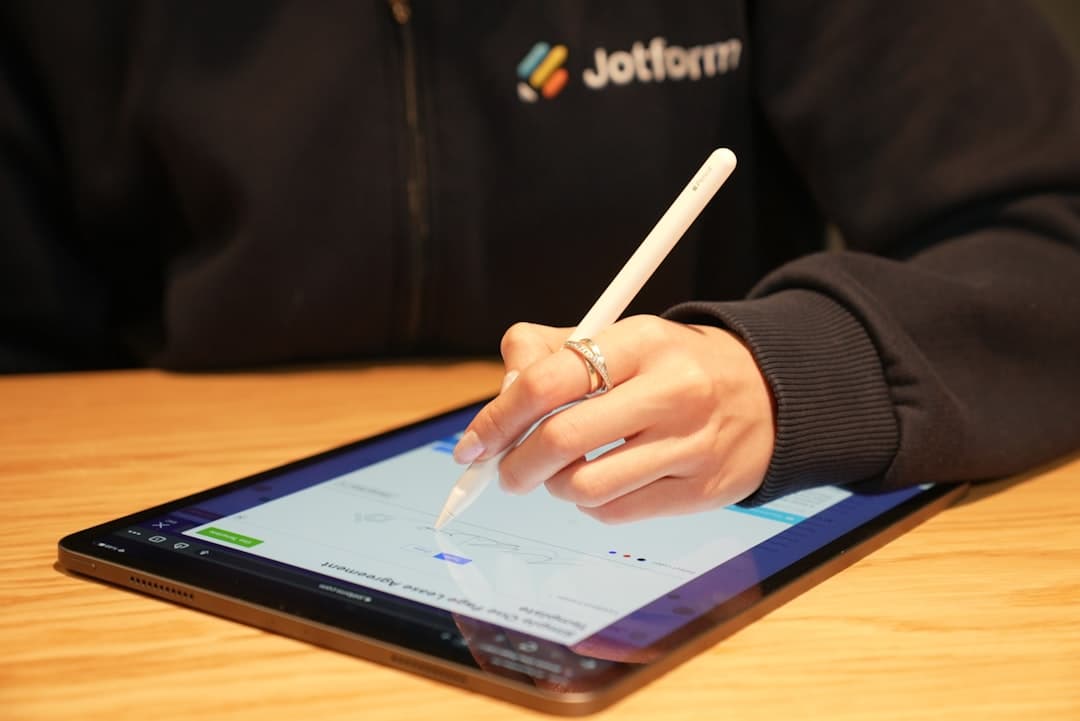
Why Electronic Signature is Essential for Your SOWs
A Statement of Work (SOW) is far more than a simple project roadmap: it is a contractual document that engages the responsibility of all parties, defines deliverables, timelines, and payment terms. Yet in B2B practice, many companies continue to collect signatures via email, through manually annotated PDFs or, worse, through simple email exchanges. This approach presents major legal gaps, particularly since the entry into force of the eIDAS regulation (No. 910/2014) and its revision under eIDAS 2.0. Understanding how to electronically sign your SOWs with legally recognized value is now an operational and legal necessity for any B2B organization.
The stakes are considerable: in the event of a dispute, a SOW signed with a qualified electronic signature (QES) serves as legal proof equivalent to a handwritten signature across all EU Member States. Conversely, a document signed through email exchange or via a non-certified system can be easily contested in court.
eIDAS Signature Levels Applicable to SOWs
Simple Electronic Signature (SES): Sufficient or Risky?
Simple electronic signature represents the lowest level of the eIDAS spectrum. It consists of data associated with a document without strong identity guarantees. For low-value SOWs or long-established business relationships with a solid contractual history, SES may seem practical. However, it offers little protection in case of dispute: the burden of proof rests entirely with the party invoking the document.
For the vast majority of B2B SOWs—which often involve tens or hundreds of thousands of euros—SES is insufficient. It does not offer the presumption of reliability required by Article 25 of the eIDAS regulation.
Advanced Electronic Signature (AES): The Recommended Standard for B2B SOWs
Advanced electronic signature (AES) is the intermediate level under eIDAS. It must be uniquely linked to the signatory, enable identification of the signatory, be created with creation data under the signatory's exclusive control, and allow detection of any subsequent modification to the signed document.
For typical B2B SOWs, AES constitutes the appropriate level. It relies on a robust identity infrastructure (two-factor authentication, professional email address verification, qualified time-stamping) and generates a complete audit trail. This audit trail, preserved in PDF format compliant with the ETSI EN 319 132 standard, is enforceable in court and constitutes proof of document integrity.
Certyneo implements AES in compliance with ETSI standards, enabling automatic generation of a PDF/A file enriched with a completion certificate including: verified identity of signatories, precise time-stamping of each action, IP addresses, authentication metadata and the cryptographic hash of the original document.
Qualified Electronic Signature (QES): For Critical Commitments
Qualified electronic signature reaches the highest level of assurance under eIDAS. It requires the use of a qualified signature creation device (QSCD) and a certificate issued by a qualified trust service provider (QTSP) registered on the European Trust List (eIDAS Trust List).
If your SOW concerns a public contract, a multi-year strategic partnership or a commitment exceeding several hundred thousand euros, QES offers maximum protection. In practice, for standard B2B electronic business signatures, advanced electronic signature in business covers the vast majority of needs.
Managing Multi-Signatory Workflows in SOW
Defining Signature Order and Roles
A SOW often involves multiple signatories on both client and service provider side: the project manager, purchasing officer, financial director, and sometimes the executive. Managing these multi-signatory flows is one of the most complex issues when signing SOWs electronically.
An appropriate B2B electronic signature platform allows you to configure sequential workflows (each signatory receives the document only after the previous one signs) or parallel ones (all signatories receive the document simultaneously). You can also define signature delegations, automatic reminders, and expiration deadlines.
Certyneo offers a visual workflow feature allowing you to drag and drop signatories in the desired order, assign signature fields to the PDF, and configure notifications at each step. Every action is recorded in the time-stamped and certified audit trail.
Interoperability and Cross-Border Signature
One of the major advantages of the eIDAS regulation is its pan-European scope. An advanced or qualified electronic signature issued in France is recognized in Germany, the Netherlands, Spain or Poland without further formality. This is particularly valuable for companies managing SOWs with partners or subsidiaries internationally.
The comparison of electronic signature solutions available on Certyneo details the differences in geographic coverage and eIDAS levels according to market providers.
Integration with Your Existing Document Stack
Electronic signature of SOWs should not be an isolated silo. 2026 best practices recommend native integration with your CRM (Salesforce, HubSpot), your ERP (SAP, Sage) or your project management tool. Modern REST APIs allow automatic triggering of a signature workflow as soon as a SOW is finalized in the source tool, without manual re-entry.
Certyneo integrates via API and webhooks with these environments, and allows you to use the AI-powered contract generator to produce pre-structured SOWs ready for signature in minutes.
The PDF Audit Trail: The Backbone of Your Legal Proof
What is a Qualified Audit Trail?
An audit trail—or audit log—is the chronological and tamper-proof journal of all actions performed on a document from its creation through to final signature. For it to be legally enforceable under eIDAS, it must integrate several elements: qualified time-stamping (compliant with ETSI EN 319 421 standard), verified identifiers of signatories, SHA-256 or higher hash of the signed document, and traceability of all accesses.
A non-qualified audit trail, for example a simple server log without certified time-stamping, has limited probative value. French courts, in their application of Article 1366 of the Civil Code, specifically examine the reliability of the identification process and the guarantee of document integrity.
Retention and Archiving of Signed SOWs
The retention of signed SOWs raises a question often overlooked: the legal duration and acceptable formats. In commercial matters, Article L.110-4 of the French Commercial Code provides a five-year limitation period for obligations arising between merchants. It is therefore advisable to retain electronically signed SOWs and their audit trails for at least ten years, taking into account the possibility of late litigation.
PDF/A-3 format (ISO 19005-3 standard) is the recommended standard for long-term archiving of signed documents, as it guarantees the integrity of embedded metadata (certificates, time-stamps) throughout the retention period. Certyneo automatically generates PDF/A-compliant exports to this standard for each signed SOW.
What to Do in Case of Dispute?
If a signatory later disputes having signed a SOW, the qualified audit trail constitutes your first line of defense. You must be able to demonstrate: (1) that the signatory's identity was verified at the time of signature, (2) that the document was not modified after signature, and (3) that the signature was affixed freely and voluntarily.
eIDAS-compliant electronic signature solutions integrate these mechanisms by design. However, it is advisable to also retain notification and read confirmation emails, which usefully supplement the evidence file. For more details on probative value, Certyneo's complete electronic signature guide details recent case law on the subject.
Legal Framework Applicable to Electronic Signature of SOWs
eIDAS Regulation No. 910/2014 and eIDAS 2.0
The European eIDAS regulation (Electronic Identification, Authentication and Trust Services) No. 910/2014 constitutes the regulatory foundation for electronic signature in the European Union. Directly applicable in all Member States without national implementation, it defines three signature levels (simple, advanced, qualified) and establishes the principle of non-discrimination: no legal effect can be refused to an electronic signature solely because of its electronic form (Article 25(1)).
The eIDAS 2.0 revision, progressively entering into force since 2024, strengthens requirements regarding digital identity wallets (EUDIW) and extends recognition of sovereign digital identities. For B2B SOWs signed in 2026, companies must ensure their signature service provider is registered on the official ENISA Trust List.
French Civil Code: Articles 1366 and 1367
Under French law, Article 1366 of the Civil Code provides that "electronic writing has the same evidentiary force as writing on paper, provided that the person from whom it emanates can be duly identified and that it is established and preserved under conditions such as to guarantee its integrity." Article 1367 clarifies that "the signature necessary for the completion of a legal act identifies its author. It manifests their consent to the obligations arising from that act."
These two articles form the foundation of the probative force of electronically signed SOWs. They imply that the signature system used must guarantee both identification of the signatory and document integrity—two conditions met by eIDAS-compliant solutions at advanced or qualified level.
GDPR No. 2016/679: Protection of Signatories' Data
The collection and processing of signatory identification data in the context of electronic signature constitute personal data processing subject to GDPR. Companies must inform signatories of data use (Article 13), appoint a data controller, and ensure data is retained in compliance with legal limitation periods. Service providers hosting data outside the EU must justify appropriate safeguards (standard contractual clauses, adequacy decision).
Applicable ETSI Standards
ETSI standards EN 319 132 (XAdES), EN 319 122 (CAdES) and EN 319 142 (PAdES) define the technical formats for advanced and qualified electronic signature for XML, CMS and PDF documents respectively. The PAdES-LT or PAdES-LTA format is recommended for PDF SOWs as it embeds long-term validation proofs directly into the file, guaranteeing document verifiability even after the signatory's certificate expires.
Use Cases: Signing SOWs Electronically in B2B
Scenario 1 — IT Services Company Managing Hundreds of SOWs Annually
A digital services company (IT services firm) of approximately 250 employees manages an average of 350 SOWs per year with major account clients. Before implementing an eIDAS-compliant electronic signature solution, the signature process involved printing the SOW, postal mailing or physical business travel for signature, then digitizing the signed document. The average delay between SOW sending and signature receipt reached 8 to 12 working days, delaying project start and invoicing accordingly.
After deploying an advanced electronic signature platform with multi-signatory workflow, the signature delay fell to less than 24 hours in 78% of cases. Automatic generation of the PDF/A audit trail in ETSI PAdES-LTA format enabled resolution of two minor contract disputes by providing irrefutable proof of signature date and signatory identity. The estimated operational gain represents approximately 1,200 hours of administrative work per year.
Scenario 2 — Industrial Group with European Subsidiaries
A mid-sized industrial group operating in France, Germany and the Netherlands generates SOWs with local subcontractors in each country. The main challenge was managing cross-border signatures: German and Dutch subcontractors demanded signature formats recognized in their respective jurisdictions.
Thanks to the eIDAS regulation, which guarantees mutual recognition of advanced electronic signatures between Member States, the group was able to standardize its signature process on a single platform. The 4 to 6 signatories involved in each SOW (technical management, purchasing management, financial management on both client and service provider sides) benefit from a pre-configured sequential workflow, with automatic reminders at D+2 and D+5. The rate of SOWs signed within 72 hours increased from 34% to 89%, significantly reducing project start delays.
Scenario 3 — Management Consulting Firm Managing Sensitive Engagements
A management strategy consulting firm of about twenty senior consultants signs SOWs valued between €80,000 and €500,000 each. For these amounts, management chose to opt for qualified electronic signature (QES) rather than advanced, to benefit from the maximum legal presumption offered by Article 25(2) of the eIDAS regulation.
The firm also configured systematic archiving: each signed SOW is automatically archived in PDF/A-3 format in a certified electronic safe (NF 461 certified, AFNOR standard for electronic archiving with probative value), with a retention period of 10 years. This approach enabled resolution of a client dispute over the scope of deliverables defined in a SOW signed 3 years previously, by producing a document whose integrity was technically irrefutable.
Conclusion
Signing a Statement of Work electronically with full legal value under eIDAS is no longer an option reserved for large enterprises: it is a necessity for any B2B organization concerned with securing its contractual commitments, accelerating sales cycles and protecting itself against disputes. The combination of an advanced or qualified electronic signature, a structured multi-signatory workflow and a PDF/A audit trail compliant with ETSI standards constitutes the de facto standard in 2026.
Certyneo offers you a complete B2B electronic signature solution, eIDAS-compliant, with multi-signatory management, automatic generation of certified audit trails and API integration with your existing stack. Whether you sign 50 or 5,000 SOWs per year, our platform adapts to your needs.
Ready to secure your SOWs? Start your free trial on Certyneo or contact our team for a personalized demonstration of our B2B electronic signature workflows.
Try Certyneo for free
Send your first signature envelope in under 5 minutes. 5 envelopes/mo for 14 days, then 2/mo, no credit card required.
Go deeper on the topic
Reference articles on this topic.
Go deeper on the topic
Our comprehensive guides to master electronic signatures.
Certyneo Community
A question about electronic signatures?
Join the Certyneo community: ask your questions, share your answers and connect with thousands of users and our team.
Continue reading about Enterprise
Deepen your knowledge with these related articles.

Delegation of Powers: Electronic Signature in Business
Delegation of power is an essential legal tool for any business. Electronic signature and eIDAS compliance: master every step.

Wire Transfer Mandates: Secure Them with Electronic Signature
Wire transfer fraud costs billions to European companies every year. Discover how electronic signature and strong authentication transform your wire transfer mandates into tamper-proof documents.
AML Compliance and Electronic Signature in Finance: 2026 Guide
Anti-money laundering regulations impose strict requirements on financial actors, and electronic signature plays a central role in identity verification and traceability. Discover how to align AML compliance with electronic signature in 2026.