
Power of Attorney for Parcel Collection at La Poste: 2026 Model
Unable to collect your parcel or registered letter in person? Discover how to draft a valid power of attorney for La Poste or a parcel pickup point in 2026.
Writer — Certyneo · About Certyneo
Introduction
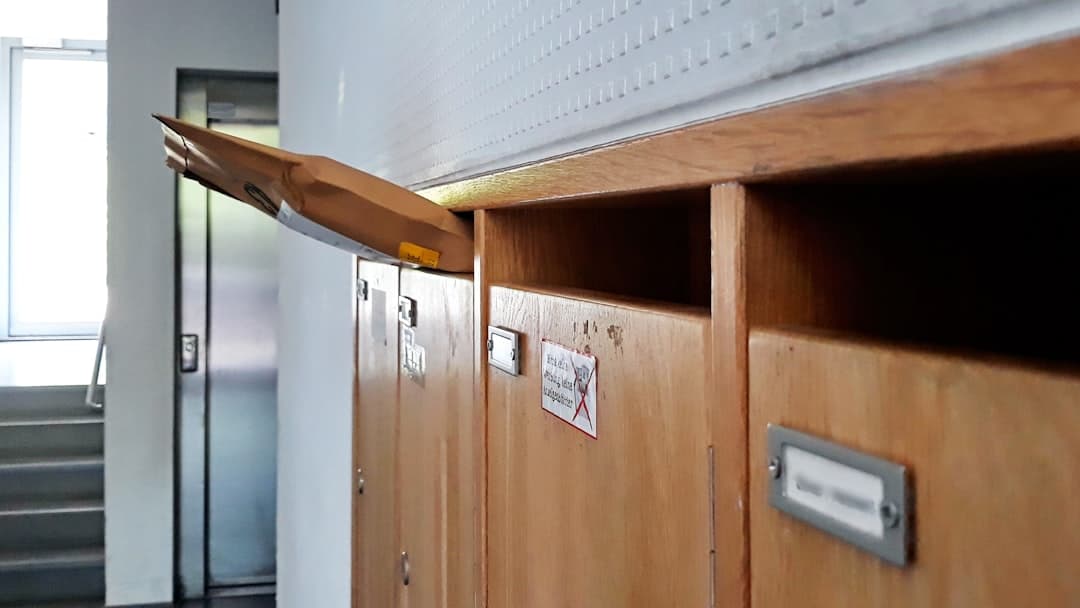
Every year, millions of people in France find themselves unable to collect a parcel or registered letter themselves from La Poste or an authorised pickup point. Professional travel, hospitalisation, reduced mobility: there are many reasons. The legal and practical solution is called a power of attorney for parcel collection. But how do you draft it correctly so it is accepted without difficulty? What mentions are mandatory? Is a plain paper model sufficient in 2026? This article guides you step by step, from legal mentions to downloadable models, including the specifics of pickup points and registered letters.
---
What is a power of attorney for parcel collection?
Legal definition and scope
A power of attorney (or mandate) is an act by which one person, called the principal, authorises another person, called the agent, to act in their name to accomplish a specific act. In postal matters, this means authorising a third party to physically receive a shipment (parcel, registered letter, delivery notice) on your behalf.
Legally, this document is based on articles 1984 to 2010 of the French Civil Code relating to mandates. A postal power of attorney is a special mandate: it is limited to a specific act (the collection of a specific shipment or all mail during a given period). It does not necessarily require the intervention of a notary or bailiff for everyday acts — a simple written document on plain paper is sufficient, provided that the essential mentions are present.
For a deeper understanding of power of attorney in all its forms, consult the comprehensive guide to power of attorney and mandate from Certyneo.
Parcel collection vs registered letter collection: what are the differences?
La Poste distinguishes two main categories of shipments that may require a power of attorney:
- Standard parcel (Colissimo, international parcel): in case of absence at delivery, a delivery notice is left and the parcel is held at the post office or pickup point. The power of attorney allows a third party to collect it.
- Registered letter (with or without acknowledgement of receipt): it requires signature from the recipient or their agent. The power of attorney must be particularly rigorous here, as the registered letter often has probative value (formal notice, legal act, official document).
In both cases, the agent must present the original power of attorney and a valid form of identification (national identity card, passport). Some post offices also request a copy of the principal's form of identification.
---
What must a plain paper power of attorney contain for La Poste in 2026?
Mandatory mentions
La Poste does not impose an official proprietary form for occasional powers of attorney. A document drafted on plain paper is accepted, provided it includes the following elements:
- Complete identity of the principal: name, surname, full address, identification number and its validity date.
- Complete identity of the agent: same information.
- Specific purpose of the power of attorney: description of the shipment to be collected (tracking number if available, nature of shipment: parcel, registered letter, delivery notice no.…), or general mandate limited to a defined period.
- Post office or pickup point concerned: exact address.
- Period of validity: explicit expiry date or mention "valid until collection of the aforementioned shipment".
- Handwritten signature of the principal: essential for authenticating the document.
- Date and place of drafting.
Plain paper power of attorney model (2026)
Here is a power of attorney model that you can copy or print:
``` I, the undersigned, [NAME Surname], born on [date of birth], residing at [full address], holder of identification document no. [number], valid until [date],
hereby give power of attorney to:
[NAME Surname of agent], born on [date of birth], residing at [full address], holder of identification document no. [number], valid until [date],
to collect on my behalf the [parcel / registered letter] referenced under tracking number [XXXXXXXXXXXX] at the post office / pickup point located [address of office], and this until [deadline for holding in abeyance].
Done at [city], on [date]. Signature of principal: _______________ ```
Can you draft a digital power of attorney for La Poste?
This is a question many people ask in 2026. Technically, European texts (eIDAS Regulation No. 910/2014) recognise the legal value of electronically signed documents. However, La Poste France currently requires the physical presentation of an original signed document in the vast majority of its offices for parcel and registered letter collection. A document printed from an email or unsigned PDF will generally be refused at the counter.
In line with modernising document processes, solutions such as those described in our electronic signature guide nevertheless allow you to prepare, store and track powers of attorney internally in your business — which is particularly useful for postal services in large organisations.
---
Collection at pickup point: what are the specific features?
How authorised La Poste pickup points work
Since the deployment of the authorised pickup point network (neighbourhood shops, tobacconists-newsagents, small supermarkets), La Poste has over 17,000 pickup points in metropolitan France according to data published by the La Poste group in 2025. These pickup points handle approximately 30% of parcels held in abeyance.
Partner shopkeepers apply the same collection rules as post offices: mandatory presentation of the delivery notice (or tracking number) and identification of the recipient or agent together with the power of attorney.
Power of attorney for pickup point: additional precautions
Unlike a post office managed by trained La Poste staff, shopkeepers at pickup points may have varying interpretations of the documents they accept. To maximise the chances of acceptance:
- Explicitly mention the name and address of the pickup point in the power of attorney.
- Attach a copy (front and back) of your identification if possible.
- If the parcel contains a valuable item, specify it in the power of attorney to avoid any dispute.
- Check in advance the holding period: at pickup points, it is often 10 working days before return to sender.
---
Permanent power of attorney vs occasional power of attorney: which one to choose?
The occasional power of attorney (or special)
This is the most common and most recommended form. It concerns a specific shipment (identified by its tracking number), a specific office, and expires once the parcel is collected or beyond a cutoff date. It limits the risk of abuse and is more easily accepted by staff.
Temporary power of attorney over a period
Certain situations — prolonged hospitalisation, temporary expatriation — require a power of attorney covering all mail for several weeks or months. La Poste offers in this case the official service "Procuration Courrier" (formerly Postal Mandate), subscribed directly at a post office or online at laposte.fr. This paid service (~€18 for 6 months in 2026) offers a secure and enforceable framework.
For businesses wishing to systematise the management of their internal mandates, the AI contract generator from Certyneo allows you to produce and sign standardised powers of attorney in a few minutes, with full traceability.
Cases where plain paper power of attorney is not sufficient
Certain shipments cannot be collected on the basis of plain paper power of attorney alone:
- Items under judicial seal: require authorisation from the court registry.
- Customs shipments with significant declared value: separate customs procedure.
- International Colissimo with signature required and high insured value: La Poste may require a notarised power of attorney.
- Official registered items from tax or judicial authorities: check with the sender whether a third-party agent is accepted.
Legal framework applicable to postal power of attorney
Civil Code: foundations of mandate
Postal power of attorney is based on the legal regime of mandate as defined in articles 1984 to 2010 of the French Civil Code. Article 1984 provides that "a mandate or power of attorney is an act by which one person gives to another the power to do something for the principal and in their name". The special mandate (limited to a specific act) is expressly provided for in article 1987. The principal is bound by acts accomplished by the agent within the limits of the mandate (art. 1998).
The power of attorney is not subject to any particular formality for everyday acts: it may be established by private deed, that is, a simple written document signed by the principal, without the intervention of a public officer, in accordance with article 1372 of the Civil Code.
Probative value and authenticity
Article 1363 of the Civil Code recalls that a private deed has the same probative force as a public deed between the parties. In case of dispute over the authenticity of the signature, it is for the person contesting to provide proof (art. 1373).
Regarding electronic signature, articles 1366 and 1367 of the Civil Code establish the principle of its equivalence to handwritten signature, provided that the signatory's identity is properly assured and the document is guaranteed in its integrity. These provisions transpose the eIDAS Regulation No. 910/2014 of the European Parliament and of the Council of 23 July 2014, which establishes three levels of electronic signature (simple, advanced, qualified) and their mutual recognition within the European Union.
eIDAS Regulation and practical limitations
Although eIDAS regulation fully recognises the legal value of qualified electronic signature (QES), La Poste as a postal operator applies its own operational control procedures at the counter. In the absence of a device for verifying an electronic signature at a post office, the physical presentation of a paper power of attorney signed by hand remains the operational norm for collection at counters and pickup points in 2026.
Protection of personal data (GDPR)
A power of attorney contains sensitive personal data (identification number, address, date of birth). GDPR Regulation No. 2016/679 requires that this data be processed with appropriate security guarantees. If you use a digital service to generate or store your powers of attorney, ensure that the service provider complies with GDPR and appoints a DPO where appropriate. Certyneo, as a B2B electronic signature platform, applies GDPR standards and CNIL recommendations on the secure retention of electronic documents.
Legal risks in case of irregular power of attorney
An incomplete or fraudulent power of attorney exposes you to serious risks. On the principal's side: if the power of attorney is too vague, the agent could claim powers beyond those intended. On the agent's side: acting without a valid power of attorney to collect mail belonging to another could constitute a violation of the secrecy of correspondence (article L. 226-15 of the Criminal Code), punishable by one year's imprisonment and a €45,000 fine.
Concrete usage scenarios
Scenario 1: An employee on extended professional travel
An independent consultant who frequently works on missions abroad regularly receives registered letters from their accounting firm, URSSAF and clients. Absent for several weeks each month, they authorise their spouse via a plain paper power of attorney drafted for each identified shipment. Since adopting this systematic practice — by keeping a pre-filled power of attorney template, to be completed in less than 5 minutes — he estimates he has avoided about ten returns of shipments held in abeyance per year, each generating on average 3 to 5 days of additional delay. The administrative time saving is estimated at 4 to 6 hours per year, not counting resubmission fees.
Scenario 2: A small business with shared mail service
A small team of 8 employees, specialising in HR consultancy, frequently receives packages of office equipment and registered letters from social organisations. The administrative manager manages all incoming mail, including shipments addressed to absent associates. To secure these collections, the company has established permanent nominative powers of attorney (lasting 12 months, renewed each year) in the name of the administrative manager, signed by each associate. This arrangement, combined with the electronic signature for the HR teams it uses for its contracts, allows it to centralise and track all internal mandates in a secure digital folder. It thus reduces receipt disputes to virtually zero and saves approximately 2 hours of management per month.
Scenario 3: An elderly person with reduced mobility
A person over 75 years old, living alone and with reduced mobility, regularly orders medicines and medical equipment by mail. Unable to travel to the post office or pickup point, they drafted, with the help of a social worker, a permanent power of attorney of 6 months in favour of a close relative, with a copy of the identification of both parties. This document, kept in duplicate (one with the agent, one with the principal), is accepted without difficulty in the post offices of their municipality. Home help associations report that this type of well-drafted power of attorney reduces by 80% cases of uncollected parcels returned to the sender for their beneficiaries.
Conclusion
Drafting a power of attorney for the collection of a parcel or registered letter from La Poste or a pickup point does not require any particular legal skills, but does require rigour. In 2026, a plain paper document, dated, signed by hand and mentioning the complete identity of the principal, the agent and the specific purpose of the power of attorney remains the operational norm accepted by La Poste and its partner pickup points. For occasional needs, use the model provided in this article. For recurring needs, La Poste's official mail power of attorney service or a secure document management solution is required.
Are you a business or professional who wishes to systematise the management of your internal powers of attorney and mandates with complete legal traceability? Discover the Certyneo solution and create, sign and archive your powers of attorney in a few minutes, in compliance with the eIDAS regulation.
Try Certyneo for free
Send your first signature envelope in less than 5 minutes. 5 free envelopes per month, no credit card required.
Dive deeper
Reference articles on this topic.
Related Certyneo tools
Move from reading to action with the tools built into the platform.
Continue reading about Regulation
Deepen your knowledge with these articles related to the topic.

Electronic Power of Attorney: Legality, Proxy and Representation in 2026
Electronic power of attorney enables you to grant a legally enforceable mandate of representation without paper. Discover the rules, risks and best practices for 2026.

Electronic Signature and HIPAA Compliance in 2026
Electronic signature is revolutionising medical document workflows, but imposes strict requirements for patient data protection. Discover how to reconcile efficiency and HIPAA compliance.
Electronic Signature as Legal Evidence in Litigation
Does a contract signed electronically really hold up in a French court? Complete breakdown of the evidentiary value of electronic signature in litigation situations.