
Compliant invoicing software 2026: Essential criteria for SMEs
The electronic invoicing reform requires French SMEs to equip themselves with compliant software before the 2026-2027 deadlines. Here's how to choose the right solution.
Writer — Certyneo · About Certyneo
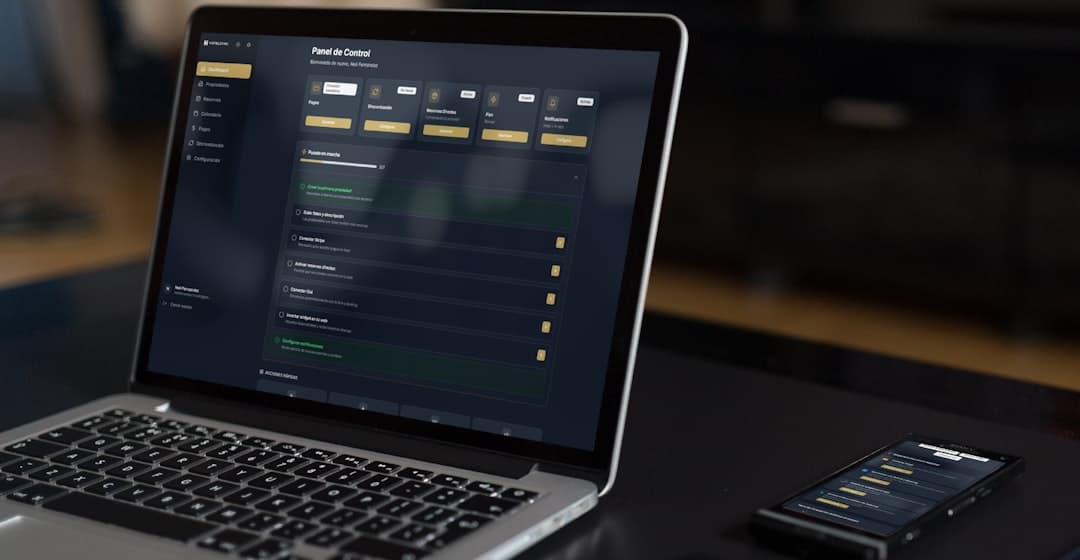
The French electronic invoicing reform is entering its operational phase in 2026. Since 1 September 2026, large enterprises and medium-sized enterprises (ETI) have been obliged to issue their invoices in structured electronic format via an approved platform. SMEs and micro-enterprises, for their part, will need to be capable of receiving these invoices from that date, and of issuing them as of 1 September 2027. This deadline creates immediate pressure on tens of thousands of small organisations that must now choose compliant invoicing software for the 2026 electronic invoice reform. What criteria distinguish a genuinely compliant solution from a simple quotation-invoicing tool? This guide provides you with concrete and factual answers.
Understanding the reform before choosing software
The regulatory foundation: Finance Act, DGFIP and Chorus Pro portal
The reform is based on Article 26 of the supplementary Finance Act for 2022 (codified in Article 289 bis of the General Tax Code), clarified by Ordinance No. 2021-1190 of 15 September 2021 and its successive implementing decrees. The Directorate General of Public Finances (DGFIP) published its external specifications in July 2023, then updated them in 2024 and 2025, defining precisely the accepted formats, mandatory data and transmission flows.
Three structured formats are recognised: Factur-X (Franco-German hybrid PDF/XML format), UBL 2.1 and CII (Cross-Industry Invoice). The Factur-X format is particularly well suited to SMEs because it combines human readability and machine exploitability in a single enriched PDF file.
The public invoicing portal (PPF), formerly Chorus Pro, centralises the directory of recipients and the orchestration of flows, but the actual transmission of invoices must necessarily pass through an Approved Dematerialisation Platform (PDP) registered by the DGFIP, or directly via the PPF for the simplest cases.
The central role of PDPs in the 2026 ecosystem
A PDP is a private company registered by the DGFIP after a compliance audit. It ensures the secure transmission of invoices between issuer and recipient, the extraction and transmission of tax data to the PPF (e-reporting flow), and the conversion between formats if necessary. Your invoicing software must therefore be natively connected to at least one approved PDP, or itself embed PDP status. To understand the subtleties of this model, consult our guide on approved PDP platforms.
Software that is not connected to a PDP in 2026, even if it generates neat PDFs, cannot be considered compliant. This is the first disqualifying criterion.
The 6 technical compliance criteria to verify without fail
1. Native generation of certified structured formats
The software must produce XML files or enriched PDF/A-3 files (Factur-X) that scrupulously comply with DGFIP specifications. This requires the presence of all mandatory fields: SIREN/SIRET of issuer and recipient, intra-Community VAT identification number, order identifier, sector-specific legal notices, transaction nature code, etc. A serious solution offers an integrated validator that detects errors before issuance. You can now test the compliance of your files with the free Factur-X validator.
2. Operational connection to one or more PDPs
Integration must be documented, tested in the DGFIP testing environment, and actively maintained. Verify that the partner PDP is indeed listed in the official list published by DGFIP (available on impots.gouv.fr). Require a demonstration of the end-to-end flow: issuance → PDP transmission → receipt statuses → archiving.
3. Management of the invoice status lifecycle
The reform requires the management of a minimum of five statuses: "Submitted", "Rejected", "Refused", "Paid" and "Under dispute". Compliant software must expose these statuses in real time, maintain their history, and allow your accounting team to trigger appropriate corrective actions. This is often overlooked when comparing solutions.
4. Automated e-reporting for transactions outside the domestic B2B scope
E-reporting concerns transactions with private customers (B2C) and international operations that do not use the domestic electronic invoicing circuit. Your software must aggregate this data and transmit it periodically to the PPF according to the defined schedule (monthly or quarterly depending on the VAT regime). An SME that failed to meet this obligation would face fines of €250 per invoice not transmitted, capped at €15,000 per year.
5. Legal archiving with evidential value
Article L. 102 B of the Tax Procedure Code requires that electronic invoices be retained for 6 years (tax reassessment period) or even 10 years for commercial purposes. Archiving must guarantee the integrity, legibility and authenticity of documents throughout this entire period. Opt for solutions that integrate a NF Z42-013 certified digital vault or use a third-party electronic archiving service provider (PAE).
6. Interoperability and open API
Your invoicing software does not exist in isolation. It must integrate with your ERP, your cash management tool, or even your electronic signature solution in the enterprise to automate the validation of purchase orders and quotations. A documented REST API and a catalogue of native connectors (Sage, Cegid, QuickBooks, Sellsy, etc.) are indicators of technical maturity.
Functional and commercial criteria for SMEs
Ease of use and support for migration
Technical compliance is not enough if your teams give up using the tool. Assess the number of steps required to issue your first compliant invoice, the quality of the documentation, the availability of French-language support, and the existence of an onboarding programme dedicated to SMEs. Consult the detailed reform timeline to plan your migration smoothly.
Pricing model suited to SME volumes
SaaS invoicing software typically adopts one of these models: fixed monthly subscription (independent of volume), subscription per invoice bracket, or transaction-based billing. For an SME issuing between 50 and 500 invoices per month, a fixed subscription with included volume is often more predictable. Be wary of hidden costs: PDP connection fees, extra charges for e-reporting, invoicing for archiving per GB.
Security, GDPR and data hosting
Your invoices contain personal data (customer details, amounts, IBANs sometimes). The software must comply with GDPR No. 2016/679: data hosting in the European Union, accessible processing register, DPA (Data Processing Agreement) available, deletion mechanisms on request. ISO/IEC 27001 certification and hosting in a HDS certified data centre (if health data is processed) or SecNumCloud (recommended for administrations) are marks of credibility.
Building your specifications: The 4-step method
Step 1: Map your current invoicing flows
Before any consultation with service providers, precisely identify: the monthly volume of invoices issued and received, the share of B2B, B2C and international transactions, the formats currently used, connected tools (CRM, ERP, bank). Use our electronic invoicing diagnostic tool to quickly identify your exposure level to the reform.
Step 2: Define your technical and organisational constraints
Identify essential integrations, IT department constraints (on-premise hosting impossible for most SaaS, but worth checking), user authorisation levels by profile (sales, accounting, management), and customisation needs for invoice templates.
Step 3: Request targeted demonstrations focused on compliance cases
During each demo, impose a standardised test scenario: issuance of a Factur-X invoice to a large client, credit note handling, processing of a PDP rejection, consultation of lifecycle statuses, export of e-reporting data. These scenario responses reveal the maturity of a solution far better than marketing slides.
Step 4: Check sector references and publisher roadmap
The French reform is likely to evolve (probable extension to VAT-liable associations, European harmonisation via the ViDA directive expected for 2030). Your publisher must demonstrate the ability to follow these regulatory changes without billing you for each compliance update. Explicitly ask for the compliance roadmap for 2026-2028 and the associated contractual commitments. The complete guide electronic invoicing 2026-2027 will help you anticipate these changes.
Legal framework applicable to B2B electronic invoicing in France
Founding texts of the reform
Mandatory electronic invoicing between French VAT-liable entities is based on several coordinated texts:
- Article 289 bis of the General Tax Code (CGI), arising from Article 26 of Act No. 2022-1157 of 16 August 2022 of supplementary finance, which establishes the obligation and empowers the government to clarify its terms.
- Ordinance No. 2021-1190 of 15 September 2021 on the generalisation of electronic invoicing in transactions between VAT-liable entities.
- Decree No. 2022-1299 of 7 October 2022 setting the entry-into-force dates (revised since) and the conditions for PDP registration.
- Order of 7 October 2022 specifying the minimum data for electronic invoices and the accepted formats.
- DGFIP external specifications, versions 2.3 and later, published on impots.gouv.fr, which constitute the binding technical reference.
Applicable penalties
Article 1737 of the CGI provides for a fine of €15 per invoice not issued in electronic format (capped at €15,000 per year). For failure to transmit e-reporting, the fine is €250 per missing transmission (same cap). These penalties apply without prior notice as soon as the breach is detected during a tax audit.
Evidential value and right to proof
The legal validity of an electronic invoice is based on Articles 1366 and 1367 of the Civil Code, which recognise electronic writing as equivalent to paper writing provided that the author can be properly identified and the integrity of the document is guaranteed. A Factur-X format electronic invoice, transmitted via a PDP and archived in accordance with standard NF Z42-013, meets these requirements.
GDPR and protection of invoicing data
Regulation (EU) 2016/679 (GDPR) applies fully to the processing of personal data contained in invoices (contact details, banking data). The invoicing software publisher acts as a processor within the meaning of Article 28 of the GDPR: a data processing agreement (DPA) must be concluded with them, defining the purposes, security measures and retention periods.
ViDA Directive and European harmonisation
The 2024/C 147/01 directive known as "ViDA" (VAT in the Digital Age), adopted by the EU Council in November 2024, provides for the generalisation of electronic invoicing and real-time transaction reporting throughout the European Union by 2030. French companies investing today in software compliant with the national reform should ensure that their publisher anticipates this European harmonisation, in particular the adoption of the EN 16931 standard (European semantic standard for electronic invoicing) as the common reference format.
Use cases: How French SMEs are achieving compliance
Scenario 1: An industrial SME subcontracting to large contracting authorities
An industrial SME with around fifty employees, specialising in precision mechanics, realises 80 % of its turnover with five major French industrial groups. Before the reform, it issued approximately 300 invoices per month in free-format PDF, sent by e-mail. From September 2026, its large corporate clients required the receipt of invoices in Factur-X format via their respective PDPs.
By deploying compliant invoicing software connected to three different PDPs (those of its main clients), the SME was able to automate the conversion of its validated quotations into structured invoices, integrate lifecycle status management into its existing ERP and reduce the average invoice processing time from 8 days to 2 days. Disputes over missing or non-compliant invoices, which represented approximately 3 % of transactions, virtually disappeared. Estimated cash flow gain: reduction in DSO (Days Sales Outstanding) of 12 days on average, according to sector benchmarks published by the Banque de France.
Scenario 2: An accounting expertise firm supporting its micro-enterprise clients
An accounting expertise firm managing the files of 180 micro-enterprise clients (craftspeople, retailers, independent professionals) anticipated the reform by integrating an electronic invoicing compliance module directly into its accounting management platform. Each micro-enterprise client benefits from simplified access allowing them to issue compliant invoices without prior technical training.
The firm thus transformed a regulatory constraint into a differentiating service: micro-enterprise clients delegate the complete management of the invoicing cycle (issuance, PDP transmission, status monitoring, legal archiving, e-reporting) to the firm. This positioning allowed the firm to retain its existing clientele and gain 25 new clients in 12 months, attracted by this turnkey offering. The time devoted by staff to invoice reminders decreased by 40 % thanks to status automation.
Scenario 3: A national IT services company
An IT Services Company (ESN) of around 200 employees, generating mixed turnover (domestic B2B, B2B export and some B2C services via subscriptions), had to simultaneously manage three distinct flows: electronic invoicing for its French VAT-liable clients, e-reporting for its international clients and private subscribers, and compliant receipt of invoices from its 80 suppliers.
By choosing a SaaS software natively integrating the management of all three flows and a registered PDP, the ESN was able to consolidate four separate tools (invoicing software, reminder tool, external archiving, manual VAT reporting) into a single platform. The ROI measured at 12 months was 3.2 according to their own internal evaluation: reduction in licence costs (–35 %), elimination of VAT reporting errors (–100 % of fines), and productivity gains equivalent to 0.8 FTE in the accounting department.
Conclusion
Choosing compliant invoicing software in 2026 is not just about ticking a regulatory box: it is a structural investment in your SME's competitiveness and cash flow. The technical criteria — PDP connection, structured formats, status management, e-reporting, evidential archiving — are non-negotiable. The functional criteria — ease of use, integrations, transparent pricing model, publisher roadmap — determine the actual return on investment.
With the 2026-2027 deadlines now active, the time for procrastination is over. SMEs that anticipate gain on both fronts: immediate tax compliance and optimisation of their Order-to-Cash processes. Do not let regulatory constraint become a financial risk.
Certyneo supports you in achieving compliance: discover our solutions on our complete electronic invoicing guide or contact our experts for a free personalised diagnosis.
Try Certyneo for free
Send your first signature envelope in less than 5 minutes. 5 envelopes/mo for 14 days, then 2/mo, no credit card required.
Dive deeper
Reference articles on this topic.
Dive deeper
Our comprehensive guides to master electronic signatures.
Certyneo Community
A question about electronic signatures?
Join the Certyneo community: ask your questions, share your answers and connect with thousands of users and our team.
Recommended articles
Deepen your knowledge with these articles related to the topic.

eIDAS Qualified Trust Service Provider: Understanding the Role of Trust Services
Qualified Trust Service Providers (TSP) are at the heart of the eIDAS Regulation. Discover their obligations, qualification process and impact on the legal value of your signatures.
QSCD Certificate eIDAS: Everything You Need to Know to Obtain It in France in 2026
The QSCD certificate is the cornerstone of qualified electronic signature in Europe. Discover its definition, legal framework and concrete steps to obtain it in France.

QES, AES, and SES: Understanding the Three Levels of eIDAS Electronic Signature in 2026
The eIDAS regulation distinguishes three levels of electronic signature with vastly different legal values. Mastering these distinctions is essential to secure your contracts in 2026.