
KPI and SLA in a SOW: Late Payment Penalties Compliant with L441-10
Milestones, performance indicators, late payment penalties: structuring these clauses in a SOW protects your payments and secures your business relationships. Discover the complete guide.
Updated on
Writer — Certyneo · About Certyneo
Why Integrating KPI and SLA into a SOW is Essential in 2026
The Statement of Work (SOW) is much more than a mission description: it constitutes the binding contractual reference between a service provider and their client. In 2026, faced with the growing complexity of IT projects, managed service offerings and multi-milestone commitments, the absence of measurable performance clauses exposes both parties to costly disputes. Integrating KPI (Key Performance Indicators) and SLA (Service Level Agreements) into the SOW allows you to objectively define the expected quality, anticipate late payment penalties and comply with the requirements of Article L441-10 of the Commercial Code on payment deadlines. This article guides you step by step through drafting these clauses, with directly usable templates.
---
Understanding the Structure of a Performance-Oriented SOW
The Role of Milestones in Contractual Governance
Milestones constitute the control points of the SOW. They break down the service into dated deliverables, each accompanied by an acceptance condition and a triggering of partial payment. A best practice is to define at least three milestones for any service exceeding 30 days: a launch milestone, one or more intermediate milestones, and a final acceptance milestone.
Each milestone must mention:
- The target date or the calendar period since the previous milestone;
- The associated deliverable (document, functionality, audit report);
- The validation criteria (checklist or acceptance report);
- The percentage of price triggered upon validation.
This structuring is essential for articulating milestones with late payment penalty clauses: a delay can only be sanctioned if the reference deadline is precisely defined in the contract.
Defining Measurable and Enforceable KPIs
A contractual KPI must comply with the SMART rule: Specific, Measurable, Achievable, Realistic, Time-bound. In an IT service SOW, the most frequently encountered KPIs relate to:
- Service availability (uptime): expressed as a monthly percentage (e.g. 99.5% on business hours);
- Incident resolution time: differentiated by criticality level (P1, P2, P3);
- Report delivery deadline: number of working days after the end of period;
- Defect rate: percentage of deliverables requiring major correction.
Each KPI must be accompanied by its calculation method, the source of reference data (monitoring tool, ITSM, application logs) and the reporting frequency. The absence of these details is the leading cause of disputes when applying penalties.
For more information on structuring your service contracts, consult our complete guide on essential clauses in a SOW.
---
Drafting Effective SLA Clauses: Structure and Pitfalls to Avoid
Anatomy of a Well-Drafted SLA Clause
An operational SLA clause in a SOW systematically includes:
- The covered scope: which services or deliverables are subject to the SLA;
- Commitment levels: table of commitments by indicator;
- Exclusions: legitimate grounds for exemption (force majeure, client-attributable failure, notified planned maintenance);
- Measurement and audit mechanism: who measures, how and with which tool;
- Consequences of non-compliance: service credit, financial penalty or right to termination.
> SLA Clause Template (availability): > "The Service Provider undertakes to maintain monthly Service availability of 99.5% (excluding notified maintenance windows 72 hours in advance). Any calendar month below this threshold entitles the Client to a service credit of 5% of the monthly fee per full 0.5% increment below the threshold, capped at 30% of the monthly fee. This credit constitutes the Client's sole recourse under this SLA, except in the case of repeated serious breach as defined in Article X."
The Most Common Errors in SLA Drafting
Analysis of commercial disputes concerning SLAs reveals several recurring errors:
- Absence of a cap: an SLA clause without a penalty cap exposes the service provider to disproportionate liability;
- Confusion between penalty and damages: contractual penalties are presumed to be flat-rate (penalty clause within the meaning of Article 1231-5 of the Civil Code); their accumulation with damages is only possible in case of fraud or gross negligence;
- Omission of exemption clauses: failing to mention dependence on third-party infrastructure (cloud hosting, telecom operator) weakens the service provider's position;
- Silence on the verification procedure: without a formal procedure, challenging the triggering of penalties is virtually systematic.
A qualified electronic signature on the SOW, such as offered by eIDAS-compliant platforms, guarantees the enforceability of these clauses from the moment the contract is concluded. Discover how electronic signature in business secures your contractual commitments.
---
Late Payment Penalties and Article L441-10 of the Commercial Code: What Every SOW Drafter Must Know
The Legal Framework for Late Payment Penalties in France
Article L441-10 of the Commercial Code (stemming from the LME law of 2008, codified and strengthened by successive ordinances) imposes a mandatory framework for business-to-business payment deadlines:
- Maximum legal deadline: 60 net days from the date of invoice issue, or 45 days end-of-month;
- Legal rate of late payment penalties: at minimum the ECB base rate increased by 10 percentage points (i.e., in practice, a minimum legal rate) — this rate is set by decree and reviewed half-yearly;
- Flat-rate compensation: €40 per unpaid invoice at due date, not subject to VAT;
- Automaticity: penalties accrue by operation of law the day after the due date, without prior notice.
These provisions apply even in the absence of a contractual clause and are non-negotiable downwards in French B2B inter-company relations. Any clause providing for a rate below the legal rate or a deadline exceeding 60 days is deemed unwritten.
Articulating L441-10 with SOW Payment Milestones
The practical difficulty in a multi-milestone SOW lies in identifying the start date of the payment period. Three configurations are possible:
- Fixed date invoicing: the 60-day period runs from the date the invoice is issued. This configuration is the simplest to manage.
- Invoicing on milestone validation: the period runs from receipt of the invoice, itself conditioned on signature of the acceptance report. Caution: if the client deliberately delays signing the acceptance to defer invoicing, they incur contractual liability and may be exposed to formal notice.
- Invoicing on performance verification (in the case of SLAs): the triggering of the invoice is linked to achievement of a KPI. In this case, the drafting of the clause must imperatively specify the verification date as the start of the L441-10 period.
> Model Late Payment Penalty Clause Compliant with L441-10: > "Any sum not paid by the due date shown on the invoice shall bear interest automatically, without prior notice, at the rate of [ECB rate + 10 percentage points, reviewed half-yearly], increased by a flat-rate recovery fee of €40 per unpaid invoice in accordance with Article L441-10 of the Commercial Code. The payment period agreed between the parties may not exceed 45 days end-of-month or 60 net days from the date the invoice is issued."
Coordination between SLA Clauses and Late Payment Penalties: Avoiding Double Sanctions
A point often overlooked in complex SOWs: when the service provider incurs an SLA penalty (credit deducted from the invoice), the net invoice is reduced, but the L441-10 deadline remains applicable to the net amount owed. It is therefore advisable to:
- Clearly distinguish SLA penalties (reduction of the debt) from L441-10 late payment penalties (sanction for payment delay);
- Specify in the SOW that the application of an SLA credit does not constitute a suspension of the payment deadline for the undisputed balance;
- Provide a mechanism for compensation or credit note for SLA credits exceeding the monthly invoice.
To help you generate clauses adapted to your situation, Certyneo's AI contract generator offers legally pre-validated templates.
---
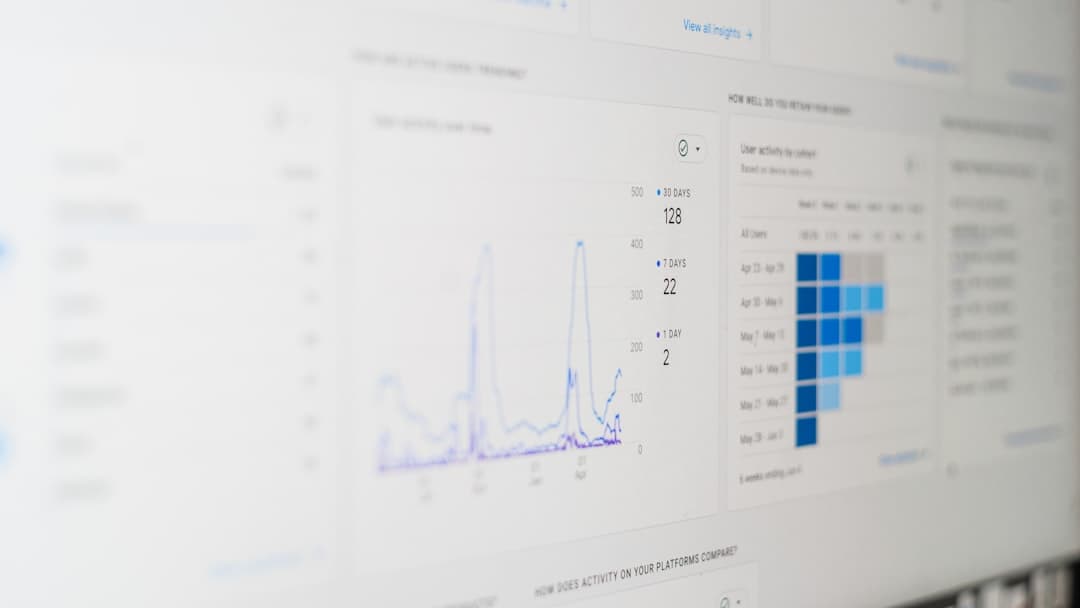
Model KPI/SLA Dashboard for a SOW: Recommended Structure
The Contractual Dashboard: A Governance Tool, Not Just a Measurement Tool
Including a formal KPI/SLA dashboard as an annex to the SOW offers several advantages:
- It constitutes an enforceable reference in case of dispute;
- It facilitates monthly reporting and reduces discussions on the calculation method;
- It enables a structured contractual performance review (QBR — Quarterly Business Review).
Recommended structure of a KPI/SLA dashboard as an annex to SOW:
| Indicator | Target | Data Source | Frequency | Penalty for Non-Compliance |
|---|---|---|---|---|
| Service availability | ≥ 99.5%/month | Monitoring tool (e.g. Datadog) | Monthly | 5% monthly fee/0.5 pts below |
| P1 resolution deadline | ≤ 4 business hours | ITSM tickets | Per incident | €500/hour over deadline |
| Report delivery deadline | ≤ 5 business days | Email send date | Monthly | €200/day late |
| Major defect rate | ≤ 2%/deliverable | Acceptance report | Per deliverable | Rework without additional charge |
SLA Review and Renegotiation During Contract Term
SLAs are not set in stone: a clause for annual review or renegotiation in the event of significant scope changes is essential in multi-year contracts. This clause must specify:
- The notice period for proposing a review (generally 60 days before annual renewal);
- The procedure for validating new levels (amendment electronically signed);
- The status of accumulated penalties in the event of retroactive renegotiation.
The amendment can be signed quickly and with full traceability using a qualified electronic signature solution, which guarantees the date certainty and integrity of the modified document.
Finally, for companies managing a high volume of SOWs and amendments, our ROI calculator enables you to estimate the gains associated with paperless processing and electronic signature of these documents.
Applicable Legal Framework for KPI, SLA and Late Payment Penalties in a SOW
Commercial Code: Article L441-10 and Mandatory Obligations
Article L441-10 of the Commercial Code is the cornerstone of the framework for late payment penalties in B2B inter-company relations in France. Arising from Law No. 2008-776 of 4 August 2008 on the modernisation of the economy (LME) and strengthened by Ordinance No. 2019-359 of 24 April 2019, it imposes:
- A maximum payment deadline of 60 net days or 45 days end-of-month from the date of invoice issue, in B2B relations;
- A minimum rate of late payment penalties equal to the refinancing rate of the European Central Bank increased by 10 percentage points;
- A flat-rate compensation of €40 per unpaid invoice at due date (Article D441-5 of the Commercial Code).
These provisions are mandatory: no contractual clause may derogate from them downwards. The DGCCRF is empowered to monitor and penalise companies that impose excessive deadlines or omit legal mentions relating to late payment penalties in their GTC and contracts.
Civil Code: Penalty Clause and Judicial Moderation
Article 1231-5 of the Civil Code provides that the court may, even on its own initiative, reduce or increase the penalty stipulated in a penalty clause if it is manifestly excessive or trivial. This provision applies to fixed-amount SLA penalties per incident. It is therefore recommended to calibrate SLA penalty amounts proportionately to the estimated loss, in order to limit the risk of judicial review.
Probative Value of Electronically Signed SOW
Article 1366 of the Civil Code recognises that "electronic writing has the same probative force as writing on paper, provided that the person from whom it emanates can be duly identified and that it is established and preserved under conditions such as to guarantee its integrity". Article 1367 clarifies that electronic signature consists in "the use of a reliable identification process guaranteeing its link with the deed to which it is attached".
The eIDAS Regulation No. 910/2014 of the European Parliament and of the Council, in its current version (and its eIDAS 2.0 developments), distinguishes three levels of electronic signature: simple, advanced and qualified. For a SOW involving significant financial penalties, the use of an advanced or qualified electronic signature is recommended to guarantee the enforceability of KPI/SLA/penalty clauses before commercial courts.
GDPR and Processing of Performance Data
Regulation No. 2016/679 (GDPR) applies to performance data when it allows indirect identification of natural persons (named access logs, named incident tickets). The data controller must provide a legal basis (contract performance, Article 6.1.b) and data retention period clauses in the SOW or its data processing annex.
Right of Proof and Preservation of Performance Evidence
In the event of a dispute over the application of SLA penalties, the burden of proof lies with the party invoking the breach. It is therefore essential to provide in the SOW for preservation of monitoring data throughout the commercial limitation period (5 years in French law, Article L110-4 of the Commercial Code). Time-stamped log exports, archived ITSM reports and electronically signed acceptance reports constitute the most solid evidence.
Illustrative use scenarios: KPIs, SLAs and penalties in SOWs
Scenario 1: An IT Services Company Managing TMA Contracts for Large Corporate Clients
These scenarios are illustrative: they describe typical situations and do not report any measured result from a client. A digital services company (ESN) of around 250 employees manages about twenty third-party application maintenance (TMA) contracts for clients in the banking and industrial sectors. Each SOW includes SLAs for availability and resolution time depending on incident priority. Without a formalised KPI dashboard or a clearly drafted SLA credit mechanism, end-of-month disputes take up a significant share of project managers' time and systematically lead to informal negotiations.
With a redesign of SLA clauses following the structure described in this article, a contractual dashboard as an annex, and advanced electronic signature of SOWs and amendments, the ESN can reduce the time spent on performance disputes and speed up payment timelines, as clients can no longer dispute the calculation method. The penalties applied then follow a written rule, rather than ad hoc negotiations. The extent of the gain should be measured on the actual scope, before and after a pilot.
Scenario 2: An Industrial SME Second-Tier Subcontractor in the Automotive Sector
An industrial SME with about a hundred employees provides engineering and prototyping services to automotive equipment manufacturers. Its SOWs are structured around technical milestones (feasibility study, mock-up, prototype, series validation). The client imposes payment terms exceeding the legal cap, in breach of article L441-10. Following a contractual audit, the SME can renegotiate its general terms of sale and its SOWs to explicitly incorporate the provisions of article L441-10 (legal payment term, late-payment penalty rate, fixed recovery compensation).
The inclusion of these clauses, combined with electronic signature of SOWs (traceability of the invoice issue date and the acceptance report), gives the SME the means to enforce late-payment penalties and shorten its average payment period. The impact on cash flow should be assessed on the actual scope of the organisation, before and after a pilot.
Scenario 3: A Digital Transformation Consulting Firm Managing Multi-Site SOWs
An organisational transformation consulting firm (around 80 consultants) works on multi-year engagements for mid-sized groups (ETI). Its SOWs include KPIs for client satisfaction (quarterly NPS), budget adherence (maximum tolerated variance) and on-time delivery (share of milestones delivered on the scheduled date), each with a contractual threshold. The associated penalties take the form of free consulting day credits rather than financial deductions, which preserves the business relationship while maintaining contractual discipline.
This approach can help encourage contract renewals during tenders, as clients appreciate the transparency of commitments and the traceability of performance through monthly KPI reports. The dispute rate at the end of an engagement is an indicator worth tracking, to be compared with that of consulting contracts without formalised SLAs. The extent of the gain should be measured on the actual scope, before and after a pilot.
Frequently Asked Questions
What is the difference between a KPI and an SLA in a service delivery contract?
A KPI is a performance indicator chosen to objectively measure an expected result, such as an availability rate or delivery timeframe. An SLA is the contractual clause that sets the level of commitment associated with that indicator and the consequences of non-compliance. In summary, the KPI measures, the SLA commits: neither one is sufficient on its own to create an enforceable contractual obligation.
Can penalties for delay stipulated in a SOW be lower than the statutory rate set by L441-10?
No. The rate of penalties for delay provided by Article L441-10 of the Commercial Code is of public policy for inter-business relationships. A contractual clause providing for a rate lower than the applicable statutory rate would be deemed unwritten. The parties may, however, agree on a higher rate, provided they expressly stipulate it in the contract.
Can a penalty clause in a SOW be cumulated with damages in case of delay?
In principle, no. The penalty clause is presumed to be a fixed sum under French law, in accordance with Article 1231-5 of the Civil Code: it replaces ordinary damages. Cumulation is permitted only in cases of fraud or gross negligence by the debtor. It is therefore essential to draft the clause with precision to avoid a judge revising it upward or downward according to the circumstances.
What liability exclusions are recommended for inclusion in an SLA clause of a SOW?
It is recommended to explicitly list the exonerating causes: force majeure within the meaning of Article 1218 of the Civil Code, failure attributable to the client or its own suppliers, scheduled maintenance windows notified within an agreed timeframe, and unavailability linked to third-party infrastructure outside the service provider's scope. The absence of these exclusions exposes the service provider to penalties for events beyond its control.
How can you prove the triggering of an SLA penalty in the event of a commercial dispute?
Proof rests on the verification procedure defined in the contract: monitoring tool reports, timestamped application logs, reports extracted from the ITSM, or joint minutes. In the absence of such a formalised procedure, each party may produce its own measurements, making dispute nearly inevitable. Establishing from the outset of SOW drafting the source of reference data and the frequency of reports is therefore essential.
Conclusion
Structuring KPI, SLA and late payment penalty clauses in a SOW is not merely a legal exercise: it is a lever for commercial performance, cash flow security and confidence in the service provider-client relationship. Compliance with Article L441-10 of the Commercial Code is non-negotiable, while the quality of SLA drafting directly determines the enforceability of penalties and amicable resolution of disputes.
By combining precise milestones, measurable KPIs, calibrated penalty clauses and qualified electronic signature, you transform your SOW into a robust governance tool. Certyneo supports you in this approach: from generating conforming contractual clauses to advanced electronic signature of your SOWs and amendments.
Ready to secure your service contracts? Create your Certyneo account for free and sign your first SOWs in just a few minutes.
Try Certyneo for free
Send your first signature envelope in less than 5 minutes. 5 envelopes for 14 days, then 2/mo, no credit card required.
Dive deeper
Reference articles on this topic.
Dive deeper
Our comprehensive guides to master electronic signatures.
Continue reading about Enterprise
Deepen your knowledge with these articles related to the topic.

Intellectual Property Clause in a SOW: Assignment or Licence in 2026
The IP clause of a SOW determines who truly owns the source code and deliverables. Discover how to draft a robust intellectual property clause for your B2B contracts in 2026.

SOW vs Quotation vs Commercial Proposal: What Legal Value?
Between SOW, quotation and commercial proposal, legal distinctions are often misunderstood. Discover which ones truly bind the parties and from what threshold.

SOW vs Statement of Work: Which Document to Choose in 2026?
Confusing a SOW with a specification document can weaken your entire contractual relationship. Discover the essential differences and the right document to use based on your context.