
Advanced Electronic Signature (AES), Simple (SES) and Qualified (QES): The 3 eIDAS Levels
Advanced electronic signature (AES), simple (SES) or qualified (QES): the eIDAS regulation defines three levels. Comparison, legal value and recommended choice according to the document.
Updated on
Certyneo Team
Writer — Certyneo · About Certyneo
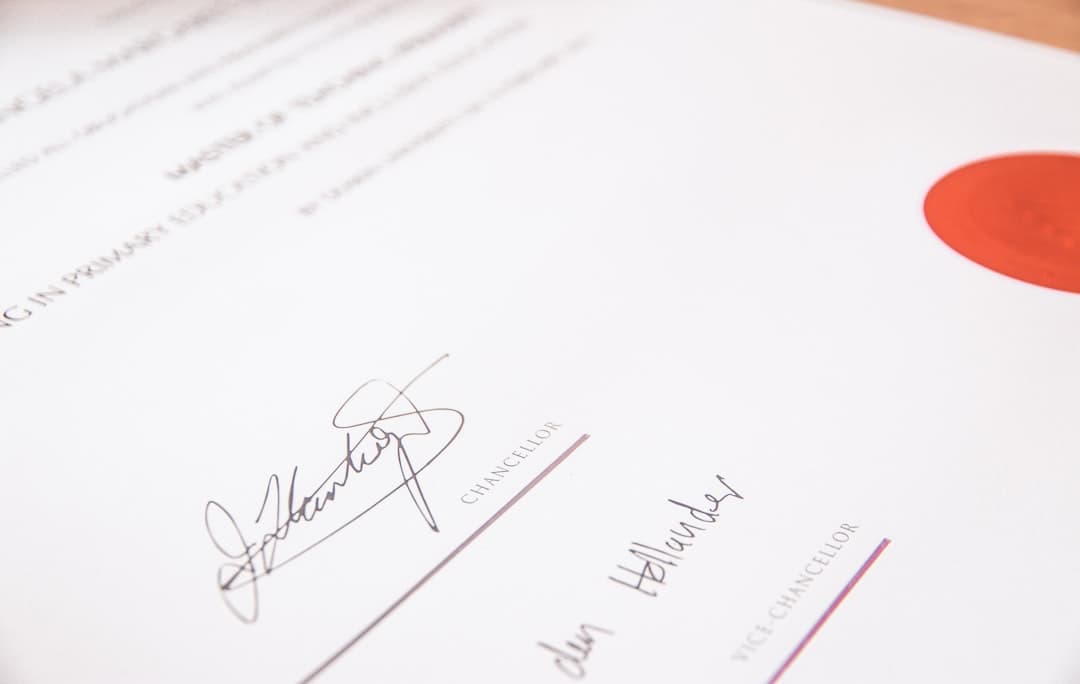
The electronic signature advanced (AES) is the level most widely used in B2B and the only one to offer a legal presumption of integrity without requiring a smart card for the signer. Alongside the simple electronic signature (SES) and the qualified electronic signature (QES), it makes up the three levels defined by the European regulation eIDAS. Here's how to choose the right level based on the nature of your document, its expected probative value, and the level of friction acceptable for the signer.
What is an advanced electronic signature (AES)?
The advanced electronic signature is the intermediate level defined by Article 26 of the eIDAS regulation. It must meet four cumulative conditions: (1) be uniquely linked to the signer, (2) be capable of identifying them, (3) be created using data that the signer can, with a high level of confidence, use under their sole control, (4) be linked to the data signed in such a way that any subsequent change is detectable in the signed document. In practice, these conditions are met through strong authentication (email + SMS OTP), a timestamped audit trail, and a cryptographic hash of the PDF.
The AES benefits from a legal presumption of integrity and origin that reverses the burden of proof before a judge: it is up to the party disputing the signature to prove it is false, not up to the signer to prove its validity. This is what fundamentally distinguishes the AES from the SES, where reliability is assessed on a case-by-case basis by the judge.
The three levels defined by eIDAS
The European regulation eIDAS (No. 910/2014) organizes electronic signatures into three levels, corresponding to increasing degrees of requirements regarding signer identification and evidentiary strength. Understanding these levels helps you choose the right signature for each document, without over-engineering the process.
Level 1: the simple electronic signature (SES)
The simple electronic signature is the basic level. It corresponds to any expression of electronic consent: a click on "I accept", a checked box, an initial drawn on a touchscreen.
- Requirements: clear consent, minimal identification (email)
- Evidence: low to moderate, varies by provider
- Use case: quotes, purchase orders, internal agreements, terms and conditions
- Signer friction: nearly none — the signer does not create an account
The SES is sufficient for the vast majority of everyday commercial exchanges where the risk of dispute is low. It remains legally valid, with the judge assessing the reliability of the process on a case-by-case basis.
Level 2: the advanced electronic signature (AES)
The advanced signature strengthens signer identification and establishes a unique link between the signer and the document. It rests on four criteria set out in Article 26 of eIDAS:
- it is uniquely linked to the signer
- it is capable of identifying the signer
- it is created using electronic signature creation data that the signer can, with a high level of confidence, use under their sole control
- it is linked to the data signed in such a way that any subsequent change is detectable
In practice, the AES relies on two-factor authentication: a unique link sent by email + an OTP code received by SMS. The final PDF includes a timestamp and a detailed audit trail.
- Use case: employment contract, lease, power of attorney, high-stakes commercial contract, NDA
- Signer friction: low — an SMS code to enter in addition to email
- Evidence: strong, rebuttable presumption of validity
Level 3: the qualified electronic signature (QES)
The qualified signature is the highest level. It relies on a qualified certificate issued by a qualified trust service provider (QTSP) listed on the trusted list of an EU member state, and on a secure signature creation device (e.g. YubiKey, smart card).
- Legal value: equivalent to a handwritten signature throughout the EU
- Use case: notarial deeds, public procurement contracts, certain notarial acts
- Signer friction: high — face-to-face or video KYC identity verification
- Cost: significantly higher than SES/AES
For most businesses, the QES is rarely needed on a day-to-day basis. It becomes essential when required by law (legal proceedings, certain public procurement contracts) or when the contract has exceptional value.
Quick comparison table
| Criterion | Simple | Advanced | Qualified |
|---|---|---|---|
| Identification | Email + SMS OTP | Qualified certificate + identity verification | |
| Legal value | Evidence assessed case by case | Presumption of validity | Equivalent to a handwritten signature in the EU |
| Friction | Nearly none | Low | High |
| Typical use case | Quotes, purchase orders | Employment contract, lease | Notarial acts, public procurement contracts |
| Cost | Low | Moderate | High |
How to choose the right level
The simple rule: align the level with the document's stakes.
- If the document is disputed, what's at stake? A few hundred dollars or a contract worth tens of thousands?
- Is the relationship with the signer known (a long-standing client) or unknown (first contact)?
- Does the document fall under a legal framework requiring a specific level (e.g. employment contract, lease) ?
As a general rule: SES for simple agreements, AES for anything related to HR, real estate, or finance, QES only when required by law.
Common mistakes
- Systematically choosing the QES "just to be safe": unnecessary friction for the signer, high cost, often overkill.
- Relying on the SES for everything: in the event of a dispute over an employment contract, the lack of strong authentication can weaken the evidence.
- Confusing acknowledgment with signature: a receipt confirmation is not a signature.
How Certyneo helps you
Certyneo natively supports the simple (SES) and advanced (AES) levels, with dual email + SMS OTP via Twilio Verify for AES. For cases requiring a QES, Certyneo interfaces with several European qualified providers (Docaposte Certigna, Universign, CertEurope) to trigger the qualified signature without switching tools.
You can set the signature level document by document based on the stakes — or by template if you've industrialized a process.
Discover the Certyneo electronic signature solution
FAQ
Can I mix levels within the same envelope?
Yes. A multi-document envelope can include a quote signed with SES and a contract signed with AES, for example. Each signer sees the authentication method suited to the document they need to sign.
Is the advanced signature recognized internationally?
Within the EU, yes, under the principle of mutual recognition in eIDAS. Outside the EU, recognition depends on the local legal framework — this should be checked according to the relevant jurisdiction.
Do I need a personal certificate to sign with AES?
No. AES can be obtained without a prior personal certificate thanks to dual OTP. This is what makes AES very accessible, whereas QES requires a qualified certificate.
Is a qualified signature required for an employment contract?
No. An employment contract can be signed with an advanced signature (AES), which already offers a strong presumption of validity. For more details, see electronic signature for employment contracts.
How do I check the level of a signed document?
Open the PDF in Adobe Acrobat Reader: the signature properties display the level, the signer, and the timestamp. You can also use an online verifier.
Conclusion
Choosing the right level of electronic signature means finding the right balance between probative value and friction for the signer. Start simple, and move up a level when the legal stakes require it.
Try Certyneo to send, sign, and track your documents online simply, quickly, and securely.
Try Certyneo for Free
Send your first signature envelope in less than 5 minutes. 5 free envelopes per month, no credit card required.
Dive Deeper
Reference articles on this topic.
Dive Deeper
Our comprehensive guides to master electronic signatures.
Continue reading about eIDAS
Deepen your knowledge with these related articles.

Cross-Border Electronic Signature: eIDAS Between Europe and the Maghreb
Cross-border electronic signature eIDAS raises major legal and technical questions for businesses operating between Europe and the Maghreb. Discover how to secure your international contractual exchanges.

eIDAS 1 to eIDAS 2 Transition: Impact on Signature in 2025
The eIDAS 2 regulation fundamentally reshapes electronic signature rules in Europe. Discover the key changes, implementation timeline, and actions to take now.
eIDAS Mutual Recognition: Validity Across Europe in 2026
The eIDAS regulation mandates mutual recognition of qualified electronic signatures between all EU Member States. Discover how this principle works in practice in 2026.