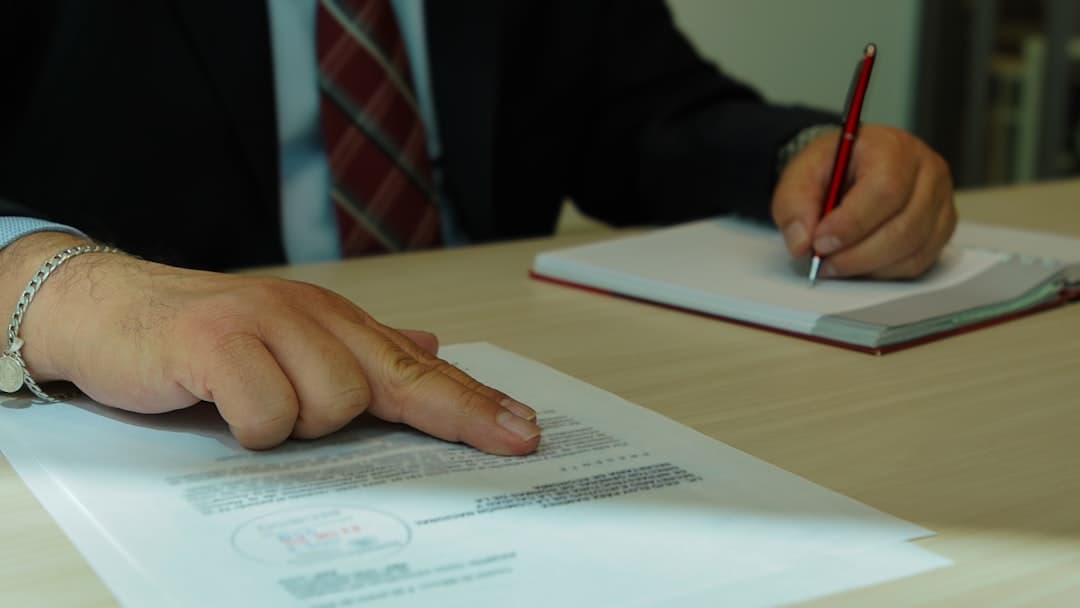
Electronic signature for lawyers: complete guide
From the first client meeting to the final settlement agreement, passing through the countersigned lawyer deed (art. 66-3-1 Law 1971, enhanced probative force), company articles and share transfers, the lawyer manages a significant volume of private agreements. This guide explains how to digitalize everything in compliance with CNB rules and professional confidentiality.
Legal framework: electronic signature in law firms
The deontological rules of the CNB (RIN), professional secrecy (art. 66-5 law 1971) and the countersigned lawyer''s deed (art. 66-3-1 to 66-3-3) govern the firm''s activities. Advanced signature (AES) compliant with eIDAS meets these requirements with a high level of proof.
- Fee agreement: AES recommended (art. 10 Macron law)
- Countersigned lawyer''s deed: AES client + AES lawyer countersign (art. 66-3-1)
- SAS/SARL/SCI articles: AES multi-partner (art. 1832 C. civ., L210-6 C. com.)
- Transfer of partnership interests: AES + partner approval (art. L221-14, L223-17)
Acts that can be electronically signed in law firms
Typical workflow for a countersigned lawyer''s deed
- 1
Prepare the private deed
Fee agreement, security, acknowledgement of debt, settlement agreement… The lawyer''s deed dispenses with any handwritten mention normally required by law (art. 66-3-3).
- 2
Client signature
The client receives a secure link by email + SMS OTP. Advanced signature (AES) in 2 minutes, without traveling to the office.
- 3
Electronic countersign by the lawyer
The lawyer receives the deed signed by the client and affixes their AES countersign. Qualified timestamping attests to the order of signatures.
- 4
Enhanced probative force
The deed is proof of the writing and signature of the parties (art. 66-3-2) — exempts from the handwriting verification procedure in case of dispute. Archiving for 10 years with audit trail.
Frequently asked questions — Electronic signature in law firms
- Can a fee agreement be signed electronically?
- Yes, without difficulty. Article 10 of the law of December 31, 1971 as amended by the Macron law requires written form but prescribes no specific format. Certyneo''s advanced signature (AES) satisfies the probative requirement with the advantage of precisely timestamping the conclusion before the service begins.
- What is an electronic lawyer''s deed and why is it interesting?
- The lawyer''s deed (art. 66-3-1 to 66-3-3 law 1971) is a private deed countersigned by a lawyer. It benefits from enhanced probative force (exemption from the handwriting verification procedure), exemption from handwritten mention for the client, and facilitates forced execution. For the firm, it''s a tangible added value that can be invoiced.
- Is the handwritten mention (security, acknowledgement of debt) really exempted?
- Yes — article 66-3-3 exempts the client from any handwritten mention normally required by law. The lawyer''s countersign replaces this mention. This is one of the main advantages of the lawyer''s deed for remote signature.
- How to respect professional secrecy?
- Certyneo applique chiffrement TLS 1.3 en transit + AES-256 au repos, isolation stricte par cabinet, hébergement 100 % UE (Allemagne, IONOS) sans sous-traitance hors UE. DPA conforme GDPR intégrant les clauses spécifiques au secret professionnel de l'art. 66-5 loi 1971.
- How long must deeds be kept?
- Minimum 10 years, by alignment with the civil prescription period (art. 2224 Civil Code). For deeds related to assets or successions, longer retention is recommended. Certyneo archives for 10 years included, extension available.