
Electronic Signature in Construction: Complete 2026 Guide
The construction sector is drowning in paper documents: quotes, contracts, amendments, reception reports. Electronic signature changes everything — speed, legal security, and eIDAS compliance guaranteed.
Updated on
Writer — Certyneo · About Certyneo

Why Construction Has Everything to Gain With Digital Signature
The construction sector is one of the heaviest consumers of contractual documents in France. A medium-sized construction site typically requires between 120 and 300 signed documents — quotes, purchase orders, work contracts, payment statements, reception reports, amendments, ten-year warranty certificates. Despite the digital transformation affecting other sectors, construction remains heavily dependent on paper and handwritten signatures. In 2024, according to a study by the French Building Federation (FFB), more than 68% of craft enterprises and SMEs in the construction sector still manage their contracts entirely on paper. The consequences are well known: extended signature delays, lost documents, disputes over versions, physical archiving costs, and difficulty proving documents in case of litigation.
Electronic signature for businesses provides a structured response to these problems. It allows you to sign any contractual document from a connected device in seconds, with legal value equivalent — or even superior — to handwritten signature, provided eIDAS regulation requirements are met.
The Most Commonly Signed Documents in Construction
In construction, document flows primarily concern four families of documents:
- Quotes and work contracts: foundational documents in the client-company relationship, often exchanged by email then printed for signature. An unsigned quote in time can cost a project.
- Invoices and work statements: financial documents subject to strict legal deadlines (LME law, inter-company payment deadlines of maximum 60 days).
- Reception reports (PV de réception): legally structured acts that trigger the warranty of proper completion, two-year warranty, and ten-year warranty.
- Subcontracting contracts: governed by Law No. 75-1334 of December 31, 1975 on subcontracting, they must be in writing and formally accepted.
For each of these families, digital signature reduces the validation cycle from several days to just a few hours, while producing a timestamped, tamper-proof audit trail.
Regulatory Issues Specific to the Construction Sector
Construction is subject to a dense regulatory framework: building and housing code, MOP law for public works contracts, construction insurance rules (civil liability insurance, contractor's insurance). Electronic signature must fit within this framework without weakening it.
The required signature level varies depending on the nature of the document. For a standard quote between professionals, a simple electronic signature (SES) or advanced signature (SEA) is generally sufficient. However, for public contracts above certain thresholds or for notarial acts related to construction real estate, a qualified electronic signature (SEQ) — the only one legally equivalent to handwritten signature without presumption to reverse — may be required. Understanding these three levels is essential: our complete eIDAS regulation guide details their conditions of use and respective guarantees.
Dematerializing Quotes and Invoices in Construction: Operating Procedure
Dematerialization of quotes and invoices is often the first digital initiative undertaken by a construction company. It is also the most immediately profitable.
Digital Signature of Quotes: Accelerating Conversion
An artisan or SME in construction sends an average of 15 to 40 quotes per month. The average turnaround time for a quote signed by mail or in person is 5 to 12 days. With an electronic signature solution, this delays drops to less than 24 hours in most cases, or even minutes for urgent projects.
The process is straightforward: the company generates the quote in its management software (construction ERP like Batigest, Onaya, or accounting tool), sends it via the signature platform, the client receives a secure link, reviews the document, affixes their electronic signature, and validates. The company immediately receives notification and the signed copy is archived as evidence.
This streamlined approach has a direct impact on conversion rate: a quickly signed quote is a secured project. Several sector studies (including the Markess 2024 report on digital transformation of small enterprises) estimate that reducing quote signature delays can increase conversion rate by 15 to 25%.
Electronic Invoicing and 2026 Obligation
The obligation for electronic invoicing between VAT-registered entities, resulting from Ordinance No. 2021-1190 of September 15, 2021 and its implementing decrees, has been phased in progressively since 2024 for large enterprises, and now applies to large midmarket and SMEs in 2026. For micro and small enterprises in construction, the emission obligation applies fully from September 1, 2026.
Concretely, construction companies must issue their invoices through a partner dematerialization platform (PDP) or via the public Chorus Pro portal for public contracts. Electronic signature of invoices is not always mandatory in B2B flows under e-reporting, but it constitutes enhanced authenticity and integrity guarantee, recommended by the tax authority for sensitive B2B flows.
In this context, construction companies that have not yet integrated digital signature in their invoicing processes are taking an increasing risk of non-compliance. Using a solution like Certyneo allows you to address both eIDAS compliance and tax traceability simultaneously.
Work Contracts and Subcontracting: Securing Critical Documents
Work contracts and subcontracting agreements are the documents most exposed to disputes in construction. An unsigned reception report, an amendment accepted verbally without written trace, a purchase order whose version is subject to disagreement: these situations generate costly disputes.
Public Contracts and Qualified Signature
Since Ordinance No. 2015-899 on public contracts and its implementing decree of March 25, 2016, public buyers may require electronic signature for contracts exceeding €25,000 excluding VAT. For formalized contracts (above European thresholds), advanced electronic signature based on a qualified certificate is standard on dematerialization platforms (PLACE, AWS, regional e-markets).
Construction companies responding to public calls for tender must therefore have a qualified electronic signature certificate compliant with ETSI EN 319 132 standard. This certificate is issued by a qualified trust service provider (QTSP) listed on the European Trust List (TSL). Our comparison of electronic signature solutions helps you identify providers offering this level of service.
Subcontracting: 1975 Law Requires Written Form
The Law of December 31, 1975 on subcontracting requires that every subcontracting contract be established in writing and that the subcontractor be approved by the client. Qualified electronic signature perfectly meets this requirement for written form, while offering a complete audit trail: certified signatory identity, qualified timestamp, document integrity guaranteed.
In case of dispute regarding the reality or content of a subcontracting contract, a document electronically signed with a qualified signature has a presumption of reliability that is virtually irrefutable before French civil and commercial courts, in accordance with Article 1367 of the Civil Code.
Reception Reports: A Legal Document Not to Neglect
The reception report for work is the act that triggers legal construction guarantees (proper completion, two-year, ten-year). Its date is often at the heart of disputes between clients and companies. A reception report electronically signed with qualified timestamping compliant with ETSI EN 319 422 standard is unassailable on the date question.
In construction sites involving multiple trades, it is possible to organize multi-party signature on the same document from the site — with just a connected tablet or smartphone — without all participants being physically present at the same time. This is considerable operational gain for general contractors and project managers.
Choosing the Right Electronic Signature Solution for Construction
Not all electronic signature solutions are equal, and the construction sector has specific needs: mobility (teams are on site), robustness (large documents with attached plans), interoperability (with trade-specific ERPs), and signature levels adapted to each document type.
Selection Criteria for a Construction Company
To choose well, a construction company should evaluate the following points:
- Available signature levels: the solution must offer at minimum advanced signature (SEA) and ideally qualified signature (SEQ) for public contracts.
- API integration: native connection with trade software (Batigest, Onaya, Sage Bâtiment, Cegid) avoids duplicate entries and accelerates rollout.
- Mobility and field UX: the interface must be usable on smartphone and tablet, including in field conditions.
- Probative archiving: signed documents must be stored in a digital safe compliant with NF Z42-020 standard to be enforceable in case of dispute over duration (up to 10 years for ten-year warranty).
- GDPR compliance: data hosting in European Union, transparent privacy policy.
If you currently use another provider and wish to evaluate migration, our guide on migrating from DocuSign or YouSign to Certyneo gives you a practical roadmap and questions to ask your future provider.
ROI and Return on Investment for Construction
Investment in an electronic signature solution is quickly recovered in construction. Taking into account avoided costs (printing, postal shipping, physical archiving, data re-entry), administrative productivity gains, and reduced payment delays, average return on investment is achieved in 3 to 6 months for a construction SME handling more than 50 contractual documents per month. Use our dedicated ROI calculator to precisely estimate benefits based on your document volume and cost structure.
Legal Framework Applicable to Electronic Signature in Construction
Electronic signature in the construction and building sector is part of a multi-layered legal framework, combining French civil law, European law, and sector-specific regulation.
Civil Code: Articles 1366 and 1367
Article 1366 of the Civil Code provides that "electronic documents have the same probative force as paper documents, provided that the person from whom they emanate can be duly identified and they are established and preserved in conditions designed to guarantee their integrity". Article 1367 clarifies that electronic signature "consists of the use of a reliable identification process guaranteeing its connection to the act to which it is attached", and recognizes that qualified signature enjoys a presumption of reliability.
For construction, these provisions mean that a quote, work contract, or reception report electronically signed with a reliable process has the same probative force as a hand-signed paper document — and often superior probative value thanks to timestamping and audit trail.
eIDAS Regulation No. 910/2014 and eIDAS 2.0
The European eIDAS regulation (Electronic Identification, Authentication and Trust Services), in force since September 2016 and strengthened by eIDAS 2.0 (EU Regulation 2024/1183, progressively applied since 2025), defines three levels of electronic signature:
- SES (Simple): no particular technical constraint, limited probative value.
- SEA (Advanced): uniquely linked to the signer, created by data that the signer can use under their exclusive control, detection of any subsequent modification.
- SEQ (Qualified): created using a qualified signature creation device (QSCD), based on a qualified certificate issued by a QTSP listed on the TSL. Strict legal equivalence with handwritten signature throughout the EU.
For public works contracts above European thresholds (€5,538,000 excluding VAT for works in 2024-2025), SEQ or at minimum SEA on qualified certificate is required.
ETSI Technical Standards
The ETSI EN 319 132 standard (XAdES) governs advanced XML signature formats used in dematerialized exchanges, particularly on public contract platforms. The ETSI EN 319 422 standard defines requirements for qualified timestamping services. Compliance with these standards guarantees interoperability between platforms and signature longevity over time.
Construction Sector-Specific Regulation
- Law No. 75-1334 of December 31, 1975 (subcontracting): requires written form for subcontracting contracts. Qualified electronic signature meets this requirement.
- Ordinance No. 2015-899 and decree of March 25, 2016 (public contracts): authorize and govern electronic signature in procurement procedures.
- Law No. 78-12 of January 4, 1978 (Spinetta) and Law No. 90-1129 of December 19, 1990: establish ten-year warranties and construction insurance. Since the date of reception report signature is legally critical, qualified timestamping provides unmatched security.
- GDPR No. 2016/679: signer data (identity, email, IP) constitute personal data. The platform must host this data in the EU, provide a retention period compliant, and enable data subject rights exercise.
- NIS2 Directive (transposed into French law by Law No. 2024-449 of May 21, 2024): strengthens cybersecurity requirements applicable to digital service providers, including QTSPs. Choosing an eIDAS-certified provider guarantees NIS2 compliance for the signature chain.
Concrete Use Cases in the Construction Sector
Scenario 1: A Masonry SME Managing 80 Quotes Per Month
A masonry company with 18 employees based in the Auvergne-Rhône-Alpes region issues approximately 80 quotes per month to individual clients and local developers. Before dematerialization, the signature process involved printing the quote, sending it by mail or unsecured PDF, then waiting for a signed return — sometimes by mail, sometimes by poor-quality photo. The average turnaround was 8 business days.
After deploying an advanced electronic signature solution, the process was reduced to: generating the quote from trade software, sending the signature link by SMS and email, signature by client in less than 3 minutes. Average turnaround dropped to 18 hours. Of 80 monthly quotes, the administrative productivity gain represents approximately 12 hours recovered work, and the rate of abandoned quotes (clients who never return them) decreased by 22%. Signed documents are automatically archived with timestamping, which has already resolved a client dispute by providing irrefutable proof of quote acceptance.
Scenario 2: A General Contractor Managing Multi-Trade Subcontracting
A building general contractor with €12M turnover, specializing in commercial building construction, manages on average 6 simultaneous construction sites each involving 8 to 15 subcontractors. Each site generates approximately 20 subcontracting contracts, amendments, and partial and final reception reports — approximately 700 signed documents per year.
Implementation of qualified electronic signature for subcontracting contracts and reception reports enabled:
- Reducing subcontracting contract signature delays from 12 days to 2 days on average.
- Eliminating disputes related to document versions (no more confusion between amendment V1 and V2).
- Facilitating ten-year warranty claims, as insurers now accept electronically timestamped reception reports as proof of delivery date.
- Reducing physical archiving costs by €3,500 per year (elimination of filing cabinets, subsequent digitization costs).
Scenario 3: A Group of Artisans Responding to Public Contracts
A temporary grouping of companies (GME) composed of five specialized artisans (electrical, plumbing, carpentry, painting, tiling) regularly responds to public calls for tender in adapted procedure markets (MAPA) for municipal building renovations. These contracts, often between €80,000 and €400,000 excluding VAT, require advanced electronic signature on qualified certificate on regional dematerialization platforms.
Before equipping themselves, several group members had no electronic signature certificate and had to obtain one urgently for each call for tender, risking missing submission deadlines. Since adopting a pooled solution with qualified certificates shared among managers, the group was able to respond to 14 public contracts in 12 months, versus 7 the previous year. The award rate improved by 28%, partly thanks to the quality and compliance of files submitted within deadlines.
Frequently Asked Questions
Does electronic signature have the same legal value as a handwritten signature for a construction contract?
Under French law, Article 1367 of the Civil Code recognizes electronic signature as equivalent to handwritten signature provided it allows identification of its author and guarantees the integrity of the document. For a construction contract between professionals, an advanced electronic signature (AES) compliant with the eIDAS regulation is generally sufficient. Qualified signature (QES) is primarily required for public procurement contracts subject to specific regulatory requirements.
What level of electronic signature should be used for a subcontracting agreement in construction?
The Law of December 31, 1975 on subcontracting requires a written contract but does not specify the required level of electronic signature. In practice, an advanced signature (AES) provides a solid level of proof through signer authentication and qualified time-stamping. For high-value amounts or foreseeable disputes, some legal practitioners recommend qualified signature (QES) in order to shift the burden of proof in case of contestation.
Is a digitally signed site inspection report enforceable in case of dispute?
Yes, provided that the solution used complies with eIDAS requirements and generates a complete audit trail: identity of signatories, qualified time-stamping, and cryptographic fingerprint of the document. These elements make it possible to prove before a court or insurance company that the report was not modified after signing and that the parties accepted it, which is decisive for establishing the start dates of legal construction warranties.
Are craftspeople and SMEs in construction required to use electronic invoicing by 2026?
Yes. The Ordinance of September 15, 2021 and its implementing decrees require SMEs and micro-enterprises subject to VAT to issue their invoices in electronic format via a partner dematerialization platform (PDP) or Chorus Pro for public procurement, effective September 1, 2026. Non-compliance with this obligation exposes the business to tax penalties and collection difficulties with customers who refuse paper invoices.
How can you ensure that a construction contractor's customer can sign electronically without specific equipment?
eIDAS-compliant electronic signature solutions allow an individual or professional to sign from any web browser, on a computer, tablet, or smartphone, without installing software or having a personal certificate. The signer receives a secure link via email or SMS, reviews the document, and then validates it with a one-time code (OTP). No special equipment is required for simple or advanced levels, which cover the vast majority of routine transactions in the sector.
Conclusion
Electronic signature is no longer optional for the construction and building sector: it is an essential lever for competitiveness, regulatory compliance, and legal security in 2026. From quotes to subcontracting contracts, through reception reports and mandatory electronic invoicing, every construction contractual document benefits from faster, safer, and more probative processing through dematerialization.
Whether you are an artisan, construction SME, or general contractor, the transition to digital signature happens in just a few days with the right support. Certyneo offers an eIDAS-compliant solution, available in SES, SEA, and SEQ levels, with integrated probative archiving and API connection to your trade tools.
Start today: create your Certyneo account or consult our pricing adapted for construction companies to find the plan matching your document volume and regulatory obligations.
Try Certyneo for Free
Send your first signature envelope in less than 5 minutes. 5 free envelopes per month, no credit card required.
Dive Deeper
Reference articles on this topic.
Dive Deeper
Our comprehensive guides to master electronic signatures.
Continue reading about Business
Deepen your knowledge with these related articles.

Power of Attorney Delegation: Electronic Signature in Business
Power of attorney delegation is an essential legal tool for any business. Electronic signature and eIDAS compliance: master every step.
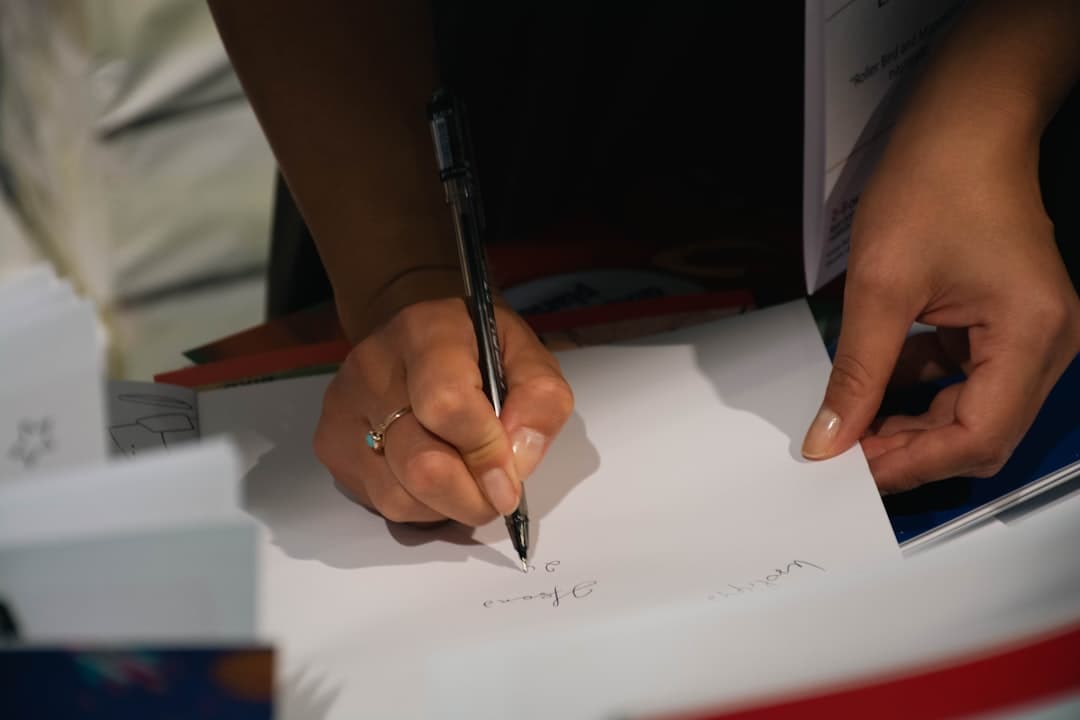
Wire Transfer Mandates: Secure Them with Electronic Signature
Wire transfer fraud costs billions to European businesses every year. Discover how electronic signature and strong authentication transform your wire transfer mandates into tamper-proof documents.
AML Compliance and Electronic Signature in Finance: 2026 Guide
Anti-money laundering requirements impose strict obligations on financial actors, and electronic signature plays a central role in identity verification and traceability. Discover how to align AML compliance and electronic signature in 2026.