
How to Archive an Electronically Signed Document
Best practices for archiving your electronically signed documents: formats, retention periods, legal proof value.
Certyneo Team
Writer — Certyneo · About Certyneo
Why archive correctly
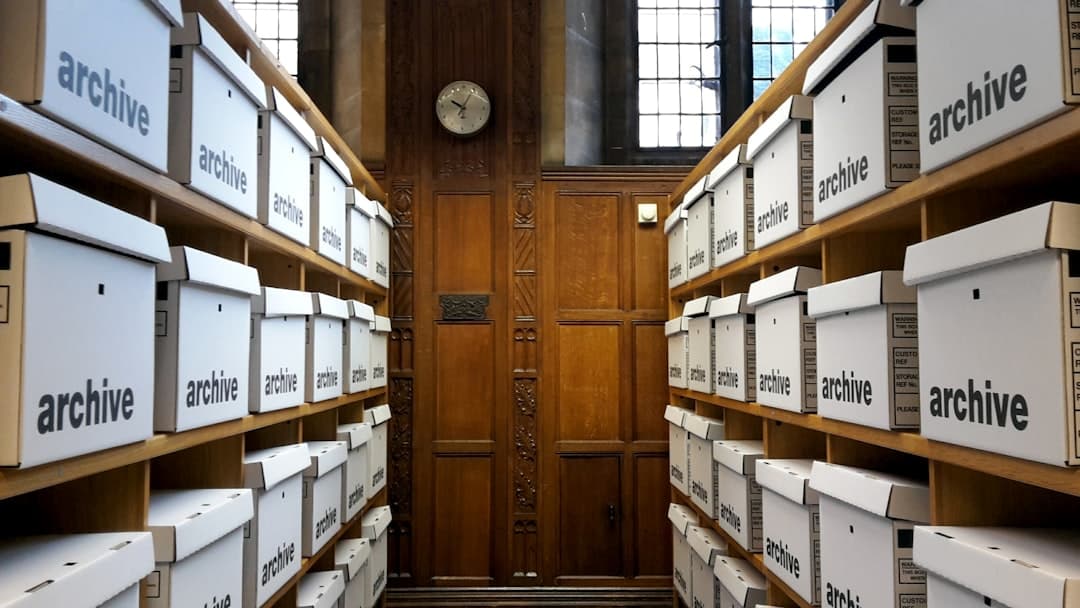
An electronically signed document has value only if the proof remains accessible and verifiable for the entire legal retention period — sometimes 10, 20, or even 30 years. Poor archiving = weakened proof in case of dispute.
Retention periods to comply with
- Commercial contracts : 10 years (Commercial Code)
- Employment contracts : 5 years after termination
- Invoices : 10 years (accounting), 6 years (tax)
- Leases : duration + 5 years
- Notarial acts : 30 years
- Insurance : 2 to 10 years depending on type
Preserve the signed PDF and the audit trail for the longest applicable retention period.
Archive formats
- PAdES-B-B : basic, simple signature
- PAdES-B-T : + qualified timestamp
- PAdES-B-LT : + certificate chain
- PAdES-B-LTA : + periodic timestamps (multi-decade)
For long-term archiving, favor PAdES-B-LTA.
The 3 archiving options
1. Outsourced archiving (platform)
The signature platform retains your documents for X years. Included in most plans.
Advantages : no effort, eIDAS compliant Disadvantages : provider dependence, reversibility to verify
2. Internal archiving
Your documents are retained on your servers or a dedicated EAS.
Advantages : full control Disadvantages : cost, internal expertise required
3. EAS with legal proof value
Electronic Archiving System certified NF Z42-013. The highest level of compliance.
Advantages : presumption of legal reliability Disadvantages : high cost, over-dimensioned for SMBs
Best practices
- Preserve PDF + audit trail, never one without the other
- Redundancy : multi-site, multi-media
- Periodic verification : every 6-12 months, confirm documents are readable
- Documentation : written procedures
- Annual restoration tests
Common mistakes
- Keep only the PDF, not the audit trail
- Store on a single medium (internal hard drive)
- Use cloud storage without retention clause
- Forget retention periods specific to certain sectors
- Fail to test restoration
Archive migration
If you change signature service providers:
- Export all signed documents + audit trails
- Import to the new system or a dedicated EAS
- Verify integrity (SHA-256 hash)
- Temporarily maintain access to the old system
Real case: SMB changing providers
SMB with 50 employees, 3,000 cumulative documents signed over 5 years. Migration:
- automated export via API
- import to new provider + external EAS as backup
- verification by sample (50 documents checked)
- old provider terminated after 3 months
Total duration: 4 weeks. Zero loss.
How Certyneo helps you
Certyneo includes 10-year archiving in all plans, with geographic redundancy in the EU, versioning, and full export at any time (complete reversibility). PAdES-B-T format by default, PAdES-B-LTA optionally for critical documents.
Discover the Certyneo electronic signature solution
FAQ
Should I print my signed documents?
No, unnecessary and counterproductive (loss of legal proof value).
Is standard cloud storage (Google Drive, Dropbox) sufficient?
For the PDF yes, but not for legal proof value. Prefer dedicated archiving.
What if my signature platform closes?
PAdES PDFs remain verifiable offline. Export audit trails regularly.
Should I encrypt the archives?
Recommended for sensitive documents. Be careful to retain keys for the long term.
When does the 10-year retention period begin?
For a commercial contract: end of performance. For an employment contract: end of contract.
Conclusion
Good archiving is the life insurance for your electronic signatures. Choose the formula suited to your needs (outsourced for most SMBs, NF Z42-013 EAS for critical cases), test regularly.
Try Certyneo to send, sign and track your documents online simply, quickly and securely.
Try Certyneo for Free
Send your first signature envelope in less than 5 minutes. 5 free envelopes per month, no credit card required.
Dive Deeper
Reference articles on this topic.
Continue reading about Tutorials
Deepen your knowledge with these related articles.

Electronic Signature: Integration in Outlook and Gmail
Sign your documents without leaving Outlook or Gmail thanks to native electronic signature integration. Discover best practices and solutions for 2026.
Electronic Signature and ERP Integration: The 2026 Guide
Connecting electronic signature to your ERP transforms your document flows and reduces signature delays by 70%. Discover how to integrate it effectively.

2026 Checklist to Reduce Telecom Signature Processing Times
Telecom operators lose an average of 4 to 7 days per contract due to non-optimized signature processes. Discover the 2026 checklist to transform your document workflow.