
Electoral proxy: voting by proxy in 2026
How to vote by proxy in 2026? From maProcuration.gouv.fr to regulatory deadlines, discover all the steps to ensure you don't miss any election.
Writer — Certyneo · About Certyneo
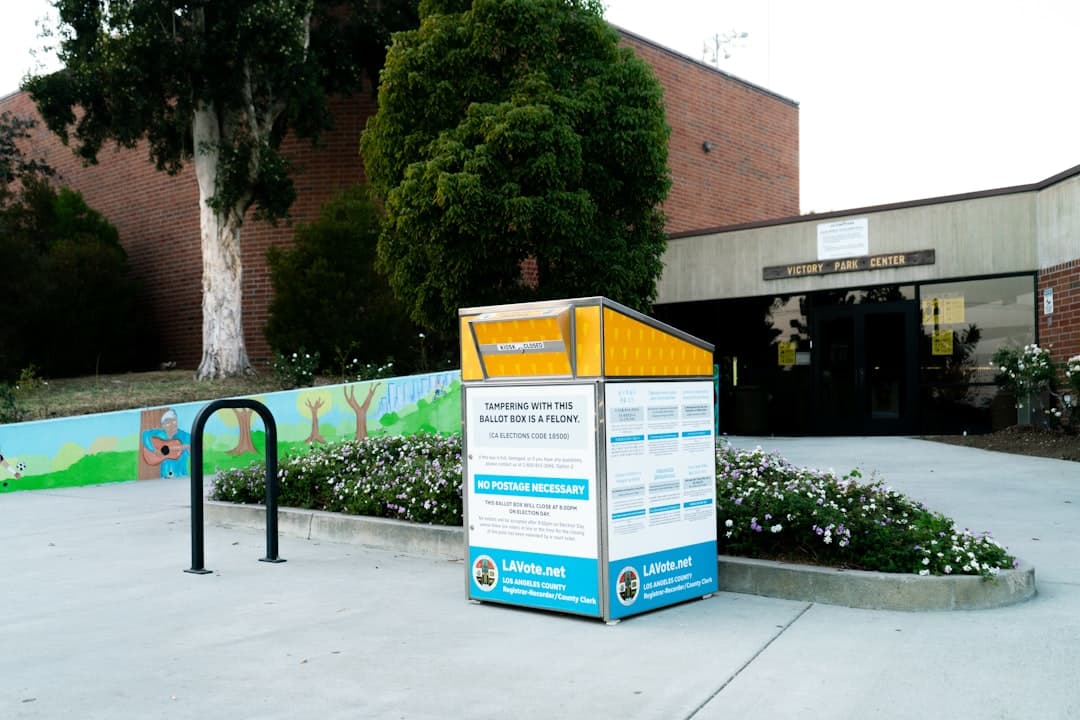
Electoral proxy allows any voter registered on the electoral rolls to entrust their vote to a trusted person when they are unable to vote on election day. Whether for professional reasons, medical reasons, reduced mobility or residence abroad, this mechanism guarantees the effective exercise of voting rights. Since 2022, the maProcuration.gouv.fr platform has significantly simplified the process by enabling remote declaration without the need for a prior visit to a police station or gendarmerie unit. This guide explains in detail the rules applicable in 2026, the deadlines to respect and the pitfalls to avoid.
What is electoral proxy and who can use it?
Electoral proxy is a legal act by which a voter — the principal — authorises another voter — the agent — to vote on their behalf in one or more specific elections. This mechanism is governed by articles L.71 to L.78 of the French Electoral Code.
Conditions for granting proxy
For a valid proxy to be established, the principal must:
- Be registered on the electoral roll of a French municipality;
- Justify an inability to vote in person (absence for professional reasons, state of health, disability status, residence abroad, training, holidays, etc.);
- Designate an agent who is themselves registered on the electoral roll of the same municipality following the 2019 reform (Law No. 2019-1269 of 2 December 2019).
Since this reform, the agent no longer needs to be registered in the same polling station, only in the same municipality. This is a significant advance that has facilitated recourse to proxy for millions of voters.
Who can be an agent?
Any adult French voter registered on the electoral rolls can be an agent. A single agent may hold two proxies simultaneously, of which only one may be established in France (the other may be established from abroad). This limit is set out in article L.73 of the Electoral Code.
The maProcuration.gouv.fr service: how it works and steps in 2026
Launched experimentally in 2021 and generalised since 2022, the maProcuration.gouv.fr service is now the main and recommended way to submit an electoral proxy application in France. In 2026, all national and local elections are covered by this platform.
Remote declaration: how does it work?
Remote declaration via maProcuration.gouv.fr takes place in three main steps:
- Connection via FranceConnect+: The principal identifies themselves via FranceConnect+ (high security level, compatible with the tax authority mobile app, Ameli, etc.). This strong authentication guarantees the voter's identity without physical presentation of documents.
- Information entry: The principal provides their details, the municipality where they are registered, the election(s) concerned and their agent's information (surname, forename, date of birth, municipality of registration).
- Validation at town hall or police station: After online submission, the principal receives a request code which they present to a judicial police officer or an authorised officer at an equipped town hall. This physical visit takes less than 5 minutes — there is no longer any need to complete a paper form on site.
This procedure has reduced the average processing time from 45 minutes to around 5-10 minutes according to feedback collected by the Ministry of the Interior following the 2022 legislative elections.
Police station, gendarmerie or town hall visit: what do you need to bring?
When visiting to validate the proxy, the principal must present:
- A valid identity document (national identity card, passport);
- Their maProcuration request code (received by email or SMS);
- No paper form is required if the application was initiated online.
If the principal is absolutely unable to travel (hospitalisation, severe disability), they can request a judicial police officer to visit their home or place of care, in accordance with article L.72 of the Electoral Code.
Deadlines to observe for electoral proxy in 2026
Respecting deadlines is crucial: a proxy established too late may not be taken into account by the electoral services.
Deadline for submitting the application
As a general rule, the proxy must be submitted to the principal's town hall no later than the Friday before the election (i.e. D-2 if voting takes place on Sunday). This deadline takes into account the administrative processing time needed to update the poll registers.
For the 2026 elections (partial local elections, local referendums or possible national elections), it is strongly advised to initiate the process at least 15 days in advance to avoid any risks related to extended processing times during periods of high volume.
Duration of validity of a proxy
A proxy may be established:
- For a single election (valid only for the first or second round as designated, or for both);
- For a determined period of up to 3 years (since the law of 27 December 2019), thus allowing to cover several successive elections without repeated procedures.
This multi-year option is particularly useful for expatriates, those with permanent professional mobility or those suffering from chronic conditions limiting their ability to travel.
Revocation of a proxy
The principal may revoke their proxy at any time, including on the day of the election, by presenting directly at the polling station with their identity document. In this case, the proxy is cancelled and the principal votes themselves. Online revocation via maProcuration.gouv.fr is also possible before the closing date.
Special cases: French citizens abroad and overseas territories
French citizens established outside France
French citizens registered at consulates and embassies may grant proxy to a voter registered in the same consular constituency. The process can be carried out:
- Online via maProcuration.gouv.fr if the voter has access to FranceConnect+;
- Directly with the competent embassy or consulate, which has officials authorised to collect proxies.
French citizens abroad were the subject of particular attention in Law No. 2023-1380 of 30 December 2023 relating to the simplification of electoral procedures abroad, which extended the possibilities for dematerialised voting in certain contexts.
Territories with early voting
New Caledonia, French Polynesia, Saint-Pierre-et-Miquelon and the Caribbean territories vote with a time difference requiring a specific schedule. Voters in these territories should refer to local prefectural orders for exact deadlines for submitting proxies.
For further information on the legal forms of mandate and associated document management tools, please consult our comprehensive guide on proxy and mandate, which also covers notarial and commercial proxies.
Common problems and practical solutions
My agent is not registered in my municipality: what can I do?
Since the 2019 law, the agent must be registered in the same municipality (no longer in the same polling station). If your agent lives in another municipality, you will need to find a local agent or change their registration on the electoral rolls before the deadline (31 December of the year preceding the election as a general rule).
What happens if the agent forgets to vote?
The agent is not subject to any legal obligation to vote on behalf of the principal. There is no penalty provided for by the Electoral Code in the event of the agent's abstention. The relationship is based on personal trust, hence the importance of choosing a reliable and available agent.
Is proxy compatible with electronic voting?
For elections allowing electronic voting (in particular certain consular elections), a proxy cannot be exercised via online voting: the agent must physically go to the designated polling station or consulate. Electronic voting is strictly personal and not delegable.
In the broader context of the dematerialisation of official documents, qualified electronic signature plays an increasingly important role in securing professional mandates and proxies. To understand the different levels of digital signature, our comprehensive guide to electronic signature is a useful reference — particularly for companies managing delegations of authority or corporate mandates.
Legal professionals dealing with notarial proxies or signature delegations will also find practical information on our page dedicated to electronic signature for law firms, which covers the specificities of the evidentiary value of dematerialised documents.
Finally, for companies wishing to automate the management of their internal mandates or signature delegations, the electronic signature ROI calculator makes it possible to estimate the productivity gains achievable compared to traditional paper processes.
Legal framework applicable to electoral proxy
Electoral proxy in France is part of a precise legislative body, whose understanding is essential to avoid any nullity of the process.
Electoral Code: the founding texts
Articles L.71 to L.78 of the Electoral Code constitute the legal foundation of electoral proxy. They define:
- The eligibility conditions of the principal and the agent (art. L.71);
- The limit of two proxies per agent (art. L.73);
- The procedures for collecting proxy by judicial police officers and authorised officials (art. L.72);
- The conditions for revocation (art. L.75).
Articles R.72 to R.80 of the Electoral Code (regulatory part) specify the forms, deadlines for transmission to town halls and procedures for keeping proxies.
Law No. 2019-1269 of 2 December 2019
This law removed the requirement for the agent to be registered in the same polling station as the principal, requiring only the same municipality. It also extended the acceptable reasons for granting proxy, making them non-limiting: any voter may now grant proxy without having to justify a particular reason since Law No. 2022-217 of 21 February 2022 (the 3DS law), which removed the requirement to justify.
Law No. 2022-217 of 21 February 2022 (3DS law)
This law on differentiation, decentralisation, devolution and simplification removed the obligation to justify a reason for establishing an electoral proxy. Since 2022, any voter can freely delegate their vote without providing supporting documents. This major simplification was accompanied by the widespread deployment of maProcuration.gouv.fr.
Digital authentication and FranceConnect+
The use of FranceConnect+ for remote declaration is based on eIDAS Regulation No. 910/2014 of the European Parliament and Council, which establishes the levels of assurance for means of electronic identification (substantial and high). FranceConnect+ corresponds to the high level ("high"), guaranteeing strong authentication in line with the requirements of European digital identity.
Personal data protection
The collection of data from principals and agents via maProcuration.gouv.fr is subject to the General Data Protection Regulation (GDPR) No. 2016/679. The Ministry of the Interior acts as the data controller. Data is retained for the time necessary to process proxies, and then archived in accordance with legal obligations for retention of electoral records (5 years after the election according to CNIL guidelines).
Penalties for fraud
Article L.113 of the Electoral Code punishes with two years' imprisonment and a fine of €15,000 any person who obtains a proxy by using false documents or misappropriating a proxy for fraudulent purposes. An attempt is punished with the same penalties.
Usage scenarios: electoral proxy in different contexts
Scenario 1 — An employee on frequent professional travel
A sales executive making professional trips throughout Europe approximately 15 days a month uses maProcuration.gouv.fr to establish a proxy valid for 3 years in favour of their spouse, registered in the same municipality. The online process took them less than 10 minutes, followed by a 5-minute visit to the local gendarmerie on their return at the weekend. Over 4 elections held in the 2024-2026 period, they were thus able to exercise their right to vote at 100% without ever modifying their professional travel, compared to an estimated abstention rate of 60-70% for voters in situations of intense professional mobility according to post-election analyses by DILA.
Scenario 2 — A hospitalised voter or one with reduced mobility
A person hospitalised for a scheduled procedure unable to travel on election day requests, via a close carer, the visit of a judicial police officer to their bedside. Thanks to article L.72 of the Electoral Code, the officer visits with the necessary equipment to collect the proxy on site. The proxy is transmitted the same day to the municipality concerned. This scenario, which represents approximately 8 to 10% of proxies established according to Ministry of the Interior statistics, highlights the importance of contacting the gendarmerie or police station at least 5 days before the election to arrange the visit.
Scenario 3 — A community of expatriates in a consular zone
A group of approximately 200 French nationals residing in the same consular zone of a South-East Asian country collectively organise their proxies during legislative elections. A local consular association informs its members of deadlines and procedures via maProcuration.gouv.fr. Of the 200 people concerned, 140 manage to establish their proxy within the deadlines (i.e. 70%), compared to an average consular participation rate of 35-40% observed during previous elections according to reports from the Directorate of French Citizens Abroad (DFE). This 30-point participation gain illustrates the impact of awareness-raising of digital tools on the exercise of voting rights abroad.
Conclusion
Electoral proxy is an essential mechanism to guarantee the exercise of voting rights for all citizens, regardless of their situation. In 2026, the maProcuration.gouv.fr platform makes the process faster and more accessible than ever thanks to remote declaration and FranceConnect+ authentication. The key points to remember: designate an agent registered in your municipality, respect the submission deadline (no later than D-2 of the election), and plan ahead to avoid periods of high volume. The possibility of establishing a proxy valid for up to 3 years also simplifies management over several successive elections.
This logic of secure and dematerialised delegation is found in many acts of professional life. To secure your mandates, delegations of authority and company proxies with eIDAS-compliant tools, discover Certyneo solutions or create your free account.
Try Certyneo for free
Send your first signature envelope in less than 5 minutes. 5 envelopes/mo for 14 days, then 2/mo, no credit card required.
Go deeper into this topic
Reference articles on this topic.
Go deeper into this topic
Our comprehensive guides to master electronic signatures.
Certyneo Community
A question about electronic signatures?
Join the Certyneo community: ask your questions, share your answers and connect with thousands of users and our team.
Continue reading about Regulation
Deepen your knowledge with these related articles.

Electronic power of attorney: legality, agent and representation
Electronic power of attorney enables you to grant a legally binding mandate of representation without paperwork. Discover the rules, risks and best practices for 2026.

Electronic Signature and HIPAA Compliance in 2026
Electronic signature is revolutionising medical document workflows, but imposes strict requirements for patient data protection. Discover how to reconcile efficiency with HIPAA compliance.
Electronic signature as legal evidence in litigation
Does a contract signed electronically really hold up in a French court? Complete breakdown of the probative value of electronic signature in litigation situations.