
End of Paper Invoices in 2026: What's True and What's False
The electronic invoicing reform is overturning preconceived ideas about the end of paper invoices. Discover what the law actually requires of French businesses in 2026.
Writer — Certyneo · About Certyneo
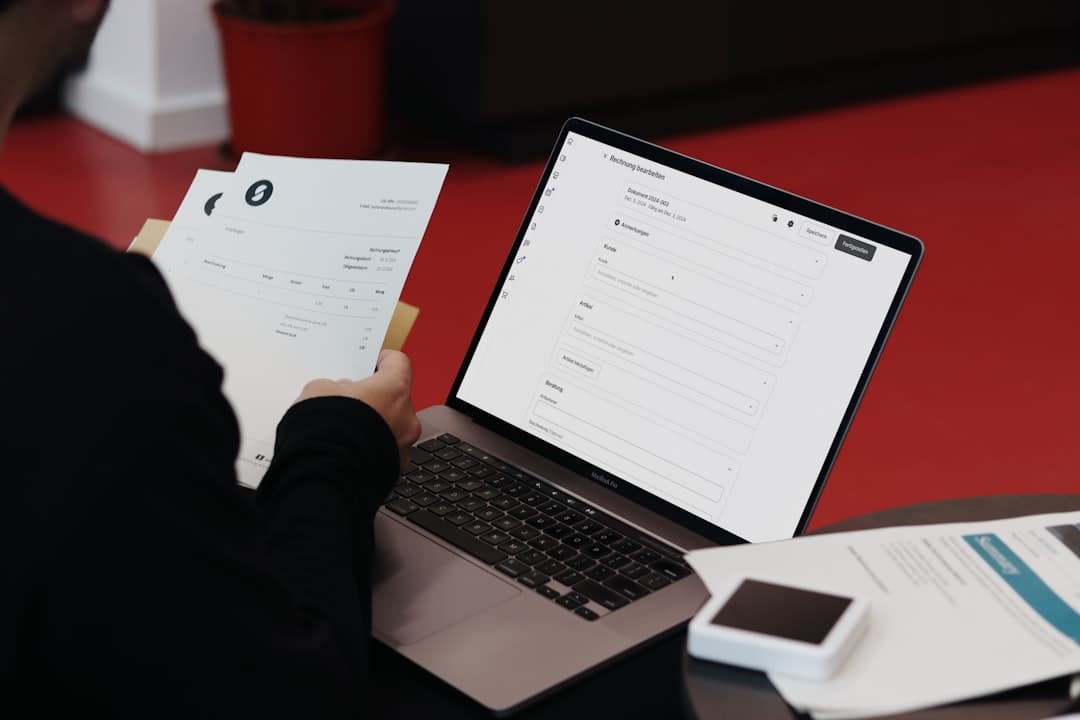
Electronic invoicing has been on everyone's lips since Ordinance 2021-1190 of 15 September 2021 set the course for mandatory dematerialisation of B2B exchanges in France. Yet a massive source of confusion persists: many entrepreneurs believe that paper invoices are now completely prohibited and that any business risks immediate penalties if it issues one. The reality is more nuanced, more progressive, and above all far more technical than it may appear. This article separates fact from fiction, sets out the true reform timeline, and explains precisely what the law does and does not yet require of the various categories of French businesses in 2026.
What the reform actually requires: the obligation to receive first
Universal reception obligation from 1 September 2026
The first concrete action of France's electronic invoicing reform is the obligation to receive. From 1 September 2026, all businesses subject to VAT in France — regardless of their size — must be able to receive electronic invoices via an Accredited Dematerialisation Platform (PDP) or the Public Invoicing Portal (PPF). This point is fundamental and often misunderstood: the law does not yet prohibit all businesses from issuing paper invoices, but it requires them to be technically equipped to receive them.
In practical terms, this means a supplier may still, depending on its size, send you a paper invoice or an unstructured PDF, but you, as the recipient, must have a compliant reception channel available. For further details on how roles are divided between platforms, the guide on Accredited PDP Platforms sets out selection criteria and operators' obligations.
The emission obligation: a staggered timeline by company size
The obligation to issue electronic invoices is progressive:
- Large enterprises and mid-sized companies: effective emission obligation from 1 September 2026.
- SMEs and microenterprises: emission obligation deferred to 1 September 2027.
This timeline was revised twice (delays in 2023 and 2024) to give businesses time to adapt. The detailed electronic invoicing timeline 2026-2027 lets you check precisely which deadline applies to your category.
In other words: as of 4 August 2026, an SME may still legally issue a paper invoice to a business client — but it can no longer refuse to receive an electronic invoice from its suppliers.
The most widespread misconceptions about the end of paper invoicing
Misconception No. 1: "Paper invoices are completely banned from 1 January 2026"
False. The date of 1 January 2026 corresponds to no regulatory deadline in the French system. The two key milestones are 1 September 2026 (mandatory reception for all + mandatory emission for large enterprises and mid-sized companies) and 1 September 2027 (mandatory emission for SMEs and microenterprises). Confusion over dates stems partly from successive shifts to the original timeline, which planned a start date of 1 July 2024.
Misconception No. 2: "A PDF sent by email is equivalent to an electronic invoice"
False since 2026 for businesses subject to the emission obligation. A PDF sent by email is not an electronic invoice within the meaning of the reform. The electronic invoice must be issued and received via an approved platform (PDP or PPF) and include structured data readable by the tax administration's information systems. The Factur-X format, which combines a readable PDF and a structured XML file, constitutes one of the officially accepted formats — but simply creating it is not enough: it must be transmitted through an approved channel.
Misconception No. 3: "B2C transactions are affected in the same way as B2B"
False. The reform targets exclusively transactions between parties subject to VAT (domestic B2B). Invoices issued to individuals (B2C) are not subject to the electronic invoicing obligation via PDP/PPF, but they fall within the scope of e-reporting, which requires transmission of aggregated data on these transactions to the tax administration. The guide on e-reporting details this complementary mechanism.
Misconception No. 4: "Self-employed workers are exempt"
Partially true, but be careful. Microenterprises are indeed subject to the reform (mandatory emission from 1 September 2027), except those in VAT exemption on a base of supplies which have no obligation to file VAT returns. These latter remain subject to the reception obligation since September 2026, since their suppliers subject to VAT may send them electronic invoices. The boundary is subtle and deserves a personalised assessment — the electronic invoicing diagnostic tool allows you to quickly identify your situation.
What the transition concretely means for your document management
Choosing an accredited dematerialisation platform
The central issue for compliance is the choice of a PDP or use of the PPF. A PDP is a private operator approved by the DGFiP, capable of receiving, issuing, transmitting and archiving electronic invoices in the regulatory formats. The PPF, managed by the State, offers a free solution but with more limited functionality. Large enterprises will naturally turn to PDPs to benefit from advanced ERP integrations, validation workflows and archiving features with legal probative value.
Electronic signature as a guarantee of integrity
Among the three methods of authenticating invoices recognised by the administration (reliable audit trail, fiscal EDI, qualified electronic signature), electronic signature remains the method offering the highest level of proof. It guarantees the integrity of content and the identity of the issuer in a cryptographic manner. Businesses wishing to legally secure their invoicing flows can rely on a eIDAS-compliant electronic signature solution to timestamp and authenticate each issued invoice. To understand the precise legal value of these mechanisms, consult the guide on the legal value of electronic signature.
Operational impacts not to underestimate
The transition to electronic invoicing is not merely a change of format: it involves a complete overhaul of internal processes. Accounting departments must adapt their entry tools, ERPs must be connected to approved platforms, and validation workflows (approval for payment, order-invoice reconciliation) must be digitalised. Businesses that fail to anticipate this transformation risk disruptions to their supplier payment cycles and non-compliance that could engage their tax liability.
The penalties provided for in Article 1737 of the General Tax Code for failure to comply with invoicing obligations may reach €15 per invoice, with no global cap defined for repeat offenders. This risk, often minimised, can quickly amount to significant sums for businesses with high invoicing volumes.
Preparing for 2027: SMEs must get ready now
Why delaying is a strategic mistake
SMEs benefit from an additional delay until September 2027, but this delay should not be interpreted as a period of inaction. Setting up a compliant solution requires on average 3 to 6 months of technical deployment (ERP integration, workflow configuration, team training, compliance testing). Waiting until the last quarter of 2027 to start the project amounts to running a high operational risk.
Moreover, SMEs already in business relationships with large enterprises subject to the emission obligation from September 2026 must be immediately capable of receiving their invoices. The reception obligation, for its part, allows no additional delay for SMEs.
Tools available to assess your compliance
Several resources make it possible to quickly assess a business's state of preparedness. The complete guide to electronic invoicing 2026-2027 synthesises the entire regulatory framework. For businesses using the Factur-X format, the free Factur-X validator allows you to verify the technical compliance of your files before issue. Finally, the Factur-X invoice generator offers an immediate operational solution for structures wishing to produce structured invoices without waiting for a complete ERP rollout.
Legal framework applicable to electronic invoicing in France
The electronic invoicing reform rests on a pile of legislative and regulatory texts that it is essential to master in order to correctly assess your obligations.
Ordinance No. 2021-1190 of 15 September 2021 is the foundational text. It empowers the government to make electronic invoicing mandatory between parties subject to VAT established in France, by amending Article 289 of the General Tax Code (CGI). Article 289 VII of the CGI, as amended by this reform, sets out three legally recognised methods to guarantee the authenticity of origin, integrity of content and readability of invoices: the reliable audit trail, fiscal electronic data interchange (EDI), and advanced electronic signature based on a qualified certificate.
Decree No. 2022-1299 of 7 October 2022 clarifies the technical details of the reform, in particular the conditions for approval of Accredited Dematerialisation Platforms (PDP) and the mandatory data formats (Factur-X, UBL 2.1, CII).
The Order of 7 October 2022 defines the functional and technical specifications of the system, notably the minimum data to be included in structured invoices transmitted to the administration via the Public Invoicing Portal.
At European level, the Directive 2014/55/EU on electronic invoicing in public procurement laid the foundations for standardised exchanges. It aligns with the EN 16931 standard defining the semantic data model of the European electronic invoice, to which Factur-X is compliant.
Regarding the probative value of documents, Article 1366 of the French Civil Code recognises the legal force of electronic writings when it is possible to identify their author and their integrity is guaranteed. Article 1367 specifies that electronic signature identifies the signer and expresses their consent. The eIDAS Regulation No. 910/2014 for its part establishes three levels of signature (simple, advanced, qualified) and their mutual recognition throughout the European Union.
In the area of data protection, the collection and processing of fiscal data contained in electronic invoices are subject to the General Data Protection Regulation (GDPR Regulation No. 2016/679). Businesses must ensure that their PDPs comply with security obligations (Article 32 GDPR) and that data does not transfer to third countries without adequate safeguards.
Finally, the NIS2 Directive (2022/0383), transposed into French law, imposes strengthened cybersecurity requirements on digital service operators considered essential, a category potentially including certain PDPs depending on their size and level of activity. Businesses must verify that their dematerialisation partners have recognised security certifications (ISO 27001, SecNumCloud) in order to limit their liability in the event of an incident.
Use cases: businesses facing the end of paper invoicing
Scenario 1: a mid-sized industrial company processing 3,000 supplier invoices per month
An intermediate-sized manufacturing business producing mechanical components, handling approximately 3,000 supplier invoices per month, faces a dual challenge on 1 September 2026: it must both issue compliant electronic invoices to its business clients and receive those from its suppliers via a PDP. The company had until then relied on an ERP that generated PDFs sent by email — an operating method that has become non-compliant for emission.
By deploying integration between its ERP and an approved PDP six months before the deadline, the company was able to automate the generation of invoices in Factur-X format and their secure transmission. Result: an estimated 65% reduction in incoming invoice processing time (end of manual re-entry), an almost complete elimination of VAT errors (approximately 80% reduction in supplier disputes), and real-time visibility over outstanding items. The deployment cost was recovered in less than eight months according to the ranges observed in the industrial sector.
Scenario 2: an accounting firm managing compliance for 80 very small business clients
An accounting firm accompanying a client base composed of 80% very small businesses (craftspeople, traders, professionals in private practice) finds itself on the front line of explaining the reform to business owners unfamiliar with technical issues. The majority of these very small businesses issue between 10 and 100 invoices per month, often still on paper or via basic office tools.
The firm implemented a systematic diagnostic approach for each client, distinguishing those subject to VAT (and therefore to the reception obligation from September 2026 and emission in September 2027) from those in VAT exemption on a base. For the former, it negotiated pooled access to a PDP via a framework contract, allowing its clients to benefit from a group rate. Average benefit observed for the very small businesses concerned: elimination of 30 to 45 minutes per week spent on entry and filing of received paper invoices, equating to an annual saving estimated between €800 and €1,500 for the smallest structures.
Scenario 3: a regional distribution chain subject to e-reporting
A retail chain operating across several French regions, achieving approximately 70% of turnover in B2C and 30% in B2B, must manage two complementary obligations simultaneously: electronic invoicing for its B2B transactions and e-reporting for its sales to individuals. Confusion between these two systems had initially led its finance department to believe that only its B2B flows were affected by the reform.
Once the distinction was clarified, the company deployed an integrated solution allowing automatic transmission of aggregated B2C transaction data to the tax administration via its PDP. This system made it possible to anticipate potential tax checks, improve reconciliation of VAT collected data and identify configuration anomalies in its cash registers — anomalies that could have generated significant tax adjustments during an audit. The return on investment of the solution was estimated at less than 12 months, primarily thanks to securing tax risk.
Conclusion
The end of paper invoicing is not a switch you flip all at once: it is a progressive transition, governed by a precise regulatory timeline that too many businesses still do not understand. In 2026, the universal obligation to receive electronic invoices is in force for all parties subject to VAT, whilst the obligation to issue applies to large enterprises and mid-sized companies — SMEs having until September 2027. Separating misconceptions from legal reality is the first step to avoiding penalties and structuring a smooth transition.
Certyneo supports businesses of all sizes through this transformation: from bringing your invoicing flows into compliance to qualified electronic signature of your contractual documents. To assess your level of preparation and calculate achievable savings, start today with Certyneo's ROI calculator or contact our experts for a personalised assessment.
Try Certyneo for free
Send your first signature envelope in less than 5 minutes. 5 free envelopes per month, no credit card required.
Go deeper into this topic
Reference articles on this topic.
Go deeper into this topic
Our comprehensive guides to master electronic signatures.
Recommended articles
Deepen your knowledge with these related articles.

Health Data Protection and GDPR Compliance for Healthcare Professionals
Health data represents the most sensitive personal information under the GDPR. Discover all the obligations that apply to healthcare sector professionals in 2026.

VAT 2026: calculation, declaration and new obligations for businesses
The VAT reform of 2026 overhauls the rules for calculation and declaration affecting millions of French businesses. Master the new obligations before they apply to you.

EIRL vs SARL: Complete Comparison of Legal Structures in 2026
Choosing between EIRL and SARL is a strategic decision that affects your assets, taxation and professional future. Discover the complete comparison for 2026.