
Building Compliance Certificates: Sign them online in 2026
Building compliance certificates concentrate significant legal and operational challenges. Discover how certified electronic signature transforms their management.
Updated on
Writer — Certyneo · About Certyneo
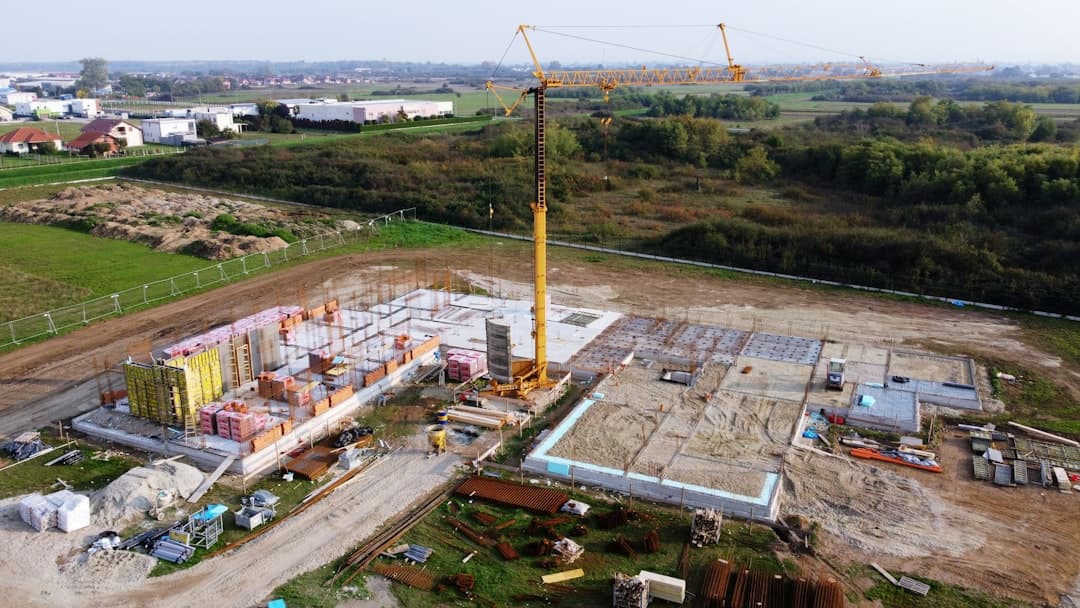
Why are building compliance certificates so strategic?
In the building and civil engineering sector, the compliance certificate is not merely an administrative document: it is the cornerstone that engages the civil and criminal liability of the project owner, project manager and executing contractor. In France, more than 500,000 completion certificates are produced each year according to data from the Construction Observatory (CEREMA, 2025), covering projects ranging from energy renovation to major civil engineering public contracts.
This documentary burden has increased considerably with the entry into force of environmental regulation RE2020, the requirements of the ELAN law relating to accessibility, and obligations arising from the tertiary decree. Result: administrative teams in construction companies spend an average of 3 to 5 hours per week on the collection, signing and archiving of compliance certificates alone. The electronic signature in the enterprise is gradually emerging as the most appropriate response to this burden.
The different types of certificates concerned
It is important to distinguish between several families of documents according to their legal nature and scope:
- Compliance certificate for thermal regulations (RT2012 or RE2020), issued by an approved body or inspection office after verification of works.
- Completion of works certificate (AFT), a contractual document binding the project owner and contractor, confirming the completion and compliance of works with specifications.
- Electrical compliance certificate (Consuel), mandatory before commissioning a domestic or professional installation.
- Qualibat or RGE certificate (Recognised Environmental Guarantor), essential for accessing certain markets and for validating eligibility for public grants (MaPrimeRénov', CEE).
- Declarations certifying compliance with fire safety, accessibility for public buildings and equipment safety standards (in accordance with articles R. 111-19 et seq. of the Building Code).
Risks of unsecured document management
A poorly signed, backdated or lost compliance certificate exposes the entire contractual chain to serious consequences: rejection of final work acceptance, blocking the release of retention guarantees (5% of the contract under article 101 of the Public Procurement Code), or even questioning of ten-year liability. Administrative courts have multiplied decisions penalising public project owners for lack of documentary traceability (Council of State, order of 14 March 2023, n°459 412).
---
Certified electronic signature: a compliance lever for construction
Adopting electronic signature for managing construction compliance certificates is not merely a matter of operational efficiency. It is above all an imperative of legal security. The eIDAS Regulation No. 910/2014, applicable throughout the European Union, defines three levels of electronic signature whose legal value is fully recognised before courts: simple, advanced and qualified.
For building compliance certificates, the level of signature to prioritise depends on the stakes of the document:
- Simple electronic signature: acceptable for internal exchanges and low-stakes documents (site meeting notes, service order).
- Advanced electronic signature: recommended for completion of works certificates, delivery notes certified as compliant and acceptance reports. It is based on a qualified certificate uniquely linked to the signatory.
- Qualified electronic signature: mandatory for public contracts above European thresholds (€5,382,000 HT for works contracts in 2024) and for any document where the law requires a signature in the strict handwritten sense.
How does the process work in practice?
A platform like Certyneo natively integrates multiparty signature workflows, essential in construction where a certificate simultaneously engages the inspection office, general contractor, subcontractors and project owner. The process unfolds in four stages:
- Document import and preparation: the certificate (PDF/A, archivable format under ISO 19005) is uploaded to the platform and signature zones positioned.
- Definition of signatories and signature order: the inspection office signs first, then the contractor, finally the project owner. Each stage is time-stamped.
- Signature with strong authentication: each signatory receives an OTP (One-Time Password) or uses their qualified certificate via their personal workspace.
- Automatic legal archiving: the signed document, accompanied by its audit report and qualified electronic time-stamping, is archived reliably for the applicable legal period.
Integration with construction industry tools
Modern electronic signature solutions expose REST APIs allowing direct integration with site management software (Onaya, Batigest, Progib, or sector-specific ERPs). This integration allows the signature workflow to be automatically triggered as soon as a certificate is generated by business software, without re-entry or file manipulation. For a company managing 300 certificates per year, this automation gain represents estimated savings of between 40 and 60 hours of administrative processing (source: Markess by exægis study, 2024).
---
Specific requirements for public construction contracts
Public contracts constitute a particularly demanding field of application for building compliance certificates. European Directive 2014/24/EU, transposed into French law by the Public Procurement Code (articles L. 2191-1 et seq.), imposes strict rules on the dematerialisation of procedures.
Since 1 October 2018, all formalised public contract procedures must be conducted entirely electronically. This includes the submission of bids, but also all documentary exchanges during the execution phase — including compliance certificates. The PLACE platform (State Purchasing Platform) and the purchasing profiles of local authorities require that documents be signed with a certificate complying with ETSI standards.
Retention guarantee and clearance of reservations: two key moments
In the lifecycle of a building contract, two moments concentrate most of the documentary exchanges related to compliance:
Acceptance of works (article 41 of CCAG Works 2021) results in the production of a minutes of meeting signed by both parties. If reservations are raised, each clearance of reservation is the subject of a separate certificate. With paper management, this process can take several weeks; electronic signature reduces it to 24-48 hours.
Release of the retention guarantee, one year after acceptance, requires a final compliance certificate signed by the project owner. Any delay in this procedure generates default interest at the charge of the project owner (ECB rate + 8 points). Dematerialisation effectively eliminates this administrative delay risk.
Subcontracting and documentary chain
The construction sector is structurally organised around subcontracting (law of 31 December 1975, codified under articles L. 2193-1 et seq. of the Public Procurement Code). Each approved subcontractor must produce their own compliance certificates for the lots under their responsibility. Managing this documentary chain — potentially 10 to 30 subcontractors on a major project — becomes unmanageable without a centralised digital tool. The comparison of available electronic signature solutions on the market makes it possible to identify platforms that truly offer the advanced multiparty management necessary for construction.
---
RE2020 compliance, labels and certifications: new certificates to dematerialise
Since 1 January 2022, RE2020 (Environmental Regulation 2020) has profoundly changed the documentary landscape of new residential construction, with progressive extension to tertiary buildings. It introduces two new mandatory certificates:
- Certificate of consideration of RE2020 when submitting the building permit: produced by a thermal engineering office and signed by the project owner.
- Certificate of RE2020 compliance at the completion of works: issued by an accredited body (inspection office, certified diagnostician) after on-site verification.
These two documents have an important peculiarity: they must be transmitted to the Departmental Directorate of Territory (DDT) via the Géoportail de l'Urbanisme portal. Advanced-level electronic signature is expressly accepted by the DHUP circular of 12 September 2022.
QualiPAC labels, BBC Effinergie and HQE certifications
Beyond regulatory requirements, voluntary certifications (HQE, BREEAM, LEED) generate their own flow of attestations. An HQE Sustainable Building certified project typically produces between 80 and 150 supporting documents over the entire construction cycle. The legal value of electronic signature is fully recognised for these documents when it respects the advanced eIDAS level, which is confirmed by certifying bodies (Cerway, CSTB Evaluation).
Probative archiving: a long-term challenge
Building compliance certificates have exceptionally long retention periods. Ten-year liability runs for 10 years after work acceptance (article 1792 of the Civil Code). Good finish guarantee runs for 1 year, biennial guarantee for 2 years. In practice, project management offices retain their technical archives for 20 to 30 years.
Probative electronic archiving — complying with standard NF Z 42-020 and ETSI EN 319 162 specifications on long-term preservation of signatures — is therefore essential. Certyneo offers an integrated digital vault guaranteeing document integrity and readability over this period, with automatic signature re-sealing mechanisms before certificate expiration.
---
Implementing electronic signature for your building compliance certificates: the 5-step method
Adopting electronic signature for building compliance certificates is not something to improvise. Here is a proven methodology for a successful transition:
Step 1 — Map your documentary flows
Before choosing a tool, you must exhaustively identify the types of certificates produced, their annual volume, the stakeholders involved (internal and external) and the specific contractual requirements of each project owner. This mapping often reveals 30 to 40% of previously unidentified documents.
Step 2 — Qualify the required signature level
Based on the mapping, assign to each type of certificate the appropriate eIDAS signature level. This qualification work should be validated by the legal officer or external counsel. An error in level can render the document unenforceable in case of dispute.
Step 3 — Choose a compliant and interoperable platform
Prioritise a solution with an eIDAS compliance certificate issued by a qualified trust service provider (QTSP) appearing on the EU Trusted List. Also verify the API integration capacity with your existing business software. If you currently use DocuSign or Yousign, know that migrating to Certyneo is a straightforward and documented process.
Step 4 — Train teams and partners
Adoption often fails not due to lack of technology, but due to insufficient change management. You must train not only internal teams (site supervisors, administrative assistants, project managers), but also external partners (inspection offices, regular subcontractors) who will sign via the platform.
Step 5 — Monitor and audit continuously
Establish tracking indicators: signature completion rate on time, average documentary cycle duration, follow-up rate. A dedicated dashboard allows you to quickly identify bottlenecks and demonstrate the ROI of the solution. You can estimate your return on investment now using the electronic signature ROI calculator offered by Certyneo.
Legal framework applicable to building compliance certificates
Foundations of civil law and electronic signature
The legal value of electronic signature affixed to a building compliance certificate rests on a solid legislative foundation. In French law, articles 1366 and 1367 of the Civil Code (from ordinance n°2016-131 of 10 February 2016) establish the equivalence between electronic signature and handwritten signature, provided that it makes it possible to identify its author and guarantees the integrity of the signed document.
At European level, eIDAS Regulation No. 910/2014 of 23 July 2014 (and its eIDAS 2.0 revision, Regulation No. 2024/1183 of 11 April 2024) establishes a unified supranational framework. It defines three levels of electronic signature (simple, advanced, qualified) and confers increasing presumption of reliability on them. Qualified signature has a legal effect equivalent to handwritten signature in all Member States, without additional condition.
Building law and documentary obligations
The Building and Housing Code imposes specific documentary obligations. Article L. 111-9 requires a certificate of consideration of energy and environmental performance requirements at the opening and completion of the project. Article R. 111-19-43 governs accessibility certificates for public buildings.
Ten-year liability (article 1792 of the Civil Code) and completion guarantee (article 1792-6) make the compliance certificate a central probative document. In the event of a loss, the damage insurance underwriter (Spinetta law of 4 January 1978, codified in article L. 241-1 of the Insurance Code) will systematically require production of these certificates. Their absence or alteration may result in a refusal of coverage.
Public procurement and mandatory dematerialisation
The Public Procurement Code (articles L. 2132-2 and R. 2132-7) requires electronic signature for all formalised contracts since 1 October 2018. Decree n°2016-360 and order of 12 April 2018 specify the acceptable technical formats: certificates must comply with ETSI EN 319 132 (XAdES), ETSI EN 319 122 (CAdES) or ETSI EN 319 142 (PAdES) standards.
Personal data protection
Compliance certificates frequently contain personal data (signatory identity, professional contact details). The processing of this data is subject to GDPR n°2016/679: legal basis required (article 6), defined retention periods, right of access and erasure by data subjects (articles 15 to 17). Signature platforms must be able to produce a processing register compliant with GDPR and designate a DPO if volumes justify it.
Risks in case of non-compliance
The use of non-compliant electronic signature or an unqualified platform exposes you to several cumulative risks: document unenforceability in court, refusal of coverage by the damage insurer, contractual penalties for procedural delay, and in the most serious cases, questioning of the criminal liability of the project owner for forgery (article 441-1 of the Criminal Code).
Use cases: electronic signature applied to building certificates
Case 1 — A general contractor managing high volume of certificates on public contracts
A construction company with annual turnover of €15 to 25 million, mainly on public contracts for school building and sports facility renovation, must produce approximately 400 compliance certificates per year (work acceptance, clearance of reservations, RE2020 compliance, subcontractors). With entirely paper-based management, the average time between actual completion of work and full signature of the acceptance certificate was 18 working days, due to validation circuits involving the inspection office, site supervisor, project manager and local authority representative.
After deploying an advanced electronic signature solution integrated into its site management software via API, this timeframe fell to an average of 2.5 working days, a reduction of 86%. Release of retention guarantees (representing cumulatively over €800,000 in immobilised funds annually) was accelerated by 3 weeks on average. The ROI of the solution was achieved in less than 4 months, taking into account the administrative processing cost saved and interest on released treasury.
Case 2 — An inspection office issuing compliance certificates on a national scale
An approved inspection office operating across France with twenty inspection engineers issues over 2,000 thermal, structural and fire compliance certificates each year. The multiplicity of signatories (one engineer per technical item) and geographical dispersion made document management particularly complex: documents travelled back and forth by registered mail or unsecured email, with obvious risks of loss or alteration.
The implementation of a qualified electronic signature platform with role-based access management (each engineer can only sign certificates relevant to their speciality and inspection assignment) centralised all flows. The rate of documentary errors (wrong version signed, missed initial, incorrect date) dropped from 12% to less than 1%. Automatic probative archiving — with qualified time-stamping — now guarantees complete traceability of each certificate during the 30-year retention period required.
Case 3 — A private project owner piloting an energy renovation programme
A social landlord managing a portfolio of 8,000 dwellings launches a multi-year energy renovation programme (insulation, boiler replacement, ventilation) partly financed by energy savings certificates (CEE) and MaPrimeRénov' Condominiums. These schemes require production of RGE certificates from contractor companies and RE2020 compliance certificates after works — two documents whose authenticity is verified by controlling bodies (ADEME, CEE operators).
Before dematerialisation, collecting these certificates from 40 different intervening companies over a year mobilised two full-time equivalents during semestral closure periods. After deploying a signature portal accessible to external companies via a simple secure link (without requiring software installation on the subcontractor's side), the average collection timeframe fell from 3 weeks to 4 working days. The landlord was able to unlock its CEE funding requests within regulatory timeframes, avoiding estimated penalties of €45,000 for the year.
Frequently Asked Questions
What legal value does a construction compliance certificate signed electronically hold in court?
A certificate signed with an advanced or qualified electronic signature, compliant with eIDAS Regulation No. 910/2014, is fully enforceable in court throughout the European Union. The associated audit report, which records the identity of the signatories, timestamps and cryptographic fingerprints of the document, constitutes admissible evidence before French civil, criminal and administrative courts, just as much as a handwritten deed.
What level of electronic signature is mandatory for a certificate of completion of works in a public contract?
For public works contracts with a value exceeding the European threshold set at €5,382,000 (ex VAT), a qualified electronic signature is required. Below this threshold, an advanced signature based on a qualified certificate is generally sufficient. It is advisable to check the requirements of the tender rules specific to each contracting authority, as some impose a level higher than the regulatory minimum.
Can a Consuel certificate be signed electronically before the commissioning of an electrical installation?
Consuel issues its certificates via its own dematerialised procedure, separate from third-party signature platforms. However, internal contractual documents associated with the installation handover — reception notes, minutes, electrical works completion certificates — may be electronically signed by the parties. Care should be taken not to confuse the official document issued by the authorised body with the contractual documents produced by the companies.
How is the integrity of a compliance certificate archived electronically guaranteed over the long term?
Integrity is ensured by two complementary mechanisms: the cryptographic sealing of the file at the time of signing, which detects any subsequent alteration, and the qualified electronic timestamp, which anchors the document in time in an irrefutable manner. For reliable preservation over the term of the ten-year warranty, at least ten years, the use of PDF/A archival format and a service compliant with NF Z 42-020 standard is strongly recommended.
Is the electronic signature of a compliance certificate compatible with GDPR obligations?
Yes, provided that the processing of personal data of the signatories — name, email address, telephone number for OTP — is based on a valid legal basis, generally the performance of a contract or a legal obligation. The data controller must inform the signatories in accordance with Articles 13 and 14 of the GDPR, limit the retention period of authentication data to what is strictly necessary and ensure that the signature service provider acts as a data processor within the meaning of Article 28 of the Regulation.
Conclusion
Building compliance certificates crystallise legal, financial and operational challenges that paper management can no longer effectively absorb. Between RE2020, dematerialised public contract requirements, the complexity of subcontracting chains and ten-year retention periods, the construction sector has definitively need a robust digital documentary infrastructure.
Certified electronic signature — at advanced or qualified level depending on documents — provides a concrete answer: it reduces timeframes by 80 to 90%, secures the probative value of documents, facilitates integration with business tools and guarantees compliant long-term archiving.
Certyneo was designed to precisely address these complex B2B needs, with native multiparty management, configurable workflows and verified eIDAS compliance. Ready to transform the management of your building compliance certificates? Discover our pricing and start your free trial today.
Try Certyneo for free
Send your first signature envelope in less than 5 minutes. 5 free envelopes per month, no credit card required.
Go deeper into this topic
Reference articles on this topic.
Go deeper into this topic
Our comprehensive guides to master electronic signatures.
Continue reading about Business
Deepen your knowledge with these related articles.

Delegation of Powers: Electronic Signature in Business
Delegation of powers is an essential legal tool for any business. Electronic signature and eIDAS compliance: master every step.

Payment transfer mandates: secure them with electronic signature
Payment transfer fraud costs European businesses billions every year. Discover how electronic signature and strong authentication transform your payment mandates into tamper-proof documents.
AML Compliance and Electronic Signature in Finance: 2026 Guide
Anti-money laundering regulations impose strict requirements on financial actors, and electronic signature plays a central role in identity verification and traceability. Discover how to align AML compliance and electronic signature in 2026.