
Accounting Depreciation: Legal Methods and Practices
Straight-line or declining balance depreciation? Legal periods, components, impairment provisions and impact on corporation tax.
Updated on
Certyneo Team
Writer — Certyneo · About Certyneo
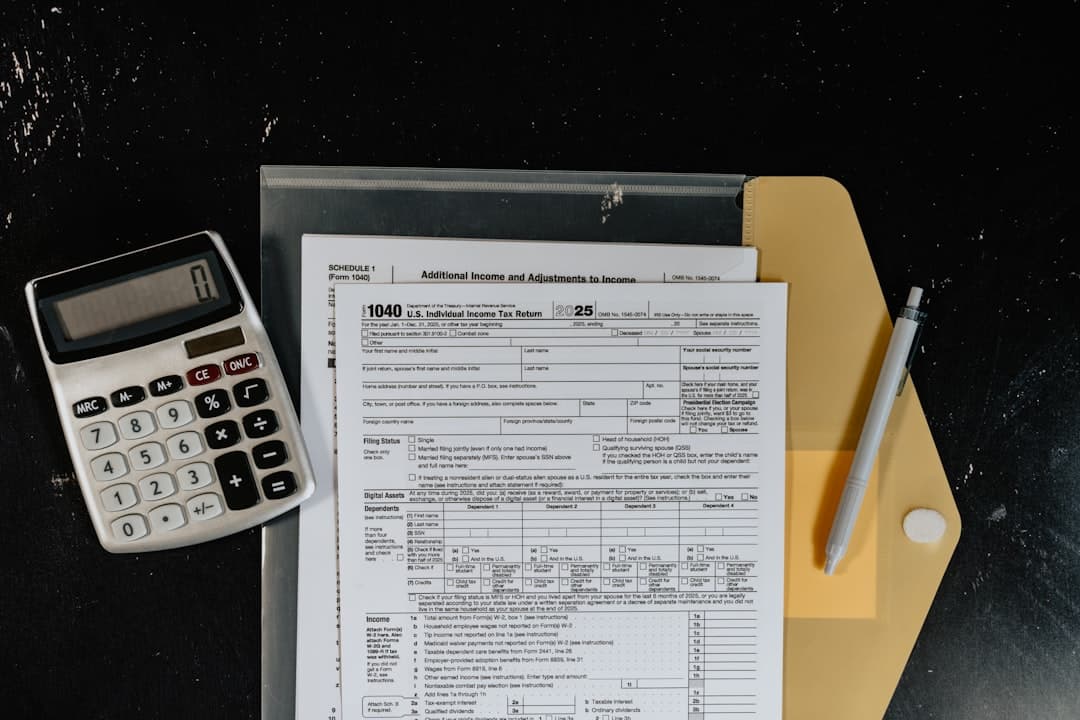
Depreciation is not an arbitrary spreading of an expense. It is the accounting recognition of the consumption of the economic benefits expected from an asset. This definition governs everything else: the period used must reflect the actual use of the asset, not a tax optimum. The divergence between what accounting requires and what tax law allows is precisely what makes the subject technical — and what generates most reassessments.
The depreciable base and the useful life
The depreciable base is the entry value of the asset less its residual value, that is, the amount the company would obtain from disposing of it at the end of its use. This residual value is only taken into account if it is both significant and measurable — which, in practice, limits it to a few categories such as vehicles or certain equipment with an active secondary market.
The useful life is the period of use expected by the company, assessed asset by asset. It must not be confused with the technical service life of the equipment: a machine usable for fifteen years but which the company plans to replace after seven is depreciated over seven years.
An allowance exists for small businesses, which may use the periods of use accepted for tax purposes rather than the actual period of use. This simplification eases the justification burden, but it does not exempt the company from revising the depreciation schedule when the conditions of use change significantly.
Depreciation methods
The straight-line method spreads the base evenly over the period. This is the standard method, applicable to any depreciable asset, and the only one accepted in the absence of justification for a different consumption pattern.
The reducing-balance method concentrates the deduction on the first few financial years, by applying a coefficient to the straight-line rate. It is reserved for certain new assets listed exhaustively, and its nature is tax-driven before being an accounting matter: when it does not correspond to the actual consumption pattern, the gap with the accounting depreciation results in an exceptional (statutory) depreciation adjustment.
Units-of-production depreciation, calculated on units of activity — machine hours, kilometres, units produced — is the most economically faithful method when use is irregular. It requires effective tracking of these units, failing which it cannot be justified.
The component-based approach
This is the obligation most frequently overlooked in small structures, and it is not optional.
When an asset comprises significant elements with different useful lives, these elements must be recognised and depreciated separately. A building is thus broken down into structural work, façade and waterproofing, technical installations, and fittings — each with its own useful life.
The stakes are not merely about compliance. The replacement of a component is capitalised and depreciated over its new useful life, while the net carrying amount of the replaced component is removed from the balance sheet. Without a component breakdown, that same replacement is expensed and, upon review, reclassified as a capital asset, with the usual consequences set out in our article on tax audits.
What is not depreciated
Three categories come up systematically:
- Land, the value of which is not consumed. When acquiring a built property, the split between land and construction is mandatory, and a clearly unbalanced split will be adjusted.
- Goodwill, not depreciable in principle, except where its useful life is limited and determinable. A regulated exception exists for small businesses.
- Financial assets, which are subject to impairment rather than depreciation.
The distinction between depreciation and impairment is fundamental: depreciation recognises an expected, planned consumption, while impairment recognises an unforeseen loss of value. An asset may be subject to both — the reasoning is the same as that set out for provisions.
Tax limits
Three rules limit the deduction, regardless of the accounting treatment adopted.
The starting point is the date of commissioning for straight-line depreciation, whereas the reducing-balance method runs from the first day of the month of acquisition. Depreciating an asset that has been acquired but not yet commissioned is a classic error.
Passenger vehicles are subject to a cap on deductible depreciation, the amount of which varies according to the vehicle's emissions. The excess portion is added back outside the accounts each year.
Minimum depreciation is the least well-known and most costly rule. A company must have recorded, at the close of each financial year, a cumulative amount of depreciation at least equal to the cumulative amount that would result from the straight-line method. Depreciation irregularly deferred — that which was not recognised when it should have been — is permanently lost for deduction purposes. Deferring depreciation to improve a loss-making result does not postpone it: it eliminates it.
Usage scenarios
Acquisition of a building. Split land and construction, then break down the construction into components. This is the point at which the breakdown is straightforward; reconstructing it five years later at the time of works is considerably harder.
Loss-making financial year. Do not suspend depreciation. The minimum depreciation rule turns an apparent deferral into a permanent loss of the right to deduct.
Replacement of equipment. Check whether the asset being replaced constituted an identified component. If so, the replacement is capitalised and the residual value of the outgoing component is expensed. The corresponding documentary discipline falls under bookkeeping.
Frequently asked questions
What useful life should be used? The actual period of use expected by the company, assessed asset by asset. Small businesses may use the periods of use accepted for tax purposes, which simplifies the justification without exempting them from revising the schedule if use changes.
Straight-line or reducing-balance? Straight-line is the standard method. The reducing-balance method is reserved for certain new assets and follows a tax-driven logic: when it diverges from the actual consumption pattern, the gap results in an exceptional (statutory) depreciation adjustment.
Is land depreciated? No. When purchasing a built property, the split between land and construction is mandatory, and an unbalanced allocation will be adjusted.
Can depreciation be suspended in a loss-making year? Not without consequence. The cumulative amount recorded must remain at least equal to the straight-line cumulative amount, failing which the deferred portion is permanently lost for deduction purposes.
What is component-based depreciation? The separate recognition and depreciation of the significant elements of an asset that have different useful lives. It is mandatory as soon as these conditions are met, and is not optional.
How should a vehicle be depreciated? Like any other asset, but the deductible portion is capped for passenger vehicles, according to a scale linked to emissions. The excess is added back each year.
Key takeaways
Depreciation is justified by the actual use of the asset, never by a profit target. Three points account for most reassessments, and all of them are settled at the time the asset is recognised rather than at the time of an audit.
The breakdown first — land and construction, then components — which determines the treatment of all subsequent replacements. Then the consistency of the useful life, which must be explainable by more than a reference to a table. And finally minimum depreciation, whereby depreciation not applied in time is not deferred but lost. These choices form part of the broader framework of corporate taxation, where the quality of the documentation determines what survives after an audit.
Try Certyneo for free
Send your first signature envelope in less than 5 minutes. 5 envelopes/mo for 14 days, then 2/mo, no credit card required.
Go deeper into this topic
Reference articles on this topic.
Related Certyneo tools
Move from reading to action with the tools built into the platform.
Certyneo Community
A question about electronic signatures?
Join the Certyneo community: ask your questions, share your answers and connect with thousands of users and our team.
Continue reading about Accounting
Deepen your knowledge with these related articles.

Electronic invoices with signatures: tax compliance 2026
The generalisation of electronic invoicing requires companies to master digital signature, XML formats and tax requirements. Discover everything you need to know to stay compliant in 2026.

Electronic signature in accounting: 2026 guide
Electronic signature transforms the management of accounting documents by guaranteeing their legal value and compliant archiving. Discover the complete 2026 guide.

Electronic signature for accounting firms
Engagement letters, financial statements, tax returns: how accounting firms streamline their client signatures.