Certyneo and Make: automating signature in engineering
Automating electronic signature workflows via Make (Integromat) transforms documentary processes in engineering. Discover how to integrate Certyneo in just a few steps.
Équipe éditoriale Certyneo
Editor — Certyneo · About Certyneo
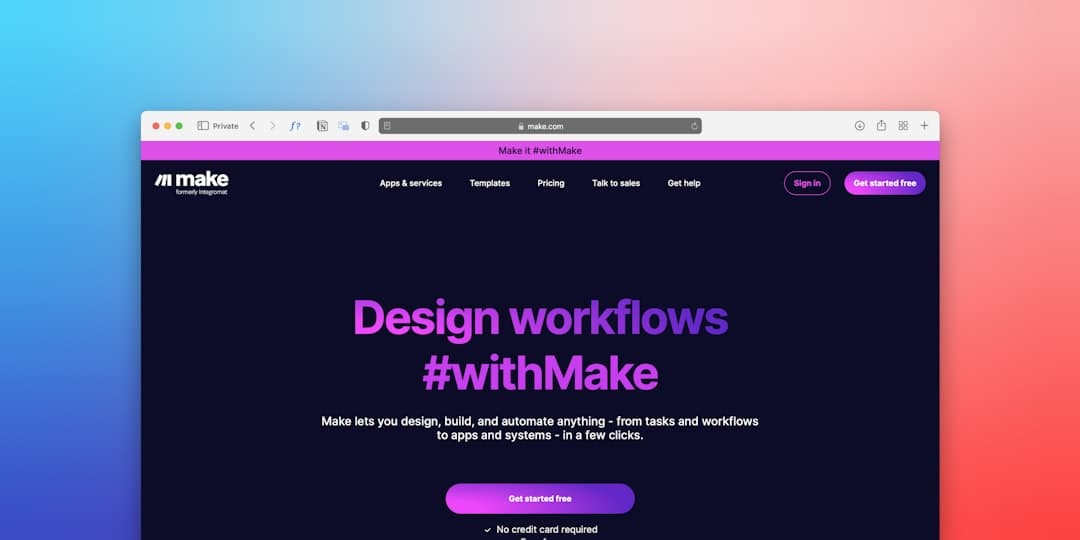
Why automate electronic signature in engineering with Make?
The engineering sector generates a considerable volume of contractual documents: works contracts, amendments, reception reports, subcontracting agreements, compliance certificates and study reports. According to a McKinsey study (2024), engineering teams spend on average 27% of their working time on repetitive administrative tasks, with the collection and tracking of signatures being among the most time-consuming.
Connecting Certyneo to an automation platform like Make (formerly Integromat) allows you to transform these manual processes into intelligent workflows, where each signature is triggered, tracked and archived without human intervention. This guide explains, step by step, how to implement this integration in a B2B engineering context, whilst meeting eIDAS regulatory requirements.
We will cover the integration architecture, step-by-step configuration in Make, available triggers and actions, then best practices specific to the engineering sector.
---
Understanding Make + Certyneo architecture for engineering
Make (Integromat): a no-code orchestration platform
Make is an integration and visual automation platform that allows you to create scenarios linking hundreds of applications via drag-and-drop modules. Unlike Zapier, Make offers advanced conditional logic, iterators, aggregators and routers, making it a particularly suitable tool for complex engineering workflows (multi-party, multi-step, documents with multiple signatories).
Make sits between your business tools (ERP, CRM, project management tools such as Autodesk Construction Cloud, Procore, or Microsoft Project) and Certyneo, orchestrating data flows and signature triggers.
The Certyneo API: the integration entry point
Certyneo exposes a complete RESTful API allowing you to perform all operations available from the graphical interface: creating signature requests, adding signatories, defining signature fields, sending notifications, retrieving status and downloading signed documents. The API uses OAuth 2.0 authentication and JSON format, which guarantees native compatibility with Make via the HTTP module or, ideally, via a dedicated Certyneo connector.
The Certyneo API complies with the interoperability standards defined by ETSI EN 319 132 for XAdES signature and ETSI EN 319 122 for CAdES, ensuring that each signature produced is legally enforceable throughout the European Union.
Typical topology of an engineering workflow
In an engineering office or engineering company, a typical workflow looks like this:
- Trigger: a new subcontracting agreement is created in the ERP (e.g. SAP, Sage, or a construction project management tool).
- Extraction: Make retrieves contract metadata (parties, amount, project references).
- Document generation: Certyneo's AI-powered contract generator produces the structured PDF document.
- Creation of signature request: Make calls the Certyneo API to create the request and add signatories in the defined order.
- Sequential or parallel signature: Certyneo sends signature links to the parties involved.
- Notification and archiving: upon receipt of each signature, Make triggers a Slack/Teams notification and archives the signed document in your document management system (SharePoint, Google Drive, Egnyte, etc.).
This architecture eliminates manual email exchanges and guarantees complete traceability, essential during engineering project audits.
---
Step-by-step configuration of the integration in Make
Step 1 — Create the scenario and configure the Certyneo connection
In your Make space, create a new scenario. If the native Certyneo connector is available in the Make marketplace, select it directly; otherwise, use the HTTP > Make a request or HTTP > Make an OAuth 2.0 request module.
To configure the connection:
- Base URL: `https://api.certyneo.com/v1`
- Authentication method: OAuth 2.0 (Client Credentials) or Bearer Token API key, depending on your Certyneo account configuration
- API Key: available in your Certyneo dashboard, Settings > Integrations > API section
Keep your API key in Make's connection manager (and not hardcoded in the scenario) to comply with security best practices.
Step 2 — Define the trigger appropriate to the engineering sector
The choice of trigger is crucial. In engineering, the most common triggers are:
| Trigger | Make Module | Use case | |---|---|---| | New file in SharePoint folder | SharePoint > Watch Files | Contract deposited by sales staff | | New row in Google Sheets spreadsheet | Google Sheets > Watch Rows | Tracking of projects to be signed | | Incoming webhook from ERP | Webhooks > Custom Webhook | Purchase order validated in SAP | | New Jira/Asana ticket | Jira > Watch Issues | Deliverable requiring client validation |
For complex engineering workflows (e.g. signing a works contract requiring co-signature by a technical director and legal director), the incoming Webhook trigger from the ERP offers the greatest flexibility.
Step 3 — Create the signature request via the Certyneo API
Once the trigger is configured, add an HTTP module pointing to the Certyneo signature request creation endpoint:
``` POST https://api.certyneo.com/v1/signature-requests ```
The JSON request body includes:
```json { "name": "Subcontracting agreement - Project {{1.project_name}}", "signers": [ { "email": "{{1.signer_email}}", "name": "{{1.signer_name}}", "order": 1 } ], "document_url": "{{2.file_url}}", "signature_level": "advanced", "expiry_date": "{{formatDate(addDays(now; 15); 'YYYY-MM-DD')}}" } ```
Note the use of the `advanced` signature level (Advanced Electronic Signature, AES), in line with eIDAS requirements for engineering contracts of significant value. For low-value internal documents, the `simple` level is sufficient.
Step 4 — Manage notifications and post-signature archiving
After creating the request, add a second branch to your Make scenario, triggered by a Certyneo Webhook signalling signature completion. Certyneo automatically sends a POST to the webhook URL you will have defined in the request settings.
Upon receipt of this webhook, your scenario can:
- Download the signed and timestamped PDF via `GET /signature-requests/{id}/signed-document`
- Archive it in your document management system (SharePoint, Egnyte, Google Drive)
- Update the contract status in your ERP or CRM
- Send an automatic notification to the project team via Slack, Teams or email
- Trigger invoicing or project opening in your management tool
This chain of actions guarantees end-to-end traceability of the document lifecycle, a fundamental requirement in audited projects (ISO 9001 certification, public contracts, Seveso projects).
---
Best practices specific to the engineering sector
Managing multi-party signatures and sequential workflows
Engineering often involves documents requiring multiple signatories in a specific order: first the project manager, then the technical director, finally the legal representative of the client company. Certyneo natively handles sequential signing via the `order` parameter in the signatory list.
In Make, you can dynamically build the signatory array by using an Array Aggregator that collects signatory data from your ERP or a reference table, before injecting it into the Certyneo API request. This approach allows you to manage contracts with 5 to 10 signatories without modifying the scenario.
Associating signatures with project folders
In engineering, each signed document must be associated with a specific project folder. Use Certyneo's custom metadata to store the business number, project phase and market code. This metadata will be returned in the completion webhook and can be used by Make to archive the document in the correct folder of your document management system.
This practice aligns with the requirements of the NF EN ISO 19650 standard (information management in BIM) and facilitates documentary audits at the end of the project.
Monitoring workflow quality and errors
Make offers a detailed execution log for each scenario. In a professional context, configure email or Slack alerts on error scenarios, and use Make's Error Handler module to handle Certyneo API failure cases (rate limiting, document too large, signatory not found).
If you wish to compare Certyneo's capabilities with other market solutions before launching the integration, consult our comparison of electronic signature solutions to identify the solution best suited to your engineering context.
Finally, to maximise the return on investment of your automated workflow, our electronic signature ROI calculator allows you to precisely estimate the time savings and cost reductions achievable based on the volume of documents processed by your engineering office.
Legal framework applicable to electronic signature in engineering
Legal foundations of electronic signature
In French law, the legal validity of electronic signature is based on Article 1366 of the Civil Code, which provides that "written documents in electronic form are admitted as evidence in the same way as written documents on paper", and on Article 1367, which clarifies that "the signature necessary for the completion of a legal act identifies its author and demonstrates consent".
At European level, Regulation eIDAS No. 910/2014 (Electronic Identification, Authentication and Trust Services), supplemented by eIDAS 2.0 (Regulation EU 2024/1183), defines three levels of electronic signature:
- SES (Simple Electronic Signature): suitable for low-value internal documents.
- AES (Advanced Electronic Signature): recommended for common engineering contracts, subcontracting agreements and purchase orders. It guarantees reliable identification of the signatory and document integrity.
- QES (Qualified Electronic Signature): required for notarial acts and certain large-scale public contracts.
Specific obligations in the engineering sector
Under public contracts, Decree No. 2016-360 relating to public contracts requires complete dematerialisation above certain thresholds. Commitment documents and subcontracting agreements must be signed with an AES or QES compliant with eIDAS, produced by a qualified trust service provider (QTSP) listed on the European Trusted List.
The ETSI EN 319 132 standard defines the XAdES profiles used for advanced XML signature, whilst ETSI EN 319 122 covers CAdES profiles for binary document signature. Certyneo complies with these standards, guaranteeing interoperability and cross-border recognition of signatures.
GDPR and protection of signatories' personal data
The processing of signatories' personal data (name, email, signature biometric data) is subject to Regulation GDPR No. 2016/679. As the data controller, your engineering company must ensure that Certyneo acts as a processor within the meaning of Article 28 GDPR, with a DPA (Data Processing Agreement) in proper form. Signature data must be retained for the applicable limitation period (5 years for commercial contracts under Article L. 110-4 of the Commercial Code, 10 years for construction contracts due to ten-year warranty).
NIS2 Directive and security of automated workflows
Engineering companies operating in critical sectors (energy, transport, water) may be subject to the NIS2 Directive (2022/2555/EU), transposed into French law by the Law of 14 April 2025. This directive imposes security requirements on information systems, including automation workflows connected to third-party providers such as Make and Certyneo. It is appropriate to document data flows, encrypt communications (TLS 1.3 minimum) and maintain a register of digital sub-processors.
Use cases: Make + Certyneo in engineering
Scenario 1 — Geotechnical engineering office managing 300 mission reports per year
A geotechnical engineering office specialising in geotechnics, with about fifteen engineers, produces on average 300 mission reports and service agreements annually. Before the Make + Certyneo integration, each report required manual email sending, telephone follow-up after 5 days without response, and manual archiving on the file server. The average time to collect signatures was 8 working days.
After deployment of the automated workflow — triggered by depositing the finalised report in SharePoint — the Make scenario automatically creates the Certyneo signature request, sends notification to the client, and automatically follows up at Day +3 if the signature has not been received. The signed document is instantly archived in the corresponding project folder.
Result: reduction in signature time from 8 days to an average of 1.8 days (−78%), estimated saving of 2.5 hours of administrative assistance per week, approximately €3,500 per year in administrative processing costs. These orders of magnitude are consistent with sector benchmarks published by Forrester Research on document automation (2024).
Scenario 2 — Industrial engineering company managing multi-party subcontracting agreements
An industrial engineering company of intermediate size (80 to 150 employees) oversees projects requiring the signing of subcontracting agreements involving 3 to 6 parties: client, delegated principal designer, first and second-tier subcontracting companies. Each contract requires strict sequential signing for contractual and insurance reasons.
The Make + Certyneo workflow is triggered by purchase order validation in the ERP. Make dynamically builds the ordered list of signatories from the supplier database, creates the Certyneo signature request with sequential parameters, and notifies each party in turn. Upon completion, the signed contract is archived in Procore and the contract status is updated in the ERP.
Result: elimination of sequencing errors (a subcontractor signing before the principal designer) of 100% through automatic management of the signing order. Average contract finalisation time reduced from 12 days to 4 days (−67%), which accelerates the actual start-up of projects.
Scenario 3 — Engineering consulting firm managing scope change amendments
An engineering consulting firm supporting industrial clients in their product transformation projects frequently issues amendments in the course of a mission, requiring rapid approval to avoid blocking the project. These amendments were previously printed, signed in meetings or sent by post, creating delays incompatible with the pace of agile projects.
With Make + Certyneo, the creation of an amendment in the project management tool automatically triggers a signature request. The client receives a mobile-friendly signature link allowing them to sign from their smartphone in less than 2 minutes, even when on-site. The advanced signature level (AES) is applied, ensuring the legal validity of the amendment.
Result: amendment validation time reduced from 5 to 7 days to less than 24 hours in 85% of cases. Improved client satisfaction and reduced risk of undocumented scope drift, a frequent source of disputes in engineering consulting.
Conclusion
The integration of Certyneo with Make (Integromat) represents a major efficiency lever for players in the engineering sector. By automating the entire documentary lifecycle — from contract creation to archiving the signed document — you eliminate repetitive manual tasks, reduce signature times by 67 to 78% on average, and guarantee complete eIDAS compliance for each document produced.
The technical configuration, although requiring initial careful setup, is accessible to teams with a no-code profile or a Make integrator. Benefits are evident within the first weeks of use, with measurable ROI on administration costs and project start-up times.
Ready to transform your documentary workflows? Create your Certyneo account for free and connect your first Make scenario in less than an hour, or contact our team for personalised support tailored to your engineering context.
Try Certyneo for free
Send your first signature envelope in less than 5 minutes. 5 free envelopes per month, no credit card required.
Recommended articles
Deepen your knowledge with these related articles.
Building Compliance Certificates: Sign Them Online in 2026
Compliance certificates in the construction sector concentrate major legal and operational challenges. Discover how certified electronic signature transforms their management.
Handover Certificate: Sign Electronically on Construction Sites
The handover certificate is a major legal document in construction. Electronic signature secures it, accelerates it and eliminates postal delays.
Digital Site Quotations: Sign with Your Clients in 2026
The dematerialisation of site quotations is transforming client relationships in construction. Discover how electronic signature secures and accelerates every site validation.